
Lifting and Pulling Platform for Collision Repair
CELETTE lifting and pulling platforms give collision repair shops a practical way to raise vehicles, access anchoring points, and perform controlled structural pulls for light to medium damage repair.
- Products
- Alignment and Straightening Systems
- Lifting and Pulling Platforms
What Is an Auto Body Lifting and Pulling Platform?
An auto body lifting platform raises the vehicle to a working height, and it anchors that vehicle firmly enough to take a structural pull. The process is straightforward: the vehicle is driven or rolled onto the platform, lifted by the wheels or by pinch weld clamps, and secured. Raising it by the wheels rather than the sills leaves the entire underbody clear, so the technician reaches anchoring points, measurement locations, and damaged structure without working around lift arms.

Celette Pulling &
Lifting Platform
Discover the CELETTE Pulling and Lifting Platform for Collision Repair

X-Trac: Versatility Meets Strength
Ideal for light and medium repairs, the X-Trac platform handles vehicles of all sizes, from cars to SUVs and light trucks.
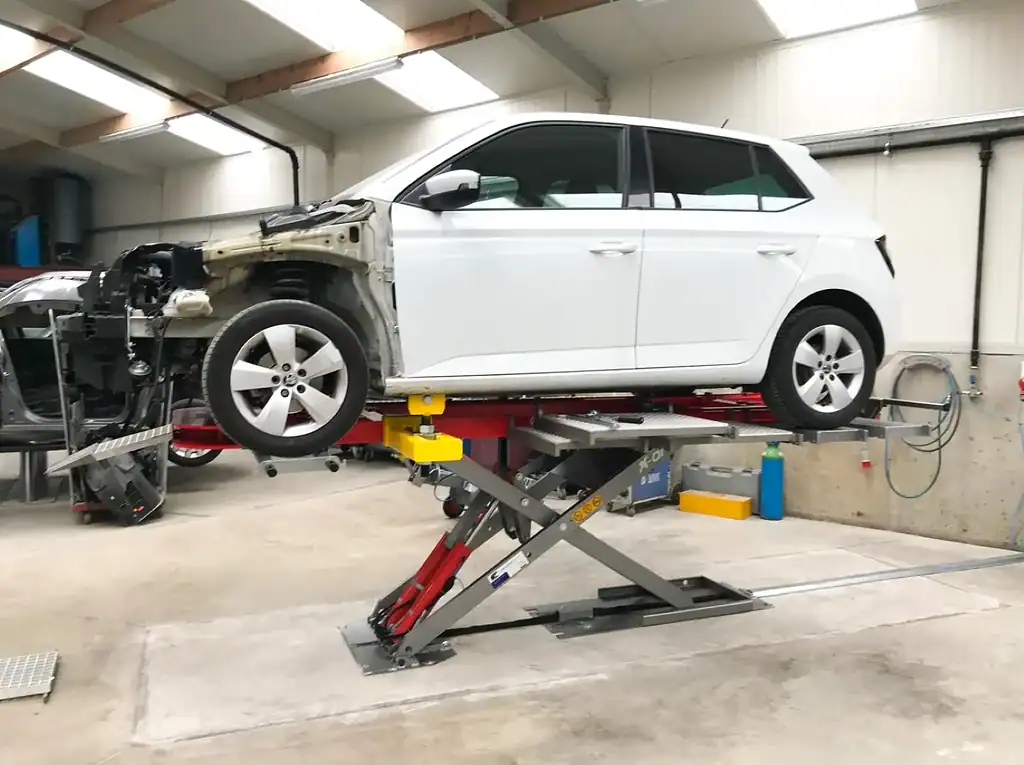
X-One: The Swift Solution for Cosmetic Repairs
Purpose-built for light, smart, and cosmetic repairs, the X-One platform facilitates quick vehicle loading and efficient pull operations.
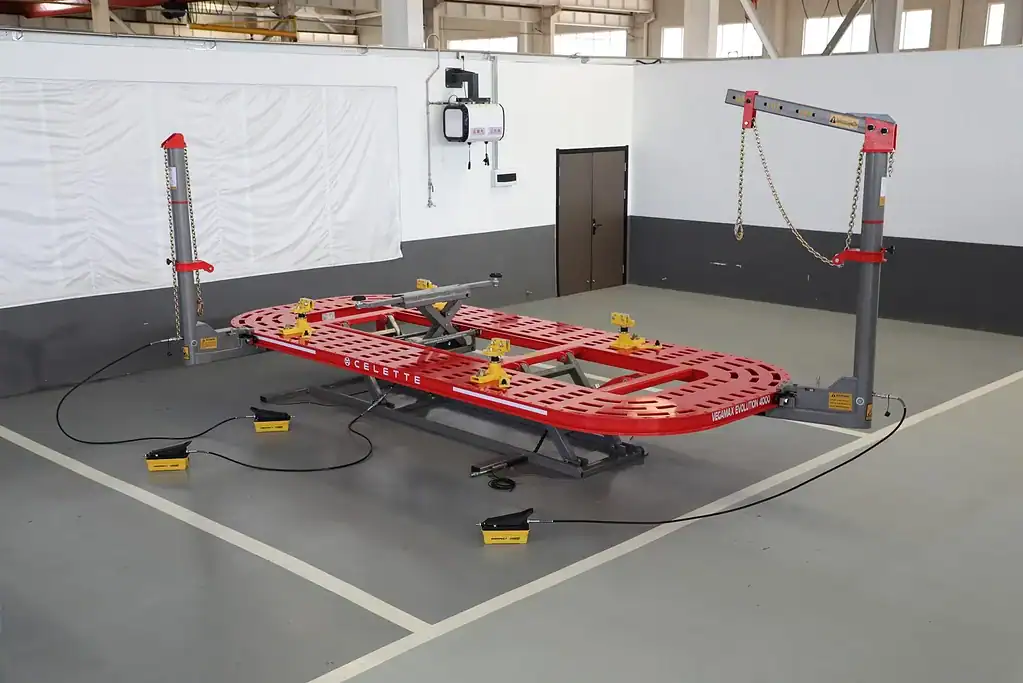
Vegamax: Heavy-Duty Performance
Engineered for versatility in repairing all types of vehicles, including passenger cars, SUVs, and light commercial vehicles, Vegamax features a long, reinforced deck designed to handle even the largest repair jobs.
Choose the Right Body Shop Lift and Pull System
The decision usually comes down to what the shop actually repairs:
- Mostly panel, smart and cosmetic work: The X-One matches that intake and keeps loading times short.
- Mixed intake with regular light to medium structural damage: The X-Trac is the general-purpose answer, and its dual function makes it the most flexible platform in the range.
- Heavier repairs, light commercial vehicles, multi-directional damage: The Vegamax and its two-tower configuration handle work the smaller platforms are not built for.
- Bay dimensions: Platform length and the clearance needed around it are considered, particularly for the 360-degree configurations where the towers travel around the vehicle.
- Existing equipment: A shop already running CELETTE compact auto body repair benches, jigs, or measuring systems should choose a platform that works alongside them rather than duplicating capability.
While these are platforms for light and medium pulling platform collision repair work, CELETTE’s jig-equipped bench Sevenne, Rhone, and Griffon ranges are more suitable for certified structural repair requiring millimetric reference against manufacturer data.
When to Choose a Scissor Lift Bench Instead
Some collision repair shops consider whether a scissor lift bench setup would be better than a pulling platform. The answer depends on the amount of certified structural work they do. A bench holds the vehicle on a fixed platform with dedicated or universal jigs positioning it at manufacturer reference points. If your work involves manufacturer certification programs, bonded and riveted structures, or electric vehicles where battery enclosure geometry has almost no tolerance, the bench is the correct choice. Plenty of shops end up using the platform for volume and light structural work and the bench, like an extra-long drive-on bench, for certified repairs, with the platform doing double duty as the lift underneath it.

Why Choose CELETTE Lifting and Pulling Platforms for Collision Repair?
- Unmatched safety features to protect your team and every vehicle
- Combining lifting and pulling in one position leads to faster repair turnaround, designed to maximize workshop efficiency
- Global OEM approvals, the CELETTE range is trusted by leading automakers
- Future-ready compatibility and seamless integration with CELETTE’s advanced electronic measuring solutions
- Over 70 years of collision repair equipment engineering
Request a Demonstration or Platform Recommendation
Contact CELETTE to arrange a demonstration, request a quotation, and discuss which body shop lift and pull system suits your repair needs.
Frequently Asked Questions About Lifting and Pulling Platforms
Q: What is the difference between a standard workshop lift and an auto body lifting platform?
A: A standard lift raises a vehicle for service access. A lifting and pulling platform raises it and anchors it against several tons of applied force, holding the geometry steady during a structural pull. A general workshop lift is not built for that load and should not be used for pulling.
Q: How much can the CELETTE X-Trac lift and pull?
A: The X-TRAC lifts 4,000 kg, approximately 8,800 lbs, which covers most passenger vehicles, SUVs and light commercial vehicles. Its pulling table applies up to 10 tons of force. The platform is APAVE certified for European safety and performance standards.
Q: Can a CELETTE platform be used as a scissor lift bench for a repair bench?
A: The X-Trac has a secondary function as a lifting table for the Sevenne bench. With the bench on wheels, it can be raised to a comfortable working height for zinc primer application, adhesive bonding, riveting, cutting, welding and inspection.
Q: Which CELETTE platform suits a shop doing mostly cosmetic repair?
A: The X-One is purpose-built for light, smart and cosmetic work, with quick vehicle loading and efficient pull operations. It suits express bays and keeps the main straightening bay free for heavier jobs.
Q: Do platforms replace a jig-equipped bench for structural repair?
A: No. Platforms are built for light and medium pulling platform collision repair work. Certified structural repair requiring millimetric reference against manufacturer data belongs on a bench with dedicated or universal jigs. Many shops operate both.
Q: Can the structure be measured while the vehicle is being pulled?
A: Yes. With the vehicle raised on the platform, NAJA 3D sensors position quickly through the open underbody and measure during the pull itself, working to ±0.7 mm. The technician monitors movement live and confirms each correction as it happens, which is how over-pulling gets avoided.
Q: How is the vehicle held during a pull?
A: Vehicles are lifted and secured by the wheels or by pinch weld clamps, which keeps the underbody and bodywork clear for anchoring, measurement and repair. The Vegamax is supplied with four anchoring blocks and accessories for frame and unibody vehicles.
