
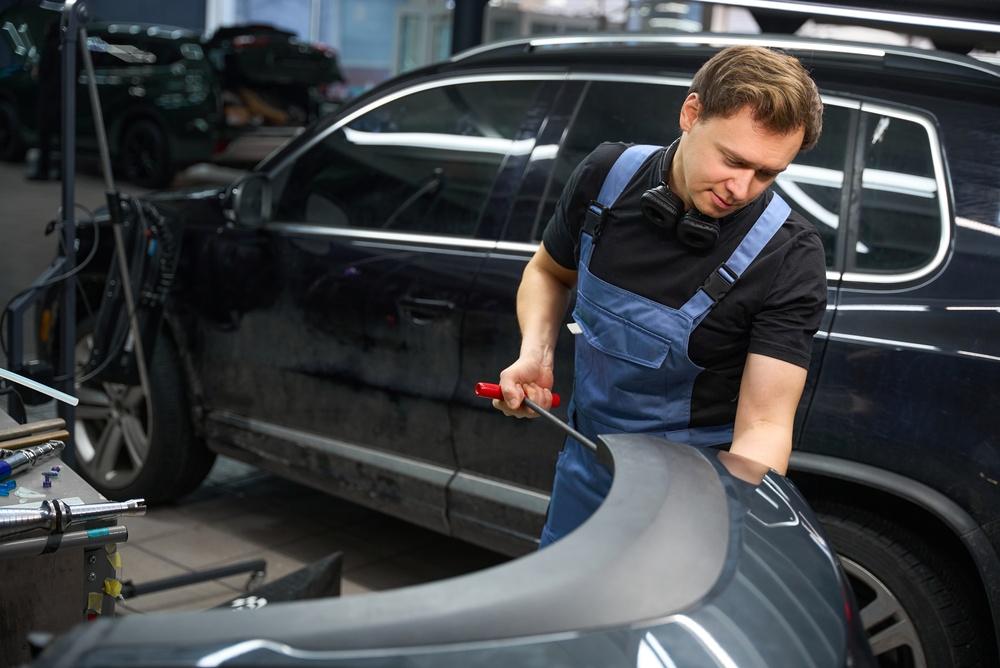
Steel still dominates the global collision repair floor, but aluminum has moved from hood panels and exotic sports cars into mainstream structural components across pickups, SUVs, and increasingly EVs. Shops that haven’t updated their setup are quietly turning away work they don’t realize they’re losing.
Aluminum has a tangible material difference, as it work-hardens, deforms differently under heat, and corrodes in ways that have nothing to do with rust. As such, using steel repair methods produces both visible and invisible problems, with the invisible ones often causing structural failures months down the line.
Here’s what to know about how aluminum behaves, what dedicated tooling and work environment the material requires, a step-level view of the repair procedure, OEM compliance considerations, and what to look for when selecting equipment partners.
Why Aluminum Behaves Differently from Steel
Aluminum work-hardens as it deforms. That means reshaping gets progressively more difficult without cracking, unlike mild steel, which deforms more predictably under repeat force. Moreover, aluminum has a different heat sensitivity by bearing a lower melting point and greater thermal conductivity, so heat spreads faster and the tolerance for welding error is narrower.
Springback is another factor, where aluminum returns more aggressively toward its original shape after force is applied, which changes how technicians plan pulls and reshaping sequences. Aluminum also has a different corrosion mechanism; aluminum doesn’t oxidize the same way steel does, which means it does not rust, but galvanic corrosion occurs rapidly when aluminum contacts steel particles. That makes cross-contamination a structural issue, not a cosmetic one.
Practically speaking, every tool that has touched a steel panel must be kept entirely separate from aluminum work.
Setting Up a Dedicated Work Environment for Aluminum Repair
Aluminum repairs cannot share a bay with steel work. Airborne steel particles embed in aluminum surfaces and initiate galvanic corrosion that stays invisible until it becomes structural. This alone rules out mixed-use bays.
Dust extraction is the next non-negotiable factor. Aluminum grinding dust is classified as potentially explosive under certain concentrations, which is why immersion-type wet-mix extraction systems are required instead of standard shop vacuums. In practice, this calls for tool segregation where separate hand tools, dollies, welding wire, grinding wheels, and storage areas are reserved for aluminum only. Color-coding and labeling are standard in certified facilities.
Environmental controls round out the setup, involving a dedicated bay or curtained area, temperature monitoring, and housekeeping procedures that specifically prohibit dry sweeping (which throws dust back into the air). OEM position statements, with Ford’s aluminum structural repair guidance being the most referenced, mandate these facility conditions as a baseline for certification eligibility.
Core Equipment for Aluminum Collision Repair
For aluminum collision repair, an equipment list includes several important pieces:
- Aluminum-capable frame machine or bench. Unibody aluminum structures require precisely controlled pulling forces, and standard steel-focused benches lack the fixture compatibility and measurement integration needed for accurate work.
- Fixture systems. Mandatory alongside the bench itself for secure holding and positioning of parts. Celette’s MZ dedicated fixtures provide model-specific anchoring, and the Cameleon universal jig covers the wider vehicle mix using OEM 3D CAD data. Both are considered essential equipment for structural aluminum work, because aluminum’s deformation characteristics make fixture-anchored repair the reliable baseline.
- 3D measuring systems. Pre-repair damage mapping and post-repair verification against OEM geometry are non-negotiable for aluminum.
- Pulse MIG welders dedicated to aluminum (220V, correct wire alloy and shielding gas) are required, kept separate from steel welders.
- Self-piercing rivet (SPR) guns and rivet-bonding systems. These handle OEM-specified joining methods for structural aluminum joints.
- Aluminum dent repair stations. These encompass stud welders, pulling bars, and glue pull systems for working on aluminum panels without overheating or marring.
- Aluminum-only hand tool set. This includes synthetic wedges, trim tools, and weld breakers. Steel hand tools leave particles that initiate galvanic corrosion, with no cleaning workaround.
How to Repair Aluminum Body Panels: Procedure Overview
- Damage assessment and OEM data review. The technician needs to identify whether the damage falls within the manufacturer’s repair limits or triggers section replacement.
- Panel removal and surface preparation. This involves drilling out spot welds and removing OEM rivets without contaminating the aluminum substrate, plus oxide removal before any welding or bonding.
- Straightening and dent repair. Aluminum-appropriate tools are used with managed heat input. Glue pull is often the right choice for accessible exterior damage because it avoids disrupting the OEM coating on the reverse side.
- Welding, riveting, and bonding. These steps follow a strict sequence: test-fit, clamp, measure, then join per OEM procedure, combining structural adhesive with SPR or blind rivets where specified.
- Corrosion protection, sealing, and refinishing. The final steps for closing the job. Bare aluminum needs prompt coating, and primer chemistry, sanding approach, and seam sealer compatibility all differ from equivalent steel workflows.
OEM Compliance and Ford Aluminum Body Repair Procedures
For Ford aluminum body repair procedures, Ford’s aluminum structural repair position statement is the most detailed public reference. It specifies facility setup, approved tooling, and technician certification. Ford F-150 and Ranger certification minimums include a 220V pulse MIG welder, a Ford-approved SPR gun, an aluminum dent extraction system, and wet-mix dust extraction.
For current OEM documentation, these live on and should be gathered from manufacturer collision portals. Generic trade databases should be avoided as improvising on OEM-specified joining methods carries real liability, because incorrect fastener type or placement compromises crash performance in ways that can’t be detected without destructive testing.
Post-repair verification includes dimensional measurement, corrosion protection confirmation, and ADAS calibration wherever sensor positioning has been affected.
Equipment Partner Selection for Aluminum Shops
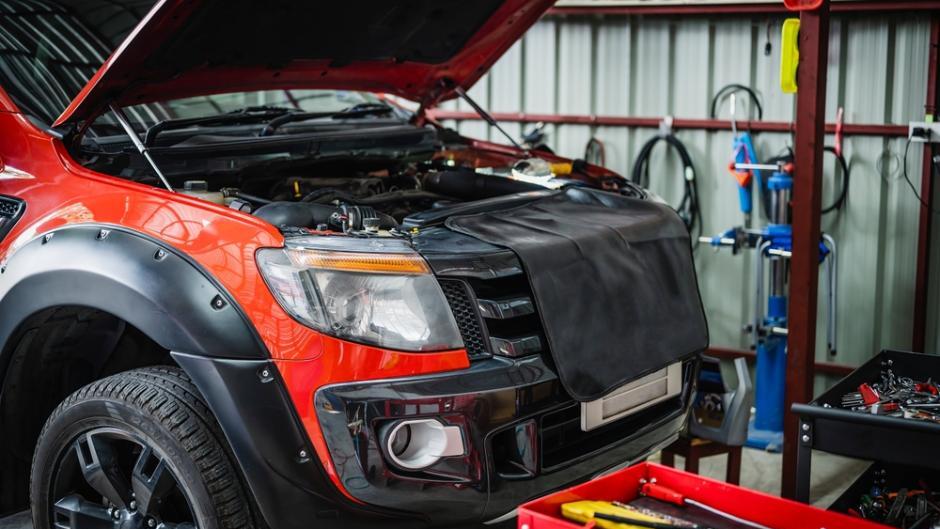
Capability for aluminum car body repair depends heavily on the structural equipment at the center of the workflow, encompassing frame machines, benches, measuring systems, and fixture sets. When looking for a body shop repair equipment manufacturer, factors to consider are their OEM approval credentials, compatibility with aluminum and multi-material vehicles, measuring system integration, and long-term technical support.
Celette has been developing auto body frame machines since 1953. Our current benches support aluminum-intensive unibody and mixed-material repair, with NAJA 3D Evolution and Eagle measuring systems integrated for dimensional reporting. Our MZ dedicated fixture system and Cameleon universal jig handle the fixture side, with Cameleon providing OEM 3D CAD-guided positioning across current and future vehicle models.
Build the Equipment Foundation for Aluminum Repair
Aluminum collision repair demands a fully separated work environment, dedicated tooling for each process stage, and OEM-compliant procedures for joining and corrosion protection. Shops that approach it with adapted steel equipment produce technically compromised repairs that often aren’t visible until structural failure occurs, which makes having the right repair equipment a real necessity.
At Celette, we provide a complete structural repair equipment range, from auto body frame machines and 3D measuring systems to universal jig solutions validated by global OEMs, giving aluminum-capable shops the equipment foundation the work requires.
Reach out to Celette today as your body shop repair equipment manufacturer for proper aluminum repair, or contact [email protected] to discuss your shop’s setup requirements.
References:
Ford Position Statement: Aluminum Structural Repair. Retrieved July 14, 2026, from https://www.oem1stop.com/sites/default/files/FORD%20Position%20Statement%20Aluminum%20Structural%20Repair%20FNL%20(9-30-25).pdf
Combustible Dust in Industry: Preventing and Mitigating the Effects of Fire and Explosions. Retrieved July14, 2026, from https://www.osha.gov/publications/combustibledustposter
Frequently Asked Questions About Aluminum Auto Body Repair
Q: Can any collision shop safely handle aluminum body repair?
A: No. Aluminum repair requires dedicated tools, separated work areas, wet-mix dust extraction, and OEM-approved procedures. Without those, repairs can compromise safety and long-term corrosion resistance in ways that often go undetected until failure.
Q: Why does aluminum collision repair cost more than steel repair?
A: The additional cost reflects specialized equipment, dedicated work areas, higher material costs, and the need for certified technicians. Shops also invest in duplicate tool sets, dedicated welders, and separate dust extraction systems that steel work doesn’t require.
Q: What role does a frame machine play in aluminum repairs?
A: An aluminum-capable frame machine provides the controlled pulling forces and measurement integration needed to restore OEM geometry after a collision. It works with fixture sets and measuring systems to verify accuracy at every stage of the repair.
Q: Are the MZ system and Cameleon jig mandatory for aluminum work?
A: For structural aluminum repair, fixture-based positioning is the reliable baseline. The MZ dedicated fixture system handles model-specific work, and the Cameleon universal jig covers the wider vehicle mix using OEM 3D CAD data. Together they form the core positioning setup for shops running aluminum auto body repair at scale.




