

The term “certification” in the collision repair industry is frequently applied without precision. For some stores, it’s a marketing emblem; for others, it’s a guiding principle for operations. The second group usually secures the work.
With OEM-approved collision repair certification, this is an important set of standards for training, equipment, and process that a manufacturer or independent body will audit against. Passing that audit changes what jobs a shop can take, which insurers refer to it, and how confidently it can repair vehicles built with ultra-high-strength steels, aluminum, and integrated ADAS systems.
Here’s what body shop certification really involves, why it matters more than it used to, and the practical steps to qualify.
What Body Shop Certification Actually Means
The term covers two related but distinct things.
- Shop-level certification is formal recognition that a repair facility meets defined standards for training, equipment, and process. OEM-approved collision networks (Ford, BMW, Honda, Tesla, and others) sit here, as does I-CAR Gold Class at the industry level.
- Technician-level credentials are qualifications earned by individual staff. ASE collision certifications (the B2 through B6 series covering structural, non-structural, plastics, mechanical, and refinishing work) are the main examples, along with I-CAR role-based training.
The distinction is important because a shop can have well-credentialed technicians without holding shop-level OEM approval, and vice versa. Full collision certification generally requires both.
Programs come in two types: brand-specific OEM networks with their own equipment lists and audit protocols, and cross-brand industry programs such as I-CAR Gold Class and VeriFacts that set baseline standards regardless of vehicle make.
Why OEM Collision Repair Certification Matters
For shops, certification is significant for a few reasons:
Safety and structural integrity. OEM procedures exist to preserve crash performance, crumple zone behavior, and ADAS function. A shop that follows them produces a vehicle that performs the way the manufacturer intended in the next collision.
Warranty and resale protection. Repairs done outside OEM-approved procedures can void manufacturer warranties and drag down resale value. Certification is the paper trail that shows the work was done properly.
Insurance relationships. Insurers use OEM locator tools to steer customers toward certified shops. Direct Repair Program (DRP) status, referral volume, and how quickly supplements get approved are all shaped by certified standing.
Consumer trust. Vehicle owners increasingly check certification before choosing a shop, especially for newer models with complex safety systems. A visible body shop certification is one of the few signals a customer can actually verify.
Core Requirements Every Certified Shop Needs
Every program has its own checklist, but the categories are broadly consistent across manufacturers.
Training and technician credentials:
- I-CAR Gold Class as the baseline for many OEM programs, with role-based ongoing training
- ASE B2 through B6 covering structural, non-structural, plastics, mechanical, and refinishing
- Brand-specific training modules layered on top for each OEM network the shop joins
- Third-party verification (OEConnection and similar) used by some OEMs to audit training compliance
Facility, equipment, and tooling:
- Structural repair benches and frame machines from an approved auto frame machine manufacturer, since most OEM programs publish named equipment lists
- Electronic 3D measuring systems for pre- and post-repair structural verification, often specified by model
- Squeeze-type resistance spot welders, aluminum-dedicated work zones, and ADAS calibration tools where the vehicle mix demands them
- Paint booths and refinishing equipment meeting environmental and quality standards
Documentation and process control:
- Written repair procedures on file for every structural job
- Pre- and post-repair photo documentation
- Pre-scan and post-scan reports covering airbag, ADAS, and safety system verification
- Calibration logs for measuring and welding equipment
Miss one category and the audit stalls. Auditors are looking as much at the paper trail as the tools.
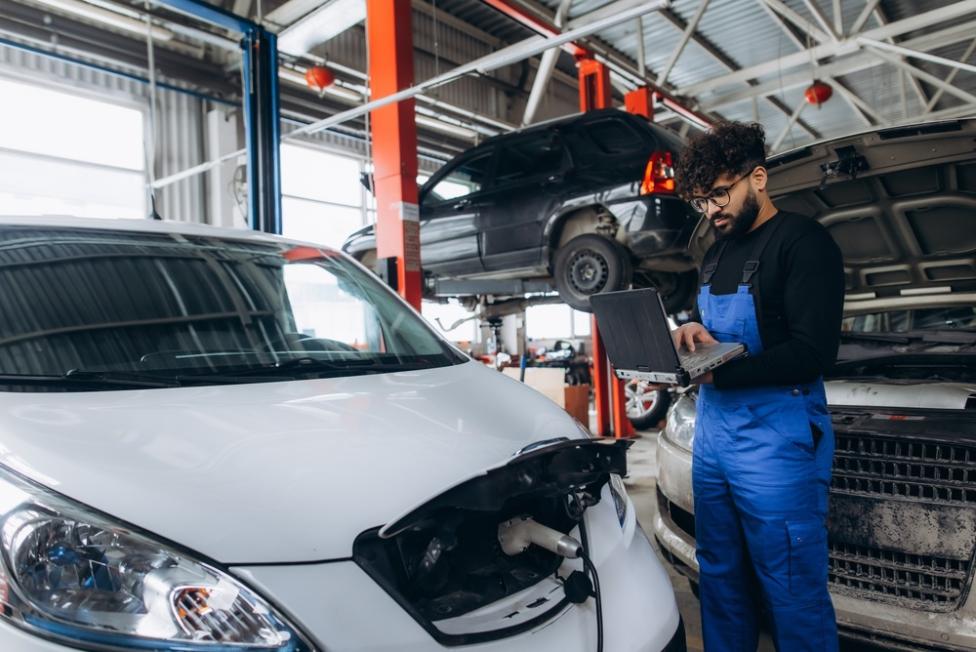
The Roadmap to Getting Certified
Shops that get certified without wasting money tend to follow the same five steps.
Step 1: Gap analysis
Audit current training status, equipment inventory, facility space, and documentation processes against the requirements of the target OEM programs. Gaps on the list are areas to build the investment plan around.
Step 2: Choose the right programs
Use local vehicle registration data and existing DRP relationships to identify which OEM brands represent the highest volume and best return. Start with one or two, not everything at once.
Step 3: Invest in equipment strategically
Equipment spending should follow program requirements. Buy what the target OEM specifies, not what happens to be on sale.
Priorities usually come down to a structural bench and frame machine on the approved list, an accepted 3D measuring system, and ADAS calibration tools for the vehicle types the shop handles.
Step 4: Build a role-based training plan
Map every technician to the training path required by the target program. I-CAR Gold Class in particular requires that all named roles stay current, so the plan needs to be maintainable, not just one-off.
Step 5: Prepare for the audit
Auditors typically review repair orders with photo documentation, pre- and post-scan reports, tool calibration logs, training transcripts, and KPI data. Get these organized and accessible before the inspection date.
How Celette Equipment Supports OEM Certification
Beyond proper training and processes, certified shops need equipment that satisfies the audit. At Celette, we contribute in that regard by holding OEM approvals from leading vehicle manufacturers, having published equipment lines that appear on OEM-approved lists.
Moreover, our NAJA 3D measuring system provides millimeter-accurate pre- and post-repair verification referenced against OEM vehicle data, producing before-and-after reports that meet documentation requirements for both auditors and insurers.
And for comprehensive repair coverage, we engineer frame benches, measuring systems, universal jigs (including the Cameleon platform), welding equipment, and anchoring accessories as one integrated system rather than a collection of parts sourced separately, ensuring seamless compatibility and ease in carrying out the repair process. For shops handling collision repair equipment in the USA market or working across the Asia-Pacific region, this integration under one connected system keeps your audit trail clean.
Set Your Shop Up for Collision Repair Certification
For repair shops, OEM collision repair certification is no longer a nice-to-have. It shapes which vehicles a shop can repair safely, which insurers refer work to it, and how much you can defend the paperwork when a claim is challenged. Shops that are positioning themselves for the next generation of vehicle complexity need certification as an operating discipline, built on quality training, equipment, and processes.
Here at Celette, our role in that discipline is grounded, with OEM approvals from leading vehicle manufacturers globally, a footprint in over 100 countries for parts supply and technical support, and an integrated equipment ecosystem covering benches, measuring, jigs, and welding built to work together. Our combination makes hitting OEM audit requirements just a matter of setup.
If OEM certification is on your roadmap, reach out to us today to get started. As a collision repair equipment USA supplier and auto frame machine manufacturer, we provide equipment that appears on OEM-approved lists and helps pave the way for your OEM collision repair certification.
References:
I-CAR Gold Class® Recognition – Collision Repair Industry. Retrieved Jul 13, 2026, from https://info.i-car.com/gold-class
Collision Repair & Refinish Certification Tests, B Series. Retrieved Jul 13, 2026, from https://ase.com/tests/b2-b5/
ASE Automobile & Light Truck Certification Tests (B-Series Collision Repair and Refinish). Retrieved Jul 13, 2026, from https://www.ase.com/tests/ase-certification-tests/automobile-and-light-truck
Frequently Asked Questions About Body Shop Certification
Q: What is the difference between shop-level and technician-level body shop certification?
A: Shop-level certification is formal recognition that the whole facility meets an OEM’s or industry body’s standards for training, equipment, and process. Technician-level credentials, such as ASE B2 to B6 or I-CAR role-based training, are earned by individual staff members. A shop needs both to hold full OEM collision repair certification.
Q: How long does OEM collision certification take to obtain?
A: Timelines vary by program, but a shop starting from scratch on training, equipment, and documentation typically needs six to twelve months to close gaps, complete the audit, and get listed. Shops with existing I-CAR Gold Class status and modern equipment tend to move faster.
Q: Do I need equipment from a specific auto frame machine manufacturer to qualify?
A: Most OEM programs publish approved equipment lists that name specific manufacturers and models. Buying from an approved manufacturer, such as Celette, satisfies that part of the audit directly. Buying outside the list can mean re-investment before certification.
Q: What happens if a certified shop skips OEM procedures on a repair?
A: The consequences range from failed audit sampling and loss of certification to voided manufacturer warranties on the repaired vehicle and possible liability exposure if the repair fails in a subsequent collision. Certified status carries an ongoing obligation to follow the procedures the certification was granted against.




