Recalibrating sensors after vehicle repair requires specific ADAS calibration equipment, and most shops are still figuring out what they actually need, whether to go fixed or mobile, and how structural accuracy ties into the process. Let’s look at a possible scenario: The shop completes a bumper repair with perfect paint and precise panel gaps, leaving the customer pleased. After two weeks, the car’s automatic emergency braking engaged unexpectedly in traffic. The radar sensor behind the bumper moved during repairs, and it wasn’t recalibrated.
This scenario is increasingly prevalent due to the growing number of sensor-driven safety systems in vehicles!
What Is ADAS Calibration?
ADAS calibration is the process of realigning a vehicle’s safety sensors to their correct reference positions after something has disturbed them. When sensors are off, the systems they support (automatic braking, lane assist, parking sensors) operate on inaccurate data. That compromises both performance and safety.
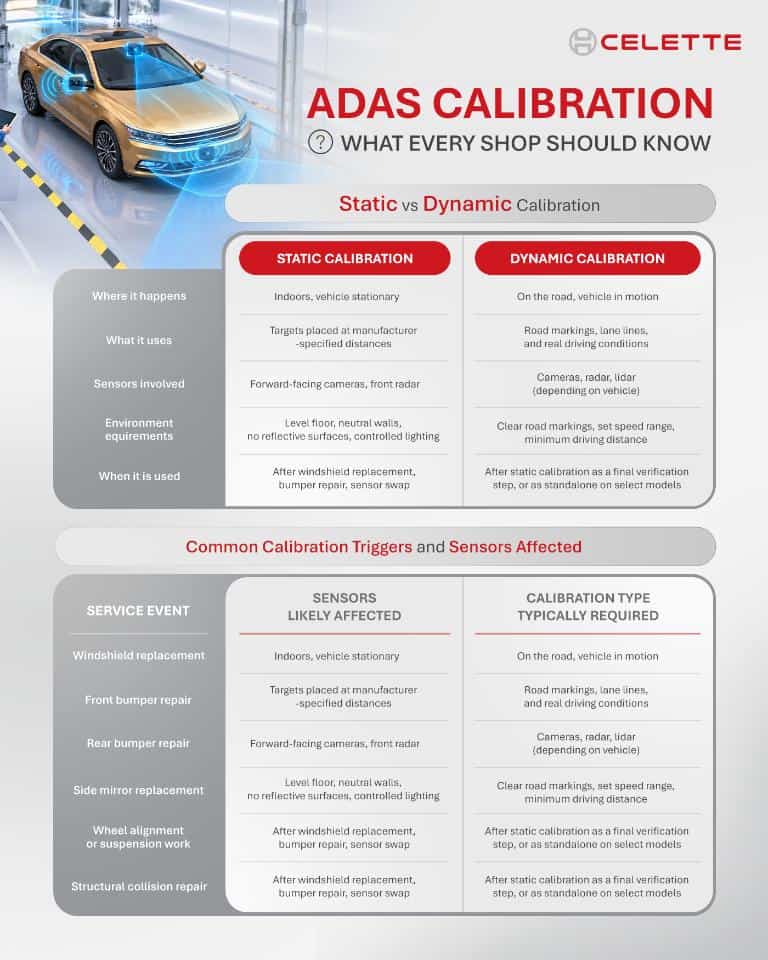
Calibration is triggered by common service events:
- Windshield replacement
- Bumper repair or removal
- Sensor replacement
- Wheel alignment changes
- Suspension repair
- Collision repair
Anything that physically moves a sensor or alters the geometry it is mounted to create a need for recalibration. How that recalibration is performed depends on the vehicle and the sensor type.
Static calibration is performed indoors with the vehicle stationary and targets placed at manufacturer-specified distances. Dynamic calibration requires driving the vehicle under controlled conditions while the scan tool monitors sensors as they self-align. Some vehicles need both, one after the other.
The system does not consistently activate dashboard warnings when sensors go out of calibration. Because the system can misalign without the driver noticing, calibration should be a standard post-repair step, rather than waiting for a warning light. The following analysis outlines the distinctions between static and dynamic procedures and identifies the service events that initiate them.
What Makes Up an ADAS Calibration System?
Knowing when and how calibration works is one thing. Having the right hardware to execute it is another. A complete ADAS calibration system has four main components, and each one has to work correctly for the result to be reliable.
- Diagnostic scan tools initiate the calibration, access manufacturer-specific procedures, read fault codes, and record results before and after. Most manufacturer workflows run through the scan tool’s software, making it the central piece of the operation.
- Calibration frames and stands hold targets at the exact height, distance, and angle the manufacturer specifies. Fixed installations bolted into a dedicated bay give repeatability between jobs. Portable frames offer flexibility but require precise manual setup each time.
- Targets and patterns are the reference points sensors align to during calibration. Camera targets use black-and-white printed patterns. Radar targets use reflective metal shapes or electronic signal modules. Requirements change by manufacturer and model year, making the target library the most variable cost.
- Guided calibration software ties the workflow together with step-by-step procedures, built-in documentation, and OEM procedure lookups.
This is why most shops invest in integrated ADAS calibration systems rather than sourcing components individually. Bundled packages cut training time and reduce the chance of procedural errors. The next decision is whether that system stays in one place or moves with the work.
Fixed vs. Mobile ADAS Calibration Equipment
Fixed setups work best when a shop has a dedicated calibration bay and consistent daily volume.
- The frame stays in position between jobs, so there is no re-setup.
- Targets stay organized, and floor markings hold accuracy from one vehicle to the next.
- Less setup time per job means faster throughput overall.
Mobile ADAS calibration equipment suits a different operational model.
- Foldable frames and compact target kits are designed to move between bays or travel off-site.
- Best for glass replacement specialists, multi-location operations, and shops without a spare bay to dedicate.
- Setup time is longer because the frame must be positioned and leveled for each job.
- Power stability and consistent documentation across locations need to be managed carefully.
Accuracy standards do not change between the two. Whether the frame is bolted to the floor or positioned on casters, the manufacturer’s target specifications, distance tolerances, and software procedures apply equally. Portability changes the logistics, not the requirements.
Choosing the Right Setup for Your Shop
Four factors drive the decision:
- Daily volume. High-volume shops get more value from fixed installations. Lower or irregular volume favors mobile.
- Vehicle brand mix. More brands means a bigger target library and higher upfront cost. Shops focused on a few brands keep costs manageable.
- Bay space. A dedicated bay supports a permanent installation. Limited or shared space points toward portable or mobile ADAS calibration equipment.
- Service model. Fixed-location shops and mobile providers have different operational needs. The equipment should match.
Calculating the ROI is straightforward. Sum the calibration sublet charges and delays over the last half-year if outsourcing is the current practice. Contrast that with the expense of internal development. When a large portion of repair orders at shops require calibration, the return on investment is usually quicker than anticipated. However, even with the correct calibration setup, one additional step must precede it.
Why Structural Accuracy Comes Before Calibration
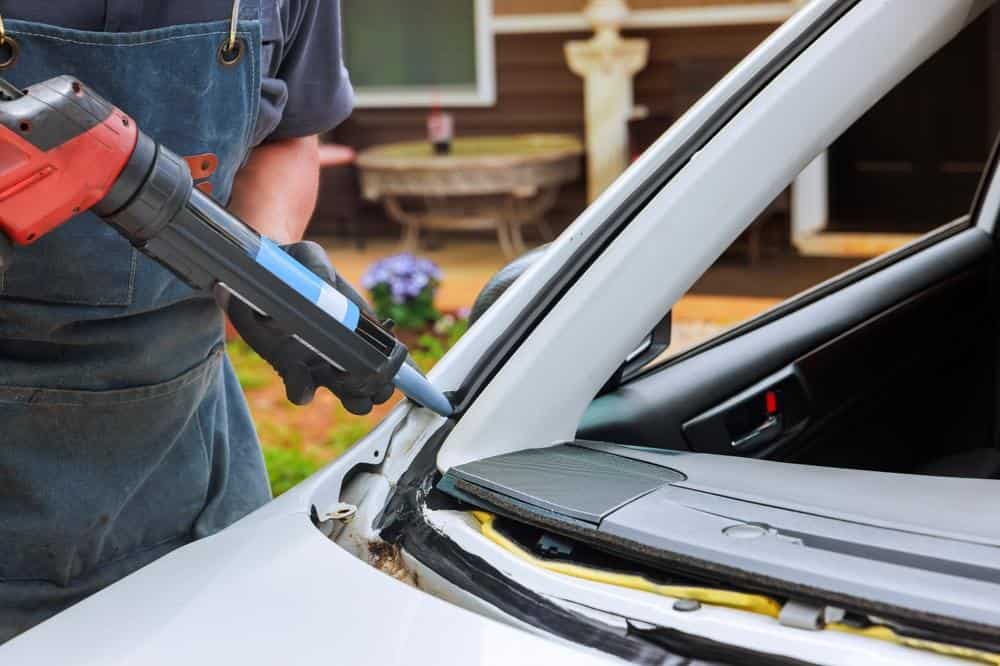
ADAS calibration is only as reliable as the structural geometry underneath it. If the frame or unibody has not been restored to factory dimensions, the calibration process may complete without errors, but the sensors are still aimed off a skewed reference plane. The vehicle must be repaired on jig systems to meet the accuracy requirements ADAS demands, and the structure has to be measured and verified before any sensor work starts.
Celette does not manufacture the scan tools, target stands, or calibration software used in the ADAS calibration process itself. What Celette provides is the structural measurement foundation that has to be in place before any of that equipment can do its job. The NAJA 3D, Celette’s 3D frame measuring system, checks the vehicle’s structure against OEM-approved reference data from a database covering over 20,000 vehicles, giving technicians a clear pass-or-fail answer with green/red tolerance indicators. It handles both pre-repair damage assessment and post-repair verification, and works with Celette benches (Sevenne, Rhone, Griffon), lifts, and floor setups without requiring layout changes.
Setting Up Your Shop for ADAS-Ready Repairs
ADAS calibration is quickly becoming one of the most requested services in collision repair. The vehicles are already arriving with these systems, and the percentage grows every model year. Shops that invest in the right equipment now handle the work in-house instead of sending it out, and those that pair calibration capability with a verified auto body measuring system cover the full workflow from frame to sensor.
The priority is matching the calibration setup to the shop’s size, vehicle mix, and daily workflow, then confirming structural accuracy before any sensor work takes place.
Explore how Celette’s NAJA 3D integrates into an ADAS-ready repair workflow. Contact [email protected] to schedule a demo.
References:
- What is ADAS Calibration? Full Guide to ADAS Calibration. Everything You Need To Know. Retrieved 18 August 2026, from https://caradas.com/what-is-adas-calibration/
- Basic Guide: ADAS Calibration Equipment. Retrieved 28 August 2026, from https://caradas.com/basic-guide-adas-calibration-equipment/
- ADAS Cameras: How They Work and Why They Need Calibration. Retrieved 18 August 2026, from https://www.caliber.com/services/auto-glass/auto-glass-calibration/adas-cameras-and-why-they-need-calibration
Frequently Asked Questions About ADAS Calibration
Q: Can a vehicle pass ADAS calibration if the frame is not straight?
A: The calibration process itself may complete without errors, but the result will be inaccurate. If the frame or unibody is not within factory tolerances, sensors are aimed off a skewed reference plane. The vehicle will pass the software check, but the sensors will still be pointing in the wrong direction. Structural measurement before calibration is the only way to catch this.
Q: How long does an ADAS calibration take?
A: A single static calibration typically takes 30 minutes to an hour, depending on the vehicle and sensor type. Dynamic calibration adds a controlled test drive on top of that. Vehicles that need both procedures, or those requiring multiple sensor types to be calibrated, can take longer. Setup and teardown time also varies between fixed and mobile configurations.
Q: Does every collision repair require ADAS calibration?
A: Not every repair, but most that involve areas where sensors are mounted. Any work that affects the bumper, windshield, grille, side mirrors, or suspension can shift a sensor enough to require recalibration. Some manufacturers now require it after all structural collision repairs, regardless of impact location. The safest approach is to check the manufacturer’s repair procedures for each vehicle.
Q: What happens if ADAS calibration is skipped after a repair?
A: The vehicle’s safety systems may function unpredictably. Automatic emergency braking could activate late or at the wrong time. Lane keeping could misread road markings. Blind-spot monitoring could miss vehicles in adjacent lanes. These failures may not produce a dashboard warning, which means the driver has no way of knowing the systems are compromised until they fail in a real situation.