Modern cars have a pre-installed sacrifice zone. This car component is engineered to fail, protecting you from harm. That seemingly simple idea is one of the most important safety innovations in car design in the last seven decades. And yet, most drivers never think about the crumple zone of a car until they’ve been in an accident and seen the aftermath firsthand.
This guide covers what a crumple zone is, how it protects occupants during a crash, and what happens to a vehicle’s structure once that protection has been activated. We’ll also look at why proper assessment and repair after crumple zone damage is critical for restoring vehicle safety.
What is a Crumple Zone?
A crumple zone is an area of a vehicle specifically engineered to deform in a controlled way during a collision. These areas are usually at the car’s front and back, situated between the impact zone and the strong passenger area.
The concept dates back to 1952, when Mercedes-Benz engineer Bela Barenyi patented a vehicle body design with deliberately deformable front and rear sections. His insight was counterintuitive at the time: a car that crumples on purpose is actually safer than one built to stay rigid.
Why they matter:
- Energy absorption: Crumple zones convert kinetic energy into deformation energy, reducing the force that reaches the people inside.
- Extended deceleration time: By collapsing progressively, the car crumple zone slows the vehicle over a longer period, which lowers the peak force on occupants.
- Cabin protection: While the surrounding structure deforms, the passenger cell (also called the safety cage) is built from high-strength steel to remain as intact as possible.
How Does a Crumple Zone Work?
Energy Absorption During a Collision
When a vehicle strikes an object, the crumple zone compresses in a controlled sequence. The crash’s kinetic energy is converted into heat and structural deformation by the inward folding of longitudinal frame rails, subframes, and crush tubes. A large part of the impact is absorbed by this process before the force impacts the occupant safety cage.
Protecting the Passenger Compartment
The design philosophy is simple: the outer structure sacrifices itself so the inner cabin doesn’t have to. Modern vehicles use a combination of mild steel and aluminum in crumple zones (materials that crush predictably) while reinforcing the passenger cell with ultra-high-strength steel and boron alloys that resist deformation.
Different Types of Impacts
Front-end collisions account for roughly 65% of vehicle impacts, according to research from the British Motor Insurance Repair Research Centre.
That’s why the largest crumple zones sit at the front. However, modern cars also incorporate rear crumple zones for rear-end impacts, plus reinforced door structures and side-impact beams for lateral crashes. Electric vehicles, which lack a traditional engine block up front, actually give engineers more room to design deeper front crumple zones.

What Happens After Crumple Zone Damage?
Structural Deformation Beyond Visible Damage
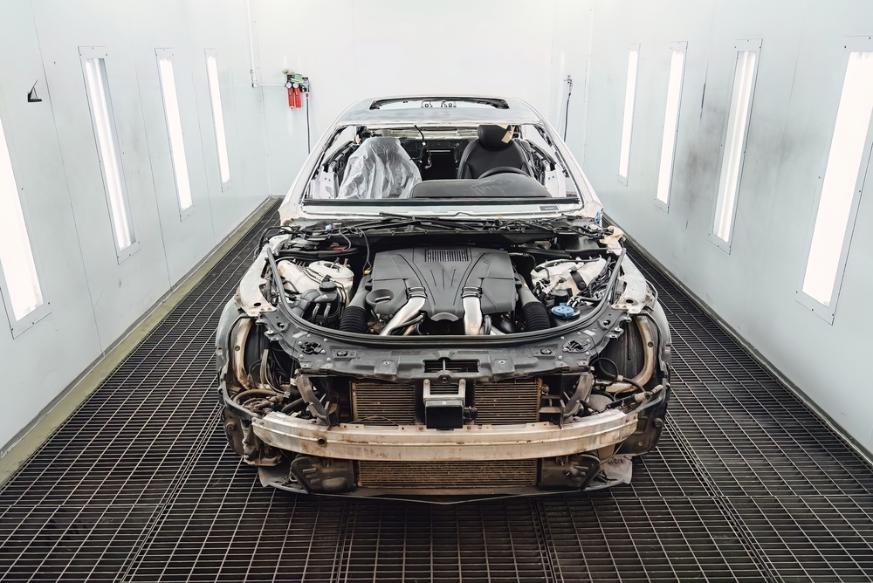
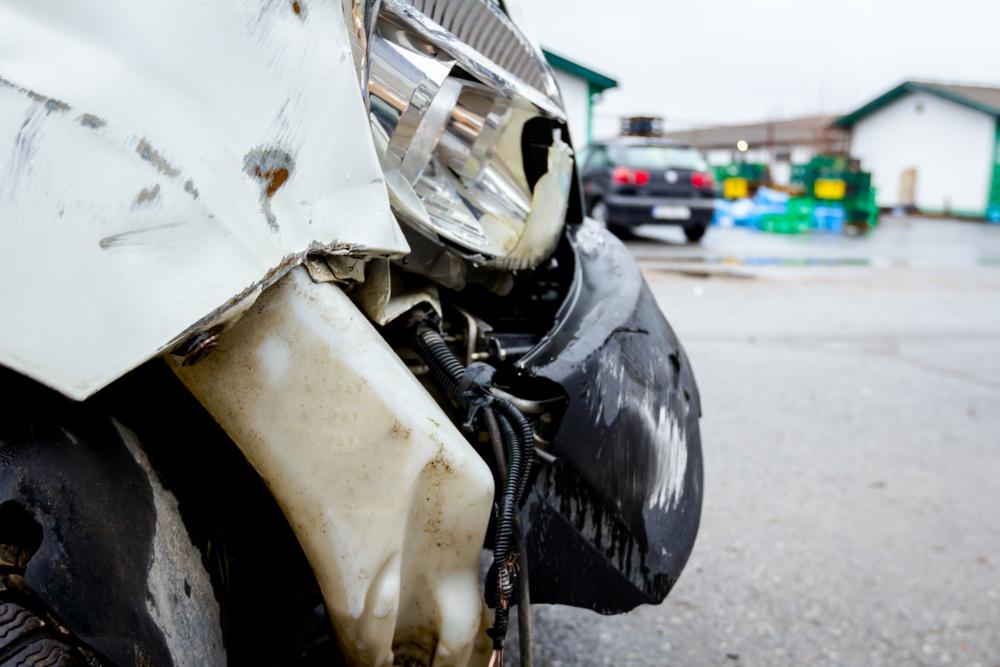
A crumple zone that has done its job will look dramatic. Crushed panels, folded metal, shattered headlights. But the real concern isn’t what you can see. Impact forces travel through the vehicle’s structure, and damage frequently extends into frame rails, pillars, rocker panels, and structural mounting points that sit well beyond the point of contact.
Why Accurate Assessment is Critical
A visual inspection alone cannot reveal the full extent of collision damage after crumple zone activation. A rail that’s shifted by just a few millimeters can affect wheel alignment, suspension geometry, and the positioning of ADAS sensors (cameras, radar, lidar). Without precise measurement, these deviations go undetected, and the vehicle leaves the shop structurally compromised.
How Collision Repair Professionals Assess Frame Damage
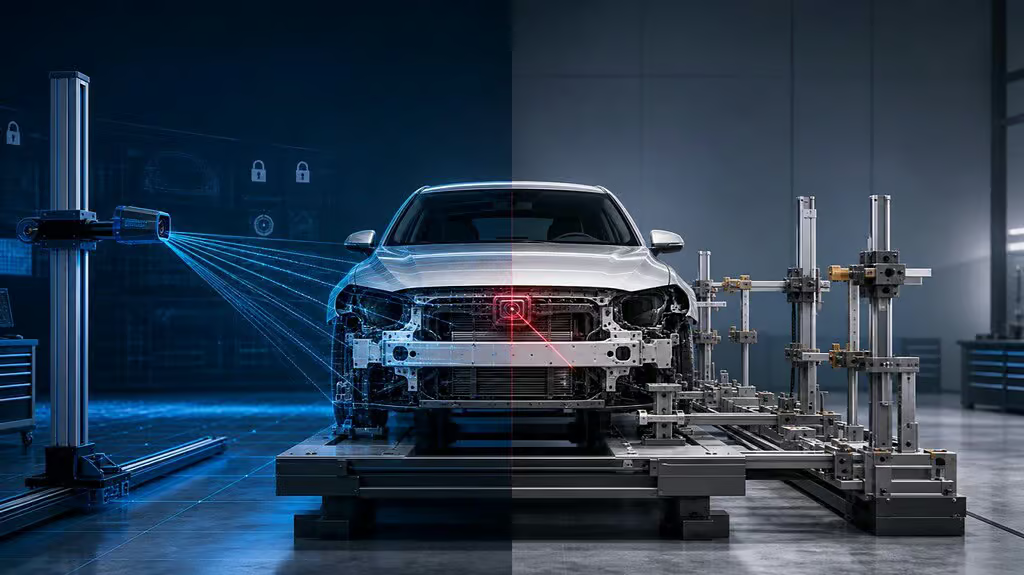
Professional collision repair facilities use electronic measuring systems to compare a damaged vehicle’s actual dimensions against the manufacturer’s original specifications. These systems place targets or sensors at key structural reference points and generate digital readouts showing exactly where and how far the structure has moved from factory geometry.
An auto body measuring system helps repair technicians identify structural displacement, misalignment, hidden frame damage, and specific repair requirements. These systems transform structural diagnosis from a guessing game into measurable data by contrasting real vehicle measurements with OEM specifications. After the repair, the same measurement verifies the structure is back to the manufacturer’s specifications.
Restoring Structural Integrity After a Collision
When measurement confirms structural displacement, the vehicle is mounted on a frame-straightening bench. Specialized clamps anchor the car at key reference points, and hydraulic pulling towers apply controlled force to bring deformed sections back toward factory specifications.
An auto body frame machine allows technicians to execute this process with precision, verifying progress against OEM data throughout the repair.
Why Precision Matters
Vehicle safety systems depend on accurate structural geometry. If the frame isn’t within specification, the consequences compound quickly:
- Crash performance: Crumple zones that have been repaired improperly may not absorb energy correctly in a subsequent collision.
- Handling and alignment: Even small deviations affect steering response and tire wear.
- ADAS calibration: Cameras and radar units mounted to the structure require exact positioning. Structural misalignment throws sensor angles off tolerance, and calibration performed on a misaligned body will produce inaccurate results.
- Future repairability: A poorly restored structure complicates any subsequent repair work on the vehicle.
Why Crumple Zone Repairs Are Not Simple Cosmetic Fixes
Not all collision damage is visible from the outside. Forces travel through connected structural members, and a front impact can affect components halfway down the vehicle’s floor pan.
Celette provides collision repair professionals worldwide with precision auto body frame machines and auto body measuring systems engineered for OEM-level structural accuracy. With over 70 years of experience and installations in more than 100 countries, Celette’s integrated equipment ecosystem supports shops in restoring vehicles to factory specifications. Contact Celette at [email protected] to learn how the right equipment supports safe, verifiable structural repairs.
References:
The history of the ESV models at Mercedes-Benz. Retrieved July 10, 2026, from https://group.mercedes-benz.com/company/tradition/company-history/history-esf.html
Crumple Zone – an overview. Retrieved July 10, 2026, from https://www.sciencedirect.com/topics/engineering/crumple-zone
How Crumple Zones Work. Retrieved July 10, 2026, from https://auto.howstuffworks.com/car-driving-safety/safety-regulatory-devices/crumple-zone.htm
Crashworthiness Research. Retrieved July 10, 2026, from https://www.nhtsa.gov/research-data/crashworthiness
Frequently Asked Questions About Crumple Zones (FAQs)
Q: What is a crumple zone in a car?
A: A crumple zone is an area of a vehicle engineered to deform in a controlled way during a collision. Located primarily at the front and rear, these zones absorb kinetic energy and reduce the force transferred to the passenger compartment, helping protect occupants from serious injury.
Q: How does a crumple zone protect passengers?
A: During a crash, the crumple zone collapses progressively, converting kinetic energy into structural deformation. This extends the time it takes for the vehicle to decelerate, which lowers the peak force experienced by occupants. The passenger cell, built from high-strength materials, is designed to remain intact while the surrounding zones absorb the impact.
Q: Can a vehicle be repaired after crumple zone damage?
A: In many cases, yes. Professional collision repair shops use auto body frame machines and electronic measuring systems to assess the extent of structural damage and restore the vehicle to manufacturer specifications. The repairability depends on the severity of the damage, the materials involved, and whether the passenger cell has been compromised.
Q: How do repair shops measure frame damage after a collision?
A: Repair facilities use electronic 3D measuring systems that place targets at key structural reference points on the vehicle. These systems compare the vehicle’s actual dimensions against OEM factory data, showing exactly where and how far the structure has shifted. This data guides the repair process and provides documentation verifying the final result.
Q: What is an auto body measuring system?
A: An auto body measuring system is a precision tool used in collision repair to compare a damaged vehicle’s structural dimensions against the manufacturer’s original specifications. It identifies hidden frame damage, misalignment, and structural displacement that visual inspection alone cannot detect.
Q: What does an auto body frame machine do?
A: An auto body frame machine is a structural repair bench that secures a damaged vehicle, measures its frame against factory specifications, and uses hydraulic pulling systems to restore deformed structural members to OEM tolerances. It is essential equipment in professional collision repair shops handling structural damage.