

𝐈𝐧𝐭𝐫𝐨𝐝𝐮𝐜𝐭𝐢𝐨𝐧
Accurate dimensional control is the foundation of professional collision repair. Before advanced electronic measuring systems became widespread, body shops around the world relied on tram gauges (also known as tracking gauges) as a primary tool to verify vehicle body dimensions. Even today, tram gauges remain one of the most widely used measuring tools in collision repair due to their simplicity, affordability, and universal applicability.
However, modern vehicles have become significantly more complex. Mixed materials, high-strength steels, aluminum structures, and the widespread integration of ADAS (Advanced Driver Assistance Systems) have dramatically increased the precision requirements for structural repairs. In this evolving environment, traditional measuring tools must be supported by accurate data, clear reference points, and intelligent workflows.
This is where Celette WebTools AI introduces a critical evolution: enabling body shops to use Celette’s OEM-level vehicle database with any tram or tracking gauge on the market, combining the simplicity of manual measurement with the intelligence of digital data.
𝐖𝐡𝐚𝐭 𝐈𝐬 𝐚 𝐓𝐫𝐚𝐦 𝐆𝐚𝐮𝐠𝐞?
A tram gauge is a manual measuring tool designed to check distances between fixed reference points on a vehicle body or chassis. Typically telescopic and adjustable, it allows technicians to compare critical dimensions.
Tram gauges do not measure in absolute coordinates. Instead, they rely on distance comparison between two known points, often referenced against manufacturer specifications.
Because of their simplicity, tram gauges require no software, calibration, or power source, making them extremely robust and universally accessible.
Tram gauge video:
𝐆𝐥𝐨𝐛𝐚𝐥 𝐔𝐬𝐞 𝐨𝐟 𝐓𝐫𝐚𝐦 𝐆𝐚𝐮𝐠𝐞 𝐚𝐧𝐝 𝐓𝐫𝐚𝐜𝐤𝐢𝐧𝐠 𝐆𝐚𝐮𝐠𝐞
Despite the availability of advanced 3D electronic measuring systems, tram gauges are still used worldwide in:
• Independent collision repair shops
• Insurance assessment and preliminary inspections
• Training environments
• Markets where electronic systems are not economically viable
• Quick verification checks during or after repairs
In many regions, tram gauges remain the first step in damage assessment, allowing technicians to quickly identify whether structural deviation exists before committing to more complex repair processes.
They are also commonly used alongside frame benches and floor systems, particularly during pulling operations, to verify dimensional progress in real time.
𝐋𝐢𝐦𝐢𝐭𝐚𝐭𝐢𝐨𝐧𝐬 𝐨𝐟 𝐓𝐫𝐚𝐝𝐢𝐭𝐢𝐨𝐧𝐚𝐥 𝐓𝐫𝐚𝐦 𝐆𝐚𝐮𝐠𝐞 𝐌𝐞𝐚𝐬𝐮𝐫𝐞𝐦𝐞𝐧𝐭
While tram gauges are practical and reliable, they also have inherent limitations that become more evident with modern vehicle designs.
Key Limitations :
1. Dependence on Accurate Data
Tram gauges are only as accurate as the dimensional data they reference. Without reliable OEM measurements, results can be misleading.
2. Lack of Visual Guidance
Traditional tram gauge use requires technicians to manually interpret diagrams or paper data, increasing the risk of human error.
3. No Digital Traceability
Measurements are not automatically recorded, making documentation for insurance or OEM compliance difficult.
These limitations do not make tram gauges obsolete—but they highlight the need for intelligent data integration.
𝐓𝐡𝐞 𝐈𝐦𝐩𝐨𝐫𝐭𝐚𝐧𝐜𝐞 𝐨𝐟 𝐀𝐜𝐜𝐮𝐫𝐚𝐭𝐞 𝐌𝐞𝐚𝐬𝐮𝐫𝐞𝐦𝐞𝐧𝐭 𝐃𝐚𝐭𝐚
Modern collision repair is no longer just about restoring visual appearance.
Structural accuracy directly impacts:
• Vehicle safety
• Passive and active safety systems
• ADAS functionality
• OEM warranty compliance
• Legal and insurance liability
Even small dimensional deviations can lead to improper sensor alignment, steering geometry issues, or incorrect crumple-zone behavior in future impacts.
This is why access to reliable, OEM-based measurement data is now more critical than the measuring tool itself.
𝐈𝐧𝐭𝐫𝐨𝐝𝐮𝐜𝐢𝐧𝐠 𝐂𝐞𝐥𝐞𝐭𝐭𝐞 𝐖𝐞𝐛𝐓𝐨𝐨𝐥𝐬 𝐀𝐈
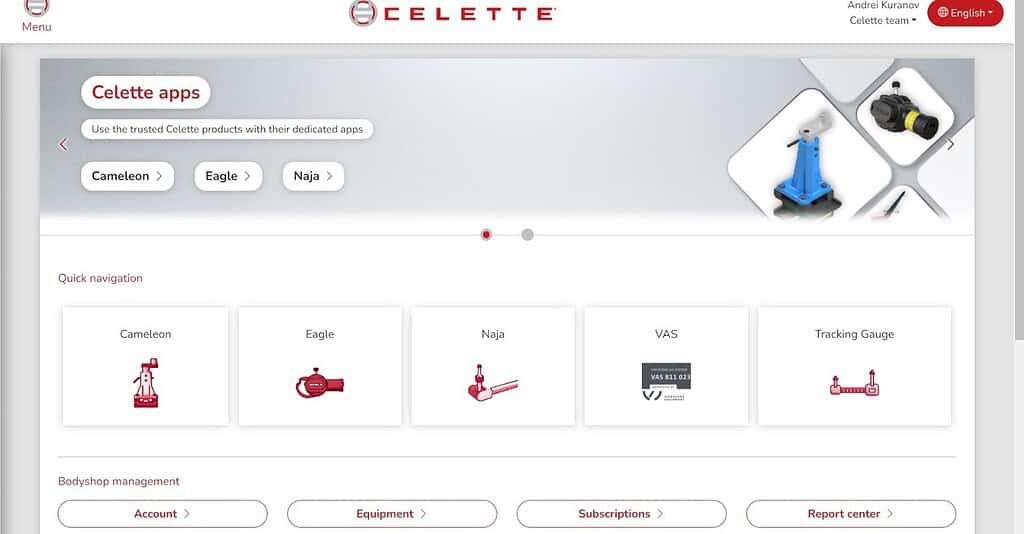
Celette WebTools AI is a cloud-based vehicle data and repair-support platform designed to provide intelligent access to Celette’s extensive vehicle database, developed over decades through OEM collaboration, homologation programs, and real-world collision-repair experience.
Unlike traditional measuring software that is strictly tied to specific hardware, WebTools AI is tool-agnostic, allowing the same database and workflows to support a wide range of measuring and repair solutions. This includes full integration with Celette electronic measuring systems such as 𝐄𝐀𝐆𝐋𝐄 𝐚𝐧𝐝 𝐍𝐀𝐉𝐀 𝟑𝐃, 𝐚𝐬 𝐰𝐞𝐥𝐥 𝐚𝐬 𝐂𝐀𝐌𝐄𝐋𝐄𝐎𝐍 𝐮𝐧𝐢𝐯𝐞𝐫𝐬𝐚𝐥 𝐣𝐢𝐠 𝐬𝐲𝐬𝐭𝐞𝐦𝐬, while also remaining compatible with 𝐭𝐫𝐚𝐦 𝐠𝐚𝐮𝐠𝐞𝐬, 𝐭𝐫𝐚𝐜𝐤𝐢𝐧𝐠 𝐠𝐚𝐮𝐠𝐞𝐬, 𝐚𝐧𝐝 𝐬𝐞𝐥𝐞𝐜𝐭𝐞𝐝 𝐛𝐞𝐧𝐜𝐡 𝐬𝐲𝐬𝐭𝐞𝐦𝐬 𝐟𝐫𝐨𝐦 𝐨𝐭𝐡𝐞𝐫 𝐦𝐚𝐧𝐮𝐟𝐚𝐜𝐭𝐮𝐫𝐞𝐫𝐬.
Beyond digital measurement, WebTools AI also supports physical repair solutions, including the option to order printed or manufactured jigs directly from Celette, ensuring accurate positioning of vehicles on benches and floor systems when jig-based repair methods are required.
𝐂𝐨𝐫𝐞 𝐏𝐮𝐫𝐩𝐨𝐬𝐞 𝐨𝐟 𝐖𝐞𝐛𝐓𝐨𝐨𝐥𝐬 𝐀𝐈
• Provide accurate OEM-based structural reference data across multiple vehicle types
• Support electronic measuring (EAGLE, NAJA 3D), jig-based repair (CAMELEON), and manual measurement tools
• Enable compatibility with selected third-party benches and traditional tram or tracking gauges
• Simplify technician workflow by centralizing data, references, and repair logic
• Improve measurement consistency, repeatability, and overall repair reliability
𝐔𝐬𝐢𝐧𝐠 𝐂𝐞𝐥𝐞𝐭𝐭𝐞 𝐖𝐞𝐛𝐓𝐨𝐨𝐥𝐬 𝐀𝐈 𝐰𝐢𝐭𝐡 𝐀𝐧𝐲 𝐓𝐫𝐚𝐦 𝐆𝐚𝐮𝐠𝐞
One of the most powerful features of Celette WebTools AI is that Celette’s vehicle database can be used with any tram gauge or tracking gauge on the market.
This fundamentally changes how manual measuring tools can be applied in modern repair environments.
𝐇𝐨𝐰 𝐈𝐭 𝐖𝐨𝐫𝐤𝐬 𝐢𝐧 𝐏𝐫𝐚𝐜𝐭𝐢𝐜𝐞
1. Vehicle Selection
The technician selects the exact vehicle model, year, and variant in WebTools AI.
2. Reference Point Identification
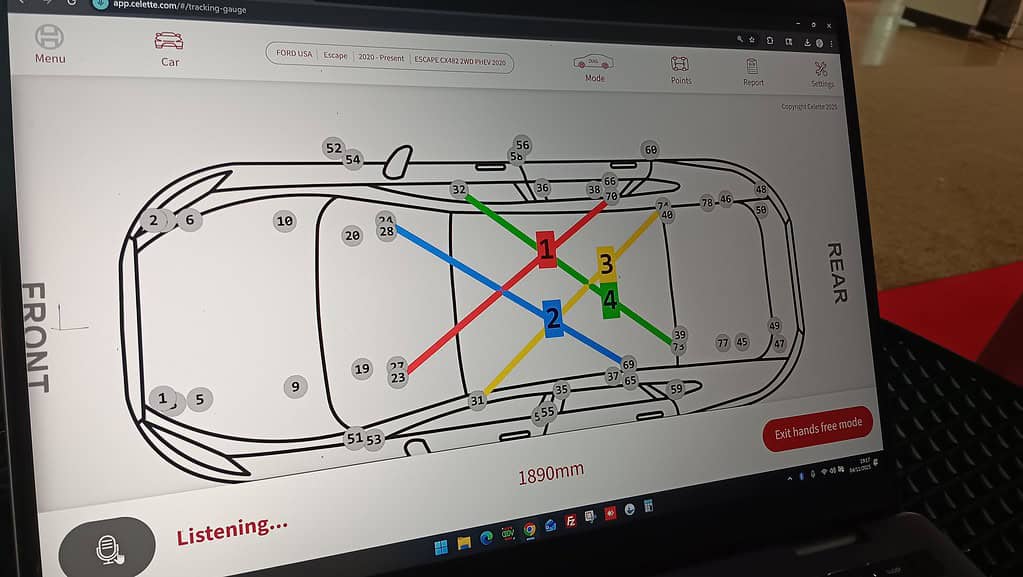
WebTools AI displays clear, structured reference points derived from Celette’s database.
3. Manual Measurement with Tram Gauge
The technician measures the distance between the specified reference points using their existing tram gauge.
4. Comparison and Verification
Measured values are compared against the reference dimensions provided by WebTools AI.
This workflow allows body shops to maintain their existing tools while significantly upgrading the quality and reliability of their measurement process.
𝐖𝐡𝐲 𝐓𝐡𝐢𝐬 𝐌𝐚𝐭𝐭𝐞𝐫𝐬 𝐟𝐨𝐫 𝐁𝐨𝐝𝐲 𝐒𝐡𝐨𝐩𝐬 𝐖𝐨𝐫𝐥𝐝𝐰𝐢𝐝𝐞
Body shops are no longer forced to invest immediately in specific electronic measuring hardware to benefit from accurate data. Any existing tram or tracking gauge becomes more powerful when paired with Celette WebTools AI.
𝐈𝐦𝐩𝐫𝐨𝐯𝐞𝐝 𝐀𝐜𝐜𝐮𝐫𝐚𝐜𝐲 𝐖𝐢𝐭𝐡𝐨𝐮𝐭 𝐂𝐨𝐦𝐩𝐥𝐞𝐱𝐢𝐭𝐲
Technicians gain access to professional-grade reference data without changing their habits or workflows dramatically. This lowers resistance to adoption and reduces training time.

𝐁𝐞𝐭𝐭𝐞𝐫 𝐃𝐨𝐜𝐮𝐦𝐞𝐧𝐭𝐚𝐭𝐢𝐨𝐧 𝐚𝐧𝐝 𝐑𝐞𝐩𝐚𝐢𝐫 𝐂𝐨𝐧𝐟𝐢𝐝𝐞𝐧𝐜𝐞
Even when using manual tools, structured reference data improves repair confidence and supports clearer communication with insurers, auditors, and OEM programs.
𝐓𝐫𝐚𝐦 𝐆𝐚𝐮𝐠𝐞𝐬, 𝐀𝐃𝐀𝐒, 𝐚𝐧𝐝 𝐌𝐨𝐝𝐞𝐫𝐧 𝐑𝐞𝐩𝐚𝐢𝐫 𝐑𝐞𝐚𝐥𝐢𝐭𝐲
It is important to be clear: tram gauges alone cannot replace electronic measuring systems when it comes to full ADAS validation or OEM-certified structural alignment.
𝐇𝐨𝐰𝐞𝐯𝐞𝐫, 𝐰𝐡𝐞𝐧 𝐬𝐮𝐩𝐩𝐨𝐫𝐭𝐞𝐝 𝐛𝐲 𝐂𝐞𝐥𝐞𝐭𝐭𝐞 𝐖𝐞𝐛𝐓𝐨𝐨𝐥𝐬 𝐀𝐈:
• Tram gauges become more reliable for structural checks
• Pre-repair and in-process verification improves
• Risk of gross dimensional errors is reduced
• Decisions about further repair steps are better informed
In this sense, WebTools AI acts as an intelligent bridge between traditional tools and modern repair standards.
𝐂𝐨𝐧𝐜𝐥𝐮𝐬𝐢𝐨𝐧
Tram gauges remain one of the most widely used and trusted measuring tools in collision repair worldwide. Their simplicity, durability, and universal applicability ensure they will continue to play a role—especially for preliminary checks and in-process verification.
However, in an era of increasingly complex vehicle structures and ADAS-driven safety requirements, data quality matters more than ever.
By enabling Celette’s professional vehicle database to be used with any tram or tracking gauge on the market, Celette WebTools AI transforms a traditional manual tool into a smarter, more reliable measuring solution.
This approach allows body shops to preserve proven tools while aligning with modern repair standards—bridging the gap between traditional craftsmanship and digital precision.
Bridge the gap between traditional tools and digital precision. Discover how Celette WebTools AI empowers body shops to use reliable OEM data with any Tram Gauge, enhancing accuracy and workflow without the need for immediate electronic hardware investment.




