𝐖𝐡𝐲 𝐂𝐨𝐧𝐭𝐢𝐧𝐮𝐨𝐮𝐬 𝐓𝐫𝐚𝐢𝐧𝐢𝐧𝐠 𝐈𝐬 𝐍𝐨𝐧-𝐍𝐞𝐠𝐨𝐭𝐢𝐚𝐛𝐥𝐞 𝐢𝐧 𝐂𝐨𝐥𝐥𝐢𝐬𝐢𝐨𝐧 𝐑𝐞𝐩𝐚𝐢𝐫
𝐊𝐞𝐞𝐩𝐢𝐧𝐠 𝐁𝐨𝐝𝐲𝐬𝐡𝐨𝐩 𝐓𝐞𝐚𝐦𝐬 𝐀𝐥𝐢𝐠𝐧𝐞𝐝 𝐰𝐢𝐭𝐡 𝐑𝐚𝐩𝐢𝐝𝐥𝐲 𝐄𝐯𝐨𝐥𝐯𝐢𝐧𝐠 𝐕𝐞𝐡𝐢𝐜𝐥𝐞 𝐓𝐞𝐜𝐡𝐧𝐨𝐥𝐨𝐠𝐢𝐞𝐬 𝐚𝐧𝐝 𝐑𝐞𝐠𝐮𝐥𝐚𝐭𝐢𝐨𝐧𝐬, particularly through structured Collision Repair Training.
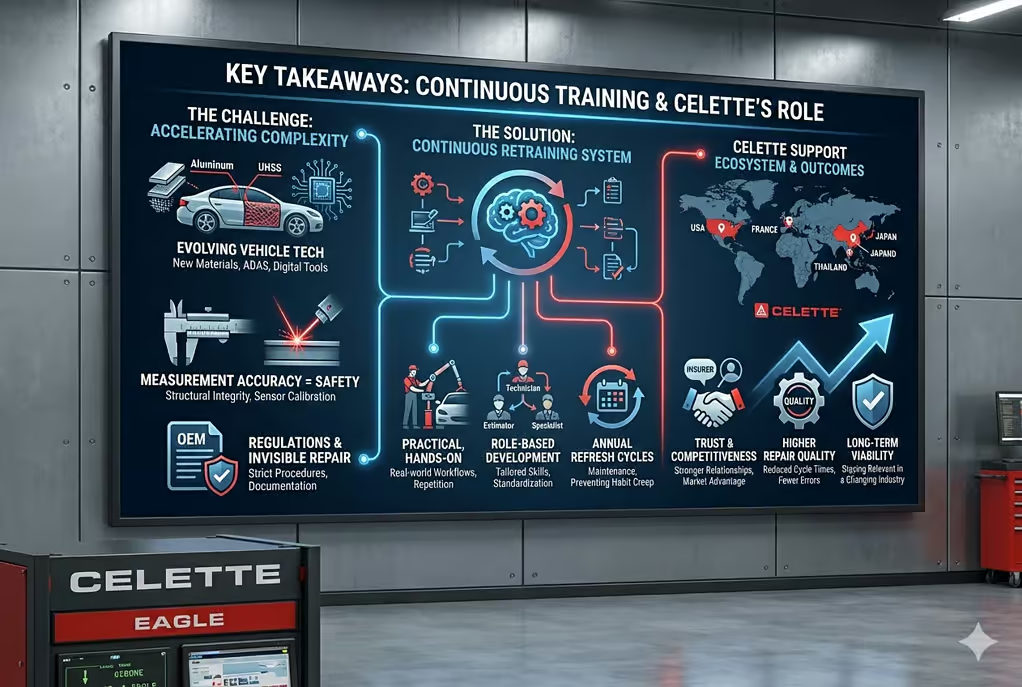
The collision repair industry is evolving at a pace unprecedented in modern collision repair history. New vehicle architectures, advanced materials, increasingly strict OEM repair requirements, and the rapid expansion of digital tools have fundamentally changed what it means to repair a vehicle correctly. In this environment, continuous retraining of bodyshop staff is no longer optional, it is a core operational requirement for safety, quality, compliance, and long-term competitiveness.
While experience and craftsmanship once sustained a shop for decades, modern complexities require these skills to be reinforced by ongoing education, structured workflows, and regular skills refresh cycles. Each model year introduces new challenges, and shops that fail to keep their teams trained risk falling behind, often without realizing.
𝐓𝐡𝐞 𝐀𝐜𝐜𝐞𝐥𝐞𝐫𝐚𝐭𝐢𝐧𝐠 𝐂𝐨𝐦𝐩𝐥𝐞𝐱𝐢𝐭𝐲 𝐨𝐟 𝐌𝐨𝐝𝐞𝐫𝐧 𝐕𝐞𝐡𝐢𝐜𝐥𝐞𝐬
Modern vehicles are no longer built around uniform materials or predictable structural layouts. Today’s cars combine:
• High-strength and ultra-high-strength steels (UHSS / boron)
• Aluminum-intensive structures
• Bonded (structural adhesive) and riveted cold-joining assemblies
• Composites and multi-material joints
These materials are frequently used within the same repair zone, governed by strict OEM rules that define approved sectioning locations, prohibit heat application in critical areas, and specify exact joining methods. A repair approach that was acceptable only a few years ago may now lead to latent defects or a severe compromise of intended structural load paths in a subsequent collision.
As a result, repair knowledge has a much shorter shelf life. Technicians who were fully competent five years ago must now continuously update their understanding of repair-versus-replace thresholds simply to remain compliant with current OEM standards.
𝐌𝐞𝐚𝐬𝐮𝐫𝐞𝐦𝐞𝐧𝐭 𝐀𝐜𝐜𝐮𝐫𝐚𝐜𝐲: 𝐓𝐡𝐞 𝐅𝐨𝐮𝐧𝐝𝐚𝐭𝐢𝐨𝐧 𝐨𝐟 𝐄𝐥𝐞𝐜𝐭𝐫𝐨𝐧𝐢𝐜 𝐒𝐚𝐟𝐞𝐭𝐲
Structural measurement is no longer a preliminary check, it is a guiding process throughout the entire repair workflow. Even minor deviations in body geometry can affect:
• Steering geometry and thrust angle
• Crash energy management and the timing of deformation zones
• Airbag deployment sensors
• ADAS sensor positioning and calibration integrity
This evolution has elevated measurement systems and controlled straightening workflows from “best practice” to safety-critical operations. Training must therefore focus on the why, not just the how. Understanding how a deviation as small as 2 mm at a frame rail may be sufficient to cause a long-range radar (LRR) or camera system to operate outside its designed tolerance, even if diagnostic software reports a “successful” calibration is essential.
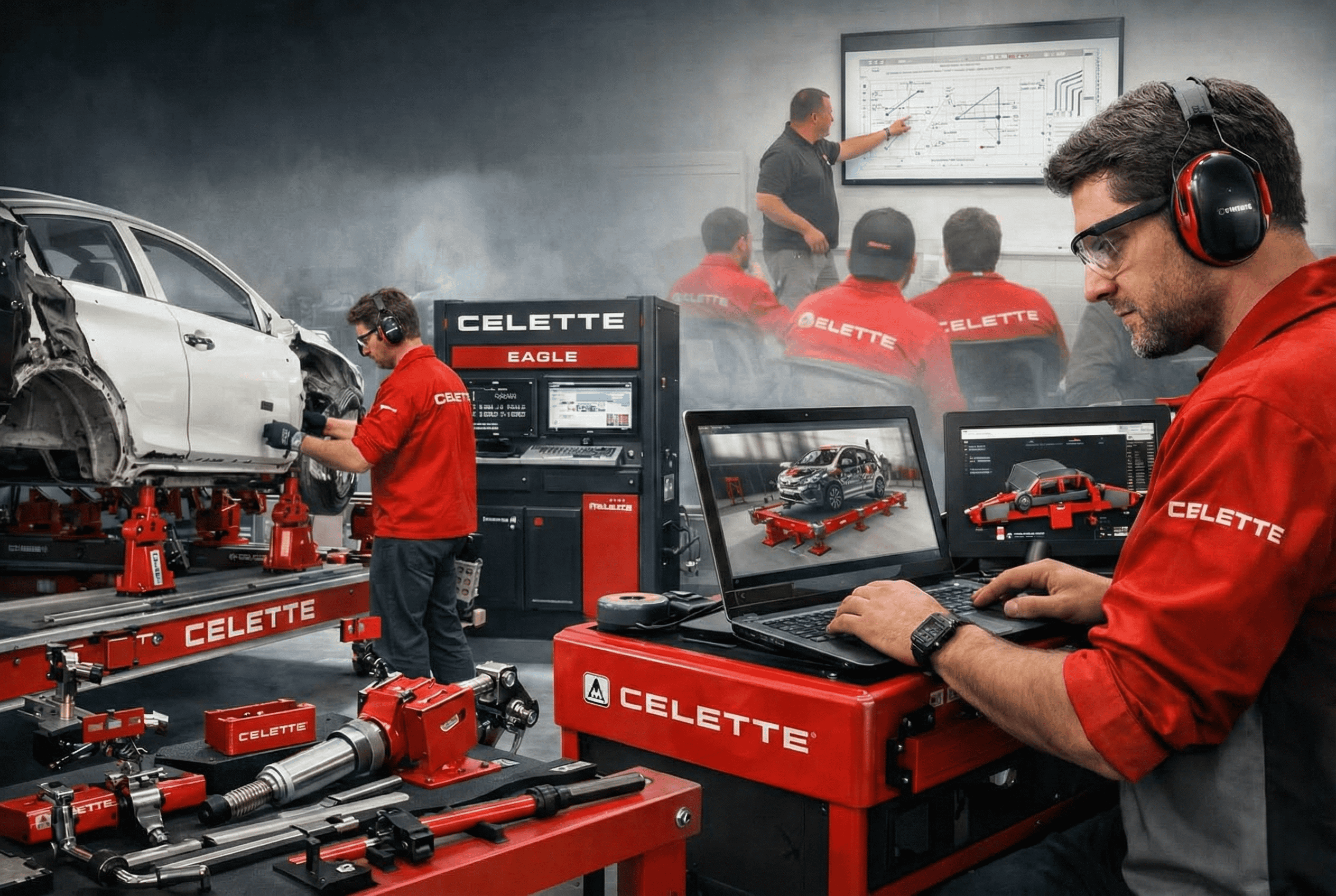
Celette’s training programs emphasize this philosophy by teaching repeatable, controlled workflows, bench setup, anchoring logic, fixture positioning, and correct measurement sequencing rather than reliance on improvisation or operator intuition.
Emphasizing Collision Repair Training is vital for adapting to these advancements and ensuring safety in repairs.
𝐑𝐞𝐠𝐮𝐥𝐚𝐭𝐢𝐨𝐧𝐬 𝐚𝐧𝐝 𝐭𝐡𝐞 “𝐈𝐧𝐯𝐢𝐬𝐢𝐛𝐥𝐞 𝐑𝐞𝐩𝐚𝐢𝐫”
Across all regions, regulatory pressure and OEM oversight continue to increase. Bodyshops are now expected to:
• Strictly follow OEM repair procedures and position statements
• Document every repair step and structural measurement for liability protection
• Ensure that mounting planes for ADAS-equipped components meet factory specifications
Visual appearance alone is no longer a valid metric for repair success. A repair can appear flawless, the so-called “invisible repair” and still be technically incorrect if underlying metallurgy, joining methods, or sensor alignment have been compromised. Training is the only reliable mechanism for closing the gap between cosmetic quality and true structural and functional integrity.
𝐓𝐡𝐞 𝐆𝐫𝐨𝐰𝐢𝐧𝐠 𝐂𝐨𝐦𝐩𝐥𝐞𝐱𝐢𝐭𝐲 𝐏𝐫𝐨𝐛𝐥𝐞𝐦: 𝐂𝐨𝐠𝐧𝐢𝐭𝐢𝐯𝐞 𝐋𝐨𝐚𝐝
One of the most underestimated challenges in modern collision repair is cognitive overload. Technicians are now expected to operate and interpret:
• Multiple measurement systems and software platforms
• OEM repair portals and live procedure databases
• Diagnostic and calibration tools with frequently updated firmware
Technicians are not robots, they rely on repetition to maintain speed, confidence, and accuracy. When complex structural repairs or OEM-specific procedures are performed only occasionally, skills naturally fade. This is not a failure of professionalism, it is a fundamental principle of human learning.
In this context, retraining is not remediation; it is maintenance. Just as a straightening bench requires regular calibration, human competency requires structured refresh cycles to prevent “habit creep,” where outdated methods reappear under time pressure.
𝐖𝐡𝐚𝐭 𝐄𝐟𝐟𝐞𝐜𝐭𝐢𝐯𝐞 𝐑𝐞𝐭𝐫𝐚𝐢𝐧𝐢𝐧𝐠 𝐋𝐨𝐨𝐤𝐬 𝐋𝐢𝐤𝐞 𝐓𝐨𝐝𝐚𝐲
Modern collision repair training must be dynamic and ongoing. The most effective programs prioritize:
• 𝐏𝐫𝐚𝐜𝐭𝐢𝐜𝐚𝐥, 𝐡𝐚𝐧𝐝𝐬-𝐨𝐧 𝐥𝐞𝐚𝐫𝐧𝐢𝐧𝐠 Technicians must practice complete workflows—anchoring, measurement, correction, and verification—under real-world conditions.
• 𝐑𝐨𝐥𝐞-𝐛𝐚𝐬𝐞𝐝 𝐝𝐞𝐯𝐞𝐥𝐨𝐩𝐦𝐞𝐧𝐭 Structural technicians, measurement specialists, and estimators each require training tailored to their responsibilities, including understanding the technical rationale behind billable operations.
• 𝐒𝐭𝐚𝐧𝐝𝐚𝐫𝐝𝐢𝐳𝐚𝐭𝐢𝐨𝐧 Establishing a defined “shop standard” ensures consistent, repeatable results regardless of which technician performs the repair.
• 𝐀𝐧𝐧𝐮𝐚𝐥 𝐫𝐞𝐟𝐫𝐞𝐬𝐡 𝐜𝐲𝐜𝐥𝐞𝐬 Annual updates should be treated as the baseline, not a one-time event tied to new equipment purchases.
𝐂𝐞𝐥𝐞𝐭𝐭𝐞’𝐬 𝐆𝐥𝐨𝐛𝐚𝐥 𝐑𝐨𝐥𝐞 𝐢𝐧 𝐂𝐨𝐧𝐭𝐢𝐧𝐮𝐨𝐮𝐬 𝐒𝐮𝐩𝐩𝐨𝐫𝐭
Celette integrates training into a broader support ecosystem for end users, OEM partners, and distributors. With a global presence spanning France, the United States, China, Japan, and a new big Asia-Pacific hub in Thailand, Celette delivers localized training while maintaining consistent international standards.
This structure ensures that evolving OEM requirements, measurement methodologies, and repair technologies are communicated clearly and applied consistently across regions.
𝐓𝐫𝐚𝐢𝐧𝐢𝐧𝐠 𝐚𝐬 𝐚 𝐒𝐮𝐩𝐩𝐨𝐫𝐭 𝐄𝐜𝐨𝐬𝐲𝐬𝐭𝐞𝐦
In a live shop environment, technical questions arise continuously: Is this anchoring strategy correct for the specific impact? How can secondary distortion be avoided during straightening?
Training and technical support are inseparable. Immediate access to expert guidance, before a mistake becomes rework or liability, represents a decisive competitive advantage. Celette’s emphasis on customer availability ensures that learning continues well beyond the classroom and is reinforced during real repair scenarios.
𝐂𝐨𝐧𝐜𝐥𝐮𝐬𝐢𝐨𝐧: 𝐒𝐭𝐚𝐲𝐢𝐧𝐠 𝐓𝐫𝐚𝐢𝐧𝐞𝐝 𝐈𝐬 𝐒𝐭𝐚𝐲𝐢𝐧𝐠 𝐂𝐨𝐦𝐩𝐞𝐭𝐢𝐭𝐢𝐯𝐞
The collision repair businesses that succeed in the coming decade will not simply be those with the most advanced equipment, but those supported by the most highly trained teams. Continuous retraining transforms complexity into control, delivering higher repair quality, reduced cycle times, and stronger trust with OEMs, insurers, and vehicle owners.