𝐁𝐞𝐟𝐨𝐫𝐞 𝐒𝐭𝐫𝐮𝐜𝐭𝐮𝐫𝐚𝐥 𝐑𝐞𝐩𝐚𝐢𝐫 𝐒𝐭𝐚𝐧𝐝𝐚𝐫𝐝𝐬: 𝐑𝐞𝐩𝐚𝐢𝐫 𝐛𝐲 𝐒𝐤𝐢𝐥𝐥, 𝐍𝐨𝐭 𝐑𝐞𝐟𝐞𝐫𝐞𝐧𝐜𝐞
In the earliest decades of automotive repair, collision work relied almost entirely on technician judgment. Body-on-frame vehicles allowed for a degree of correction without strict dimensional control, and success was defined by drive-ability and visible symmetry rather than geometric verification.
Celette’s historical relevance begins precisely where this approach reaches its limits. As vehicle production became more standardized, Germain Celette recognized that 𝐫𝐞𝐩𝐚𝐢𝐫 𝐪𝐮𝐚𝐥𝐢𝐭𝐲 𝐜𝐨𝐮𝐥𝐝 𝐧𝐨 𝐥𝐨𝐧𝐠𝐞𝐫 𝐝𝐞𝐩𝐞𝐧𝐝 𝐬𝐨𝐥𝐞𝐥𝐲 𝐨𝐧 𝐢𝐧𝐝𝐢𝐯𝐢𝐝𝐮𝐚𝐥 𝐬𝐤𝐢𝐥𝐥. His insight was not about pulling harder or measuring more, but about 𝐞𝐬𝐭𝐚𝐛𝐥𝐢𝐬𝐡𝐢𝐧𝐠 𝐟𝐢𝐱𝐞𝐝 𝐫𝐞𝐟𝐞𝐫𝐞𝐧𝐜𝐞𝐬 that remove subjectivity from structural correction.
This recognition laid the groundwork for Celette’s foundational contribution: transforming collision repair from an interpretive craft into a controlled mechanical process.
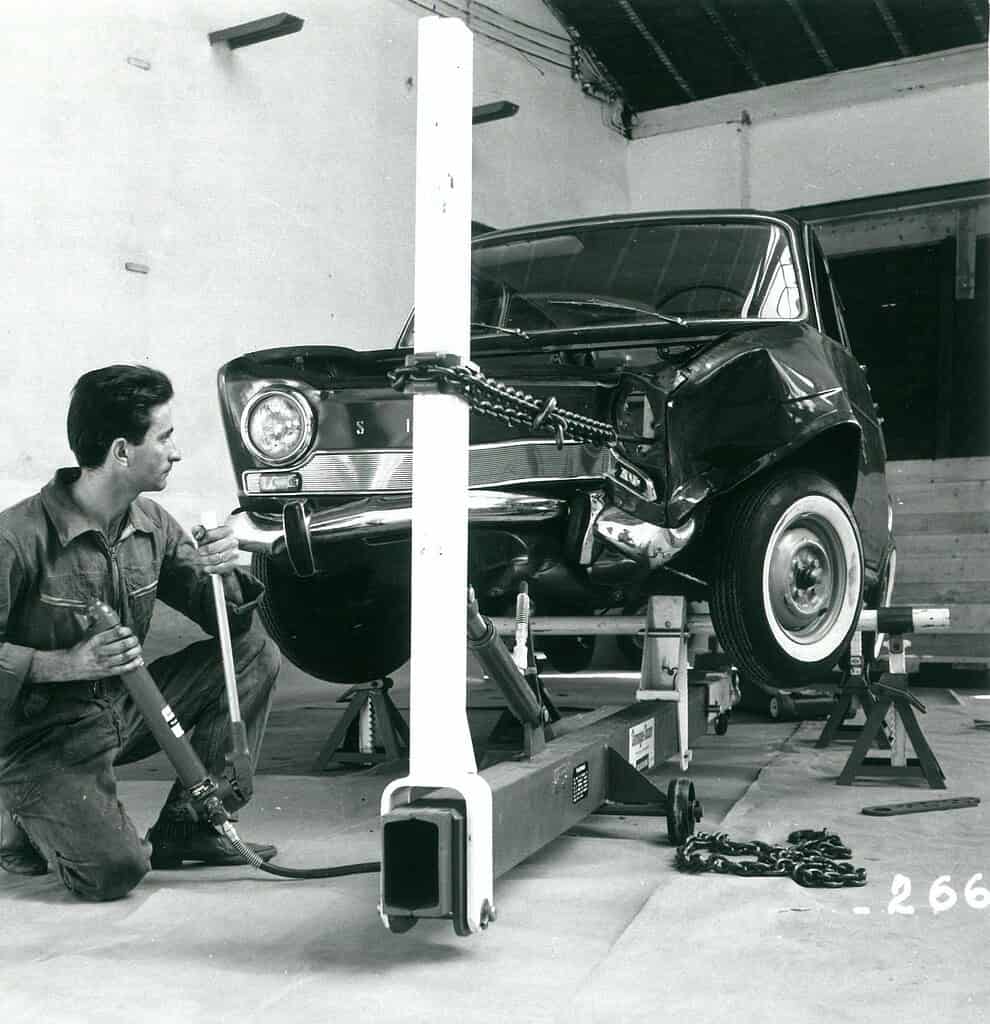
𝟏𝟗𝟓𝟑: 𝐂𝐞𝐥𝐞𝐭𝐭𝐞 𝐈𝐧𝐭𝐫𝐨𝐝𝐮𝐜𝐞𝐬 𝐭𝐡𝐞 𝐁𝐞𝐧𝐜𝐡 𝐚𝐧𝐝 𝐉𝐢𝐠 𝐑𝐞𝐩𝐚𝐢𝐫 𝐋𝐨𝐠𝐢𝐜
In 1953, Celette introduced a rigid straightening bench combined with 𝐝𝐞𝐝𝐢𝐜𝐚𝐭𝐞𝐝 𝐦𝐞𝐜𝐡𝐚𝐧𝐢𝐜𝐚𝐥 𝐣𝐢𝐠𝐬 designed to locate a vehicle at manufacturer-defined reference points. This was not merely new equipment, it was a new repair logic.
Celette’s system established three principles that remain central today:
𝟏. 𝐓𝐡𝐞 𝐯𝐞𝐡𝐢𝐜𝐥𝐞 𝐦𝐮𝐬𝐭 𝐛𝐞 𝐩𝐨𝐬𝐢𝐭𝐢𝐨𝐧𝐞𝐝 𝐛𝐞𝐟𝐨𝐫𝐞 𝐢𝐭 𝐢𝐬 𝐜𝐨𝐫𝐫𝐞𝐜𝐭𝐞𝐝
𝟐. 𝐒𝐭𝐫𝐮𝐜𝐭𝐮𝐫𝐚𝐥 𝐫𝐞𝐟𝐞𝐫𝐞𝐧𝐜𝐞 𝐩𝐨𝐢𝐧𝐭𝐬 𝐦𝐮𝐬𝐭 𝐛𝐞 𝐦𝐞𝐜𝐡𝐚𝐧𝐢𝐜𝐚𝐥𝐥𝐲 𝐟𝐢𝐱𝐞𝐝, 𝐧𝐨𝐭 𝐯𝐢𝐬𝐮𝐚𝐥𝐥𝐲 𝐢𝐧𝐟𝐞𝐫𝐫𝐞𝐝
𝟑. 𝐏𝐮𝐥𝐥𝐢𝐧𝐠 𝐟𝐨𝐫𝐜𝐞𝐬 𝐦𝐮𝐬𝐭 𝐚𝐜𝐭 𝐚𝐠𝐚𝐢𝐧𝐬𝐭 𝐜𝐨𝐧𝐭𝐫𝐨𝐥𝐥𝐞𝐝 𝐚𝐧𝐜𝐡𝐨𝐫𝐬, 𝐧𝐨𝐭 𝐟𝐫𝐞𝐞-𝐟𝐥𝐨𝐚𝐭𝐢𝐧𝐠 𝐬𝐡𝐞𝐥𝐥𝐬
By anchoring undamaged sections of the structure while correcting damaged zones, the Celette method mirrored industrial assembly logic. In doing so, it introduced the idea that 𝐜𝐨𝐥𝐥𝐢𝐬𝐢𝐨𝐧 𝐫𝐞𝐩𝐚𝐢𝐫 𝐬𝐡𝐨𝐮𝐥𝐝 𝐫𝐞𝐩𝐥𝐢𝐜𝐚𝐭𝐞 𝐦𝐚𝐧𝐮𝐟𝐚𝐜𝐭𝐮𝐫𝐢𝐧𝐠 𝐜𝐨𝐧𝐝𝐢𝐭𝐢𝐨𝐧𝐬 𝐚𝐬 𝐜𝐥𝐨𝐬𝐞𝐥𝐲 𝐚𝐬 𝐩𝐨𝐬𝐬𝐢𝐛𝐥𝐞, 𝐫𝐚𝐭𝐡𝐞𝐫 𝐭𝐡𝐚𝐧 𝐢𝐦𝐩𝐫𝐨𝐯𝐢𝐬𝐢𝐧𝐠 𝐚𝐫𝐨𝐮𝐧𝐝 𝐝𝐚𝐦𝐚𝐠𝐞.
This approach marked a clear departure from correction-by-appearance and positioned Celette as an early architect of structural repair discipline.
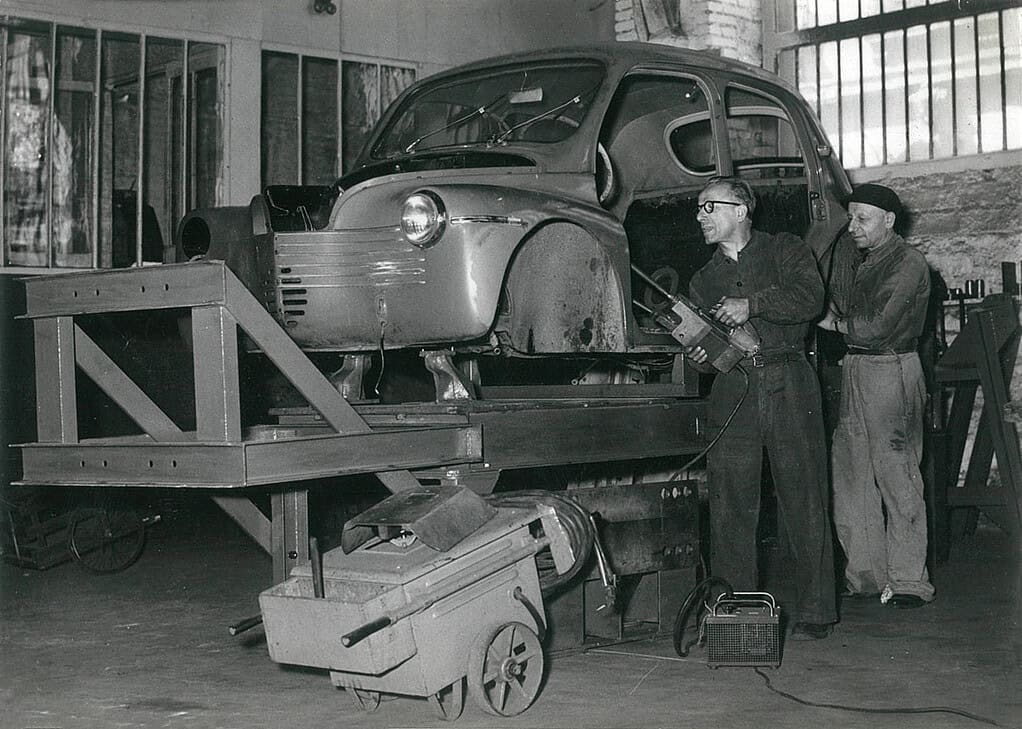
𝐇𝐨𝐥𝐝𝐢𝐧𝐠 𝐆𝐞𝐨𝐦𝐞𝐭𝐫𝐲, 𝐍𝐨𝐭 𝐉𝐮𝐬𝐭 𝐌𝐞𝐚𝐬𝐮𝐫𝐢𝐧𝐠 𝐈𝐭: 𝐓𝐡𝐞 𝐂𝐞𝐥𝐞𝐭𝐭𝐞 𝐃𝐢𝐬𝐭𝐢𝐧𝐜𝐭𝐢𝐨𝐧
As collision repair evolved, measurement systems emerged to quantify structural deviation. Celette’s contribution, however, focused on an earlier and often overlooked step: 𝐡𝐨𝐥𝐝𝐢𝐧𝐠 𝐠𝐞𝐨𝐦𝐞𝐭𝐫𝐲 𝐝𝐮𝐫𝐢𝐧𝐠 𝐜𝐨𝐫𝐫𝐞𝐜𝐭𝐢𝐨𝐧.
Celette’s dedicated jig philosophy does not treat measurement as the primary corrective force. Instead, it assumes that once a structure is mechanically located at correct reference points, deformation correction becomes inherently more controlled and repeatable.
This distinction is historically important:
• Measurement alone identifies deviation
• Celette’s jig-based anchoring actively 𝐩𝐫𝐞𝐯𝐞𝐧𝐭𝐬 𝐬𝐞𝐜𝐨𝐧𝐝𝐚𝐫𝐲 𝐝𝐢𝐬𝐭𝐨𝐫𝐭𝐢𝐨𝐧 𝐝𝐮𝐫𝐢𝐧𝐠 𝐩𝐮𝐥𝐥𝐢𝐧𝐠
By prioritizing structural fixation over post-correction verification, Celette reinforced the idea that 𝐚𝐜𝐜𝐮𝐫𝐚𝐜𝐲 𝐢𝐬 𝐚𝐜𝐡𝐢𝐞𝐯𝐞𝐝 𝐝𝐮𝐫𝐢𝐧𝐠 𝐭𝐡𝐞 𝐫𝐞𝐩𝐚𝐢𝐫 𝐩𝐫𝐨𝐜𝐞𝐬𝐬, 𝐧𝐨𝐭 𝐦𝐞𝐫𝐞𝐥𝐲 𝐜𝐡𝐞𝐜𝐤𝐞𝐝 𝐚𝐟𝐭𝐞𝐫𝐰𝐚𝐫𝐝.

𝐓𝐡𝐞 𝐔𝐧𝐢𝐛𝐨𝐝𝐲 𝐄𝐫𝐚: 𝐖𝐡𝐲 𝐂𝐞𝐥𝐞𝐭𝐭𝐞’𝐬 𝐌𝐞𝐭𝐡𝐨𝐝 𝐁𝐞𝐜𝐚𝐦𝐞 𝐄𝐬𝐬𝐞𝐧𝐭𝐢𝐚𝐥
As unibody construction became dominant, structural precision shifted from desirable to essential. In unibody vehicles, load paths, suspension geometry, and occupant protection are integrated into the body shell itself.
Celette bench-and-jig approach aligned naturally with this evolution. Because unibody structures lack a separate frame, accurate reference positioning became the only reliable way to control deformation without introducing hidden misalignment.
Historically, Celette’s systems offered repairers a way to:
• lock reference zones of the unibody,
• apply correction forces directionally,
• and maintain OEM-intended geometry throughout the process.
Rather than adapting old frame-straightening methods to new structures, Celette’s philosophy anticipated the unibody future by treating the vehicle body as a precision assembly.

𝐅𝐢𝐱𝐭𝐮𝐫𝐞 𝐋𝐢𝐛𝐫𝐚𝐫𝐢𝐞𝐬 𝐚𝐧𝐝 𝐎𝐄𝐌 𝐑𝐞𝐟𝐞𝐫𝐞𝐧𝐜𝐞 𝐋𝐨𝐠𝐢𝐜: 𝐃𝐚𝐭𝐚 𝐚𝐬 𝐭𝐡𝐞 𝐑𝐞𝐩𝐚𝐢𝐫 𝐓𝐨𝐨𝐥
As vehicle diversity expanded, Celette’s role evolved from equipment supplier to structural reference curator.
The effectiveness of jig-based repair depends not only on hardware, but on the accuracy of reference data behind it.
Celette’s historical development of model-specific fixture systems reflects a broader industry transition:
• from generic pulling,
• to vehicle-specific structural positioning.
By aligning repair fixtures with manufacturer reference logic, Celette reinforced the principle that collision repair is 𝐢𝐧𝐬𝐞𝐩𝐚𝐫𝐚𝐛𝐥𝐞 𝐟𝐫𝐨𝐦 𝐎𝐄𝐌 𝐠𝐞𝐨𝐦𝐞𝐭𝐫𝐲 𝐤𝐧𝐨𝐰𝐥𝐞𝐝𝐠𝐞. This approach foreshadowed today’s reliance on OEM procedures, dimensional databases, and model-specific repair planning.
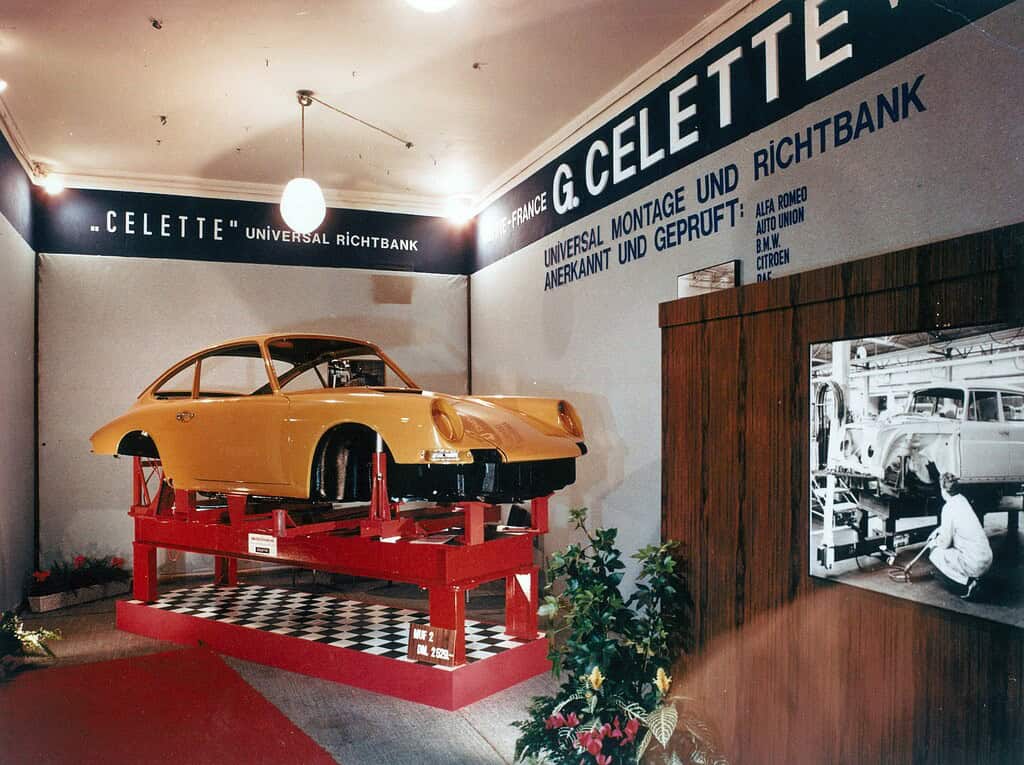
𝐃𝐢𝐠𝐢𝐭𝐚𝐥 𝐌𝐞𝐚𝐬𝐮𝐫𝐞𝐦𝐞𝐧𝐭 𝐚𝐧𝐝 𝐃𝐨𝐜𝐮𝐦𝐞𝐧𝐭𝐚𝐭𝐢𝐨𝐧: 𝐄𝐱𝐭𝐞𝐧𝐝𝐢𝐧𝐠 𝐭𝐡𝐞 𝐂𝐞𝐥𝐞𝐭𝐭𝐞 𝐏𝐫𝐨𝐜𝐞𝐬𝐬
As digital measuring systems entered collision repair, Celette’s philosophy remained consistent. Measurement became a validation layer within a process already grounded in controlled positioning.
In this context, Celette benches function not as alternatives to digital measurement, but as structural foundations upon which measurement gains meaning. When reference points are mechanically fixed, dimensional readings reflect true correction, not movement compensation.
This integration supports modern documentation requirements, insurance scrutiny, and OEM certification processes, all of which demand traceable, repeatable outcomes.
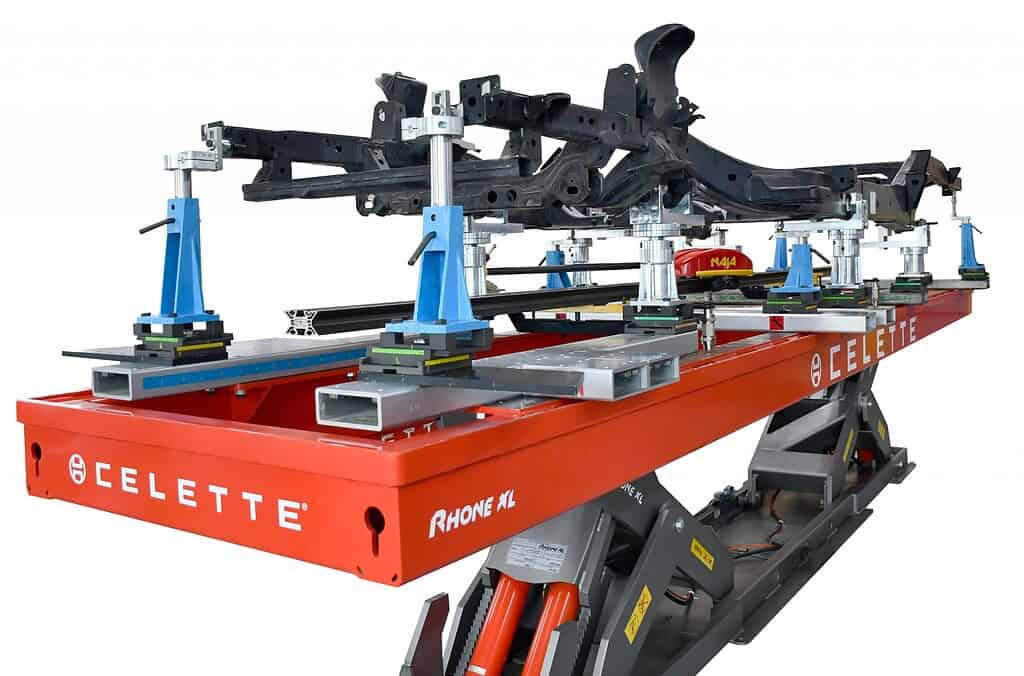
𝐀𝐃𝐀𝐒 𝐚𝐧𝐝 𝐄𝐕𝐬: 𝐒𝐭𝐫𝐮𝐜𝐭𝐮𝐫𝐚𝐥 𝐀𝐜𝐜𝐮𝐫𝐚𝐜𝐲 𝐚𝐬 𝐒𝐲𝐬𝐭𝐞𝐦 𝐈𝐧𝐭𝐞𝐠𝐫𝐢𝐭𝐲
Modern vehicles equipped with ADAS and electric powertrains have elevated structural accuracy from quality concern to system dependency.
Celette’s historical emphasis on restoring OEM reference points directly addresses this challenge. ADAS calibration assumes that:
• sensor mounts are located correctly,
• the body structure aligns with design coordinates,
• and deformation has not altered reference planes.
Celette’s method positions structural correction as the first prerequisite for electronic and sensor system performance, reinforcing the idea that calibration cannot compensate for incorrect geometry.
𝐃𝐞𝐟𝐢𝐧𝐢𝐧𝐠 “𝐏𝐢𝐨𝐧𝐞𝐞𝐫” 𝐢𝐧 𝐂𝐨𝐥𝐥𝐢𝐬𝐢𝐨𝐧 𝐑𝐞𝐩𝐚𝐢𝐫, 𝐓𝐞𝐜𝐡𝐧𝐢𝐜𝐚𝐥𝐥𝐲, 𝐍𝐨𝐭 𝐑𝐡𝐞𝐭𝐨𝐫𝐢𝐜𝐚𝐥𝐥𝐲
In historical terms, Celette’s pioneering role is not defined by exclusivity, but by process influence.
The principles Celette introduced, controlled anchoring, reference-based positioning, and manufacturing-aligned repair logic—are now embedded across the collision repair industry, regardless of equipment brand.
That influence defines true pioneering: when an approach becomes foundational rather than proprietary.
𝐂𝐨𝐧𝐜𝐥𝐮𝐬𝐢𝐨𝐧: 𝐑𝐞𝐩𝐚𝐢𝐫𝐢𝐧𝐠 𝐕𝐞𝐡𝐢𝐜𝐥𝐞𝐬 𝐚𝐬 𝐄𝐧𝐠𝐢𝐧𝐞𝐞𝐫𝐞𝐝 𝐒𝐲𝐬𝐭𝐞𝐦𝐬
From its beginnings in 1953, Celette framed collision repair as an extension of manufacturing engineering rather than a corrective craft.
That perspective has proven increasingly relevant as vehicles evolve toward tighter tolerances, integrated safety systems, and data-driven verification.
The history of collision repair, viewed through the Celette method, is the story of one central idea gaining urgency over time: A vehicle can only be safely repaired if it is structurally restored to the geometry it was engineered to have.
In today’s ADAS- and EV-driven environment, that idea is no longer optional—it is foundational.