
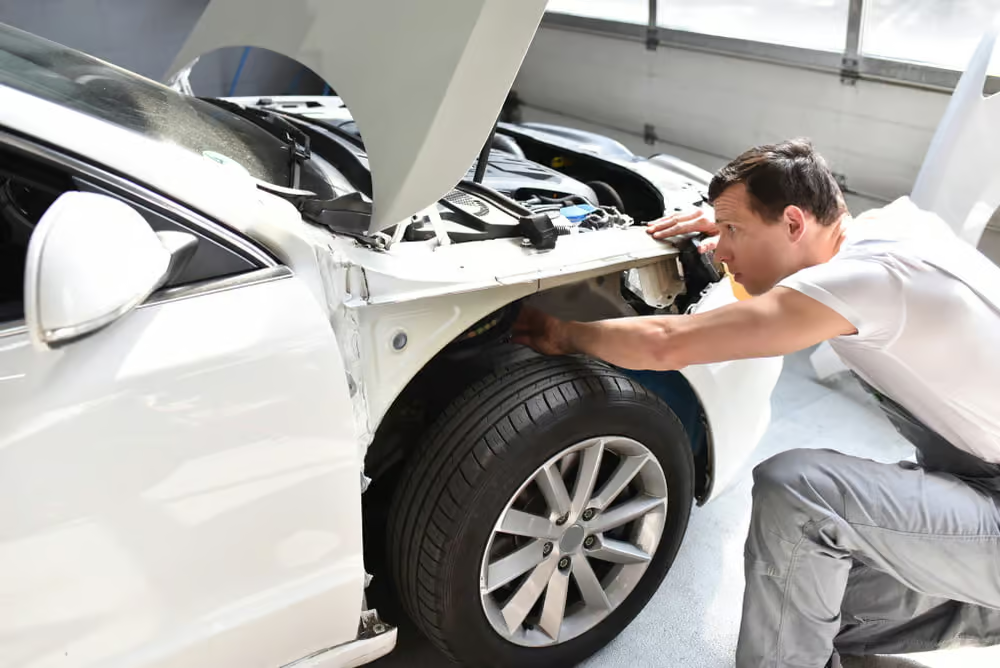
Equipping a collision repair auto shop requires different requirements than those for a general mechanical garage. Structural accuracy, occupant safety, and OEM compliance are important for collision work. The right equipment allows your shop to restore vehicles to manufacturer specifications after an accident; the wrong tools limit the types of repairs you can safely perform.
This guide presents a focused auto repair shop equipment list for collision repair facilities. From lifting and diagnostics to structural straightening systems, anchoring tools like frame machine clamps, and measuring technology, we break down the tools and equipment in automotive collision repair, so shop owners and technicians can prioritize correctly.
What is the Difference Between an Auto Shop and a Collision Repair Shop?
While both auto shops and collision repair shops work on vehicles, their roles, equipment, and technical requirements differ significantly.
Auto Repair Shop (Mechanical Shop)
An auto repair shop focuses on maintenance and mechanical repairs that keep a vehicle running properly. Typical services are engine diagnostics and repair, brake service and suspension work, oil changes and fluid service, transmission repair, and electrical troubleshooting.
Common equipment in an auto shop includes vehicle lifts, diagnostic scanners, hand tools, pneumatic tools, as well as tire and brake service machines. Auto repair shops generally do not perform structural correction. Their work doesn’t require restoring vehicle geometry after a collision.
Collision Repair Shop (Body Shop)
A collision repair shop specializes in post-accident structural and body repairs. The goal is to restore the vehicle to OEM specifications for safety, alignment, and appearance. Typical services include frame and unibody straightening, structural sectioning and welding, and body panel replacement and refinishing. It also involves ADAS-related repairs and recalibration support, and alignment verification after structural correction.
Essential equipment in a collision repair shop includes frame straightening machines and benches, anchoring and clamping systems, jig systems for precise positioning, measuring systems for dimensional verification, and welding and structural repair tools. Collision repair requires physical control of the vehicle’s structure, which is why specialized equipment and procedures are mandatory.
Understanding this distinction helps shop owners invest in the right equipment and clearly define their service scope. While a general auto shop can operate efficiently without structural equipment, a collision repair shop cannot safely perform accident repairs without frame machines, anchoring systems, jigs, and measuring technology. Choosing equipment aligned with your shop’s role protects repair quality, safety, and long-term performance.
Collision & Structural Repair Equipment
Investing in the following auto shop equipment separates reliable collision-capable shops from general auto facilities:
Frame Machines & Benches: Frame straightening machines restore unibody and full-frame vehicles to OEM dimensions. A frame machine body shop setup is essential; without it, structural repairs cannot be performed correctly. Heavy-duty configurations support trucks and commercial vehicles.
Anchoring & Clamping Systems: Frame machine clamps secure vehicles at verified structural points. Proper anchoring prevents secondary movement during pulls, so the clamp quality directly affects repair accuracy and safety.
Jig Systems: Jigs hold subframes, suspension mounts, rails, and pillars in exact positions. While dedicated jigs suit specific models, universal systems adapt using OEM data. As such, a universal car body alignment jig allows one system to service multiple vehicle platforms.
Measuring Systems: 3D and laser measuring systems confirm structural accuracy before, during, and after repair. This measurement documentation supports OEM certification and insurance requirements.
Shop Infrastructure & Safety
Collision repair introduces additional safety requirements for your workspace and safety. Ensure your workspace has heavy-duty workbenches and dedicated structural repair zones. There should be strong lighting for alignment verification and proper ventilation for welding and grinding.
A collision repair shop should also have sufficient safety equipment, including PPE for welding, cutting, and grinding; fire suppression and spill kits; and waste management for hazardous materials in compliance with local safety regulations.
Lifting & Support Equipment
Collision repair begins with safe access to the vehicle’s underside and structural points. While lifts support workflow, collision repair relies more heavily on benches and frame machines for structural operations.
Vehicle Lifts
- Two-post lifts: Useful for mechanical sub-operations and teardown, but not ideal for structural correction.
- Four-post lifts: Stable platforms for heavier vehicles and pre-repair inspections.
- Scissor lifts: Compact solutions for panel work, diagnostics, and staging.
Support Equipment
- Floor jacks and jack stands: Assist with component removal and stabilization.
- Transmission jacks: Required when removing driveline components affected by the impact.
- Engine hoists: Necessary for severe front-end or rear-end collision repairs.
Diagnostic & Electrical Tools
Modern collision repair extends beyond metal correction. Electronic diagnostics are essential tools in a collision-focused auto repair shop equipment list, especially for ADAS-equipped vehicles.
Scanners
- Professional OBD-II scanners: Required to read manufacturer-specific codes, reset modules, and perform calibrations after repairs.
Electrical Testing
- Multimeters: Diagnose wiring damage, sensor faults, and grounding issues.
- Battery support units: Maintain voltage during module programming and calibration.
Air Compressor & Pneumatic Tools
Compressed air supports many collision repair processes. Air tools speed disassembly and prep work while reducing technician fatigue.
- Compressors: Rotary screw units suit high-demand collision shops.
- Pneumatic tools: Impact wrenches, air ratchets, grinders, sanders, and blowguns.
Hand Tools: Collision Repair Essentials
Hand tools remain central to structural and body repairs, including:
- Ratchets and socket sets
- Combination and adjustable wrenches
- Pliers and locking tools
- Screwdrivers and specialty bits
- Torque wrenches
- Rolling tool cabinets for organization
Tire, Wheel & Brake Equipment
Collision repairs often affect rolling components.
- Tire changers and balancers: Required after suspension or hub replacement.
- Wheel alignment systems: Verify geometry after structural correction.
- Brake service tools: Address impact-related braking system damage.
Fluid Management Equipment
Accident repairs frequently involve fluid handling.
- Oil drain systems: Manage leaks caused by the impact damage.
- Fluid evacuators: Remove fluids during component replacement.
- A/C recovery machines: Required for condenser and evaporator replacement.
What to Consider Before Buying Collision Repair Equipment

Before purchasing collision-specific auto shop equipment, evaluate:
- Repair scope: Structural or cosmetic collision work
- Vehicle types: Passenger cars, SUVs, trucks, EVs
- Shop layout: Space for benches and pulling towers
- Budget and ROI: Structural equipment enables higher-value repairs
- Brand reliability: Training, parts support, and long-term service
Essential Collision Repair Tools and Equipment
Collision repair auto shops require frame machines, anchoring systems, jigs, and measuring technology to restore vehicles safely and correctly. For collision repair centers looking to strengthen structural repair capability, CELETTE provides professional-grade frame machines, universal jig systems, precision measuring solutions, and anchoring equipment designed for modern collision repair demands.
Contact CELETTE to build the right equipment foundation for your auto shop to repair with efficiency, accuracy, and long-term credibility.
Frequently Asked Questions
Q: What tools are needed in a collision repair and mechanic shop?
A: A mechanic shop specializing in collision repair needs lifting equipment, diagnostic scanners, hand tools, air compressors, and specialized structural repair systems. Essential collision-specific equipment includes frame machines, anchoring clamps, jig systems, and measuring technology to restore vehicles to OEM specifications.
Q: How is collision repair equipment different from general auto shop equipment?
A: General auto shop equipment focuses on mechanical maintenance, while collision repair equipment addresses structural correction. Collision shops require frame straightening systems, precise anchoring, and measurement tools to correct unibody and frame damage safely.
Q: Is a frame machine required for collision repair?
A: Yes. Structural repairs cannot be performed correctly without a frame machine. Frame machines secure the vehicle and allow controlled hydraulic force to restore frame and unibody geometry within manufacturer tolerances.
Q: Why are frame machine clamps important in collision repair?
A: Frame machine clamps secure the vehicle at verified structural points. Proper anchoring prevents movement during straightening and ensures that applied forces correct damage accurately rather than introducing secondary distortion.
Q: What role do jigs play in modern collision repair?
A: Jigs hold critical structural points, such as suspension mounts, rails, and pillars, in precise positions during repair. Universal jig systems allow shops to work on multiple vehicle models while maintaining factory geometry.
Q: Do collision repair shops need electronic measuring systems?
A: Yes. Measuring systems verify structural dimensions before, during, and after straightening. They confirm that repairs meet OEM specifications and provide documentation for insurance and certification requirements.
Q: How often should collision repair equipment be inspected or calibrated?
A: Frame machines, measuring systems, and anchoring equipment should be inspected regularly and calibrated according to manufacturer guidelines to ensure accuracy, safety, and compliance.
Q: Why does equipment brand reliability matter in collision repair?
A: Reliable brands provide consistent engineering quality, technical training, parts availability, and long-term support. This reduces downtime, supports accurate repairs, and protects the shop from liability.




