
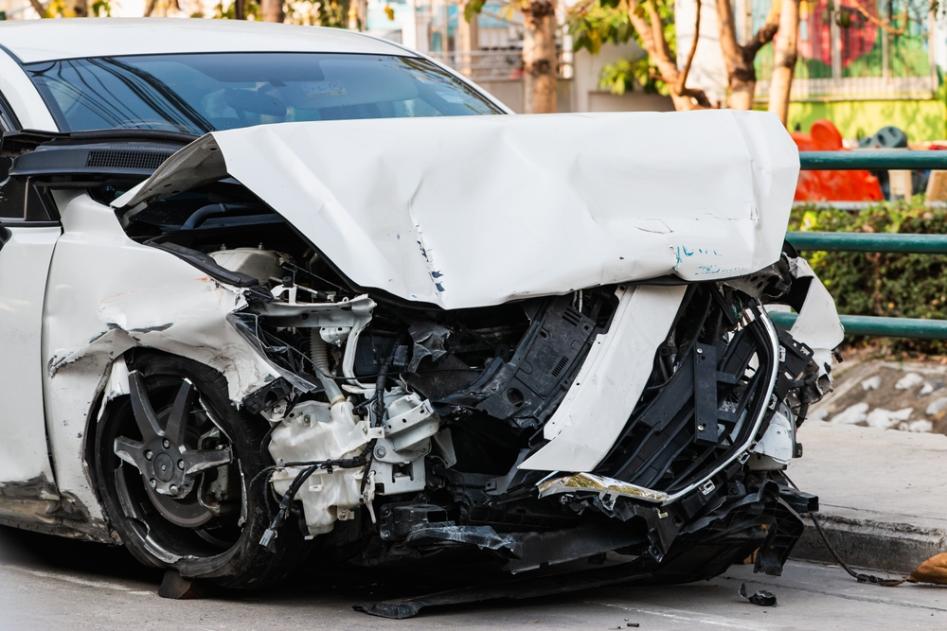
The fender bender appears minor, despite a cracked bumper, a broken headlight, and scraped paint. Despite the cosmetic flaws, the frame rail has moved 8mm to the left. This is imperceptible to the naked eye, yet it can influence the vehicle’s handling, the deployment of airbags, and the effectiveness of crumple zones in safeguarding occupants during a future impact.
That’s the difference between cosmetic damage and structural damage on a car. One affects appearance. The other affects safety. And the only way to tell them apart is through proper measurement.
What Is Structural Damage on a Car?
The meaning of structural damage on a car is simple: it’s the deformation, displacement, or failure of load-bearing components. These include frame rails, A/B/C pillars, rocker panels, crumple zones, crossmembers, and suspension mounting points. When these parts are bent, twisted, or cracked, the vehicle’s ability to absorb impact and protect occupants is compromised.
Common types of structural damage include bent or twisted frame rails, kinked unibody panels, crushed crumple zones, misaligned subframe mounting points, and cracked welds in the safety cage. Some of these are visible from underneath the vehicle, but many hide behind panels that look perfectly intact from the outside.
Cosmetic damage, by contrast, affects non-load-bearing parts like body panels, bumpers, and trim. A dented door looks bad but doesn’t change crash performance. A bent frame rail changes everything. It’s also worth noting that “structural damage” on a vehicle history report affects resale value and insurability, which matters for anyone buying a car with structural damage on its record.
Warning Signs of Structural Damage
Visual red flags:
- Uneven panel gaps around doors, hood, or trunk
- Doors that are hard to close or pop open unexpectedly
- Visible frame bends or kinks underneath the vehicle
- Torn weld seams, distorted pillars, or buckling near the roofline
Driving symptoms:
- Steering that pulls to one side even after a standard alignment
- Vehicle that wanders or feels unstable at highway speeds
- Uneven or rapidly returning tire wear
- New creaks or groans over bumps that weren’t present before the collision
Any of these justifies a professional structural assessment with measuring equipment, not just a visual once-over.
Key Facts Every Body Shop Should Know
Before starting any assessment, it helps to understand what separates cosmetic damage from structural compromise. Here’s a side-by-side breakdown.
How Body Shops Diagnose Structural Damage
Diagnosis starts with a visual inspection of impact zones, panel gaps, door and hood operation, and fluid leaks. The impact direction, speed, and any drivability changes reported by the owner help map where hidden damage is likely to be found.
But visual assessment only gets you so far. Measurement is the only real confirmation. Modern shops use 3D auto body measuring systems to compare vehicle datum points against OEM specifications. Any deviation beyond manufacturer tolerances, even a few millimeters, constitutes measurable structural damage. Pre-repair measurement establishes the baseline, and post-repair measurement confirms the vehicle has returned to spec.
Additional diagnostics include electronic scans for airbag, ADAS, and safety system faults triggered by the collision, plus suspension and alignment checks for bent control arms or misaligned subframe mounting points. Together, these steps determine whether the vehicle can be safely repaired or is approaching total-loss territory.
How Body Shops Document Structural Damage
Documentation protects the vehicle owner, the repair shop, and any future buyer or insurer. A complete structural documentation package includes:
- Pre-repair photos of all impact areas and measurement points
- 3D measurement reports showing before-and-after values versus OEM specs
- Diagnostic scan reports for airbag, ABS, and ADAS before and after repair
- Written repair plan covering structural pulls, part replacements, weld locations, and sectioning per OEM procedures
- Final alignment report and road-test notes
Car Structural Damage Repair: Step by Step
Step 1: Teardown and repair planning. Panels, bumpers, lights, and sometimes interior trim are removed to expose the frame and structural components directly. The repair plan is finalized based on which components get straightened, which get replaced, and what pulling strategy applies.
Step 2: Setup and pulling on the frame machine. The vehicle is secured to a frame bench at factory pickup points. Pulling follows the reverse of the collision sequence using hydraulic rams and clamps, with the technician checking progress against measurement data throughout.
Step 3: Sectioning, welding, and replacement. Heavily deformed sections that can’t be straightened are cut and replaced using OEM-approved sectioning locations and joining methods. Reinforcing weakened areas is acceptable; altering crumple zone geometry is not.
Step 4: Final verification and testing. A full dimensional recheck against OEM tolerances confirms the structure is back within spec. This is followed by wheel alignment, suspension check, road test, and post-repair ADAS recalibration where required.
When Structural Damage Is Beyond Repair
Not every vehicle with structural damage can be saved. When severe buckling affects multiple crush zones, the cabin geometry can’t be restored to OEM tolerances, or repair costs exceed the vehicle’s value, the vehicle is typically declared a total loss. A vehicle with prior structural repairs that sustains a second collision in the same area is also a strong candidate.
One important distinction: a vehicle can be declared a total loss for economic reasons even when the structure is technically repairable. These are separate decisions.

The Right Equipment for Structural Repair
Getting structural repairs right comes down to two things: accurate measurement and precise positioning during the pull. They serve different purposes, and mixing them up leads to problems.
On the measurement side, Celette’s NAJA 3D is a computerized auto body measuring system that checks the vehicle’s structural points against OEM dimensional data before and after repair. It doesn’t guide the repair itself. What it does is confirm whether the structure was damaged, by how much, and whether it’s back within factory tolerances once the work is done. The reports it produces go straight into the repair file for insurers and quality records.
The repair positioning is a separate job. Celette’s MZ dedicated jigs and the Cameleon universal jig system handle that side. These fixtures hold structural points in their correct locations using OEM data while the Rhone, Griffon, or Sevenne bench applies pulling force. The Cameleon works across thousands of vehicle models from a single modular kit, so shops don’t need to stock vehicle-specific fixtures for every make and model that comes through the door.
Together, the car frame measurement tool and jig systems cover the full process from diagnosis through verified repair. Visit celette.com or contact Celette today to explore the range.
References:
What Is Structural Damage on a Car? Retrieved 14 July 2026, from https://epicvin.com/blog/what-is-structural-damage-on-a-car
Frequently Asked Questions About Structural Damage on a Car
Q: Why do shops use jig systems instead of freehand pulling for car structural damage repair?
A: Jig systems like the MZ or Cameleon hold structural points in their factory-correct positions using OEM data while the bench applies pulling force. This prevents overcorrection and ensures each reference point returns to spec. Freehand pulling relies on the technician’s judgment alone, which increases the risk of dimensional errors that only show up during post-repair measurement.
Q: How should shops handle vehicles with prior structural damage on record?
A: Start with a full dimensional measurement against OEM specs to verify whether the previous repair holds up. Review any available repair documentation for OEM procedures, certified shop credentials, and before-and-after measurement data. If documentation is missing or measurements fall outside factory tolerances, flag the vehicle for further assessment before beginning new work.
Q: How do body shops detect hidden structural damage?
A: Professional shops use 3D electronic measuring systems to compare the vehicle’s structural points against manufacturer specifications. Any deviation beyond OEM tolerances, even a few millimeters, is flagged as measurable structural damage. This is far more reliable than visual inspection alone, which can miss hidden deformation behind cosmetic panels.




