𝐂𝐞𝐥𝐞𝐭𝐭𝐞 𝐃𝐞𝐝𝐢𝐜𝐚𝐭𝐞𝐝 𝐉𝐢𝐠𝐬: 𝐓𝐡𝐞 𝐎𝐄𝐌-𝐀𝐜𝐜𝐮𝐫𝐚𝐭𝐞 𝐑𝐞𝐟𝐞𝐫𝐞𝐧𝐜𝐞 𝐟𝐨𝐫 𝐒𝐭𝐫𝐮𝐜𝐭𝐮𝐫𝐚𝐥 𝐂𝐨𝐥𝐥𝐢𝐬𝐢𝐨𝐧 𝐑𝐞𝐩𝐚𝐢𝐫
In professional collision repair, structural accuracy is the foundation of safety, performance, and long-term vehicle integrity. Modern vehicles are engineered around precisely defined reference points that govern geometry, load paths, suspension behavior, and the correct operation of ADAS systems. To restore a damaged vehicle properly, the repair process must return the body structure to exact factory specifications. This is precisely the role of Celette dedicated jigs.
For more than half a century, Celette has defined the global reference for structural repair accuracy. As the inventor of both the straightening bench concept and the jig-based vehicle repair system, Celette fundamentally shaped how vehicles are repaired worldwide. Today, its dedicated jigs remain the most OEM-aligned method for restoring vehicle structures after collision damage.
𝐀 𝐁𝐫𝐢𝐞𝐟 𝐇𝐢𝐬𝐭𝐨𝐫𝐲: 𝐖𝐡𝐞𝐫𝐞 𝐈𝐭 𝐀𝐥𝐥 𝐒𝐭𝐚𝐫𝐭𝐞𝐝 𝐢𝐧 𝟏𝟗𝟓𝟑
Celette contribution to collision repair is foundational rather than incremental. In 1953, Celette invented the straightening bench, introducing for the first time a controlled, rigid reference platform for vehicle structural repair. At the same moment in history, Celette also developed the concept of dedicated jigs—mechanical fixtures designed to position vehicle bodies at precise, manufacturer-defined reference points.
This dual invention marked the true beginning of modern structural collision repair.
Before 1953, repairs relied heavily on visual alignment, manual measuring, and technician experience. By introducing the straightening bench and dedicated jig system, Celette transformed collision repair into a repeatable, engineering-based process. Because vehicles are manufactured on jigs, Celette established a principle that still defines OEM repair logic today:
𝐂𝐚𝐫𝐬 𝐚𝐫𝐞 𝐛𝐮𝐢𝐥𝐭 𝐨𝐧 𝐣𝐢𝐠𝐬—𝐬𝐨 𝐭𝐡𝐞 𝐦𝐨𝐬𝐭 𝐚𝐜𝐜𝐮𝐫𝐚𝐭𝐞 𝐰𝐚𝐲 𝐭𝐨 𝐫𝐞𝐩𝐚𝐢𝐫 𝐭𝐡𝐞𝐦 𝐢𝐬 𝐨𝐧 𝐣𝐢𝐠𝐬.
From that starting point, Celette began building what is now one of the world’s most extensive vehicle fixture databases, continuously developed and validated in close collaboration with car manufacturers.
COLLISION REPAIR HISTORY VIDEO:
𝐖𝐡𝐚𝐭 𝐀𝐫𝐞 𝐂𝐞𝐥𝐞𝐭𝐭𝐞 𝐃𝐞𝐝𝐢𝐜𝐚𝐭𝐞𝐝 𝐉𝐢𝐠𝐬?
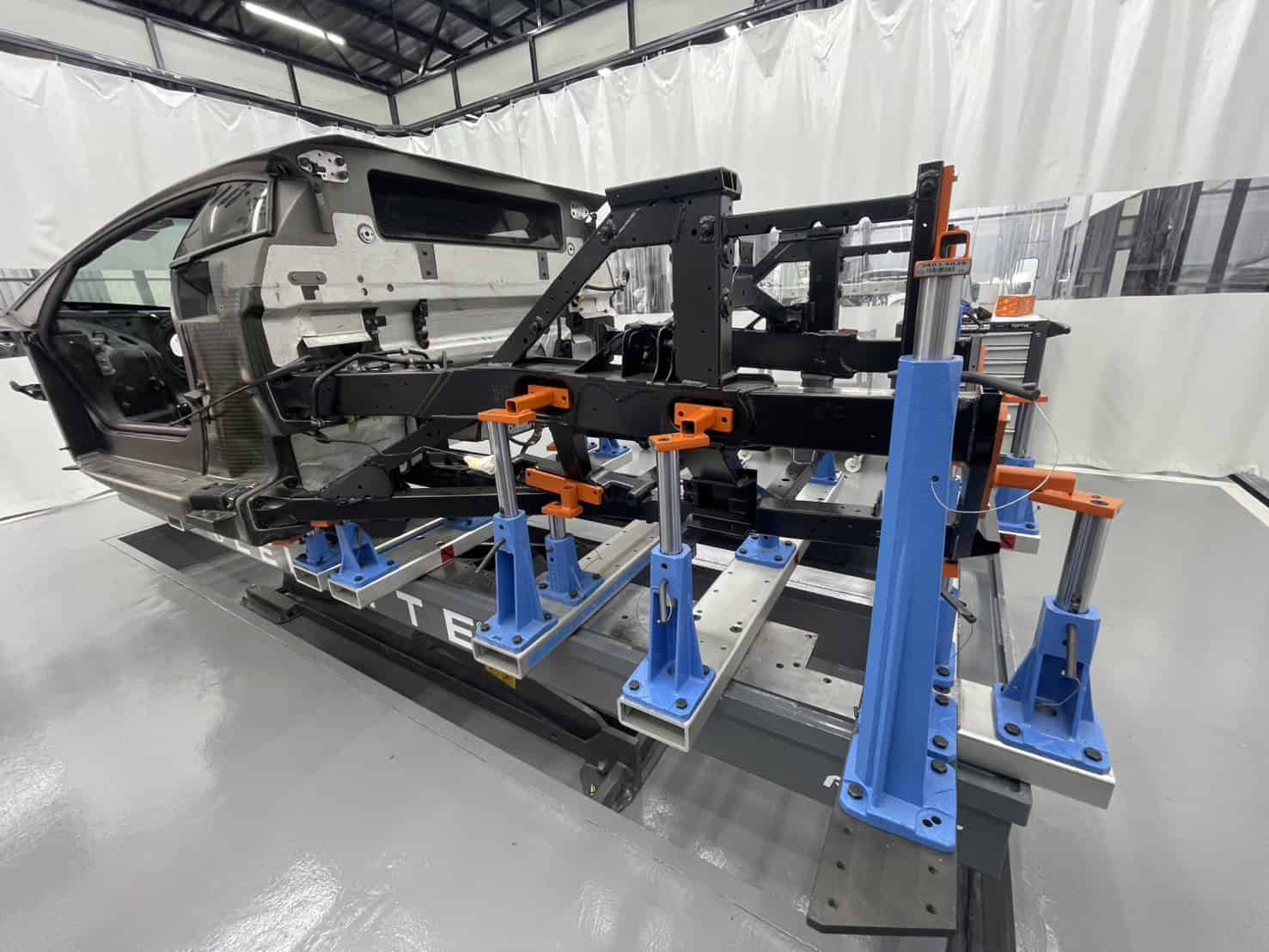
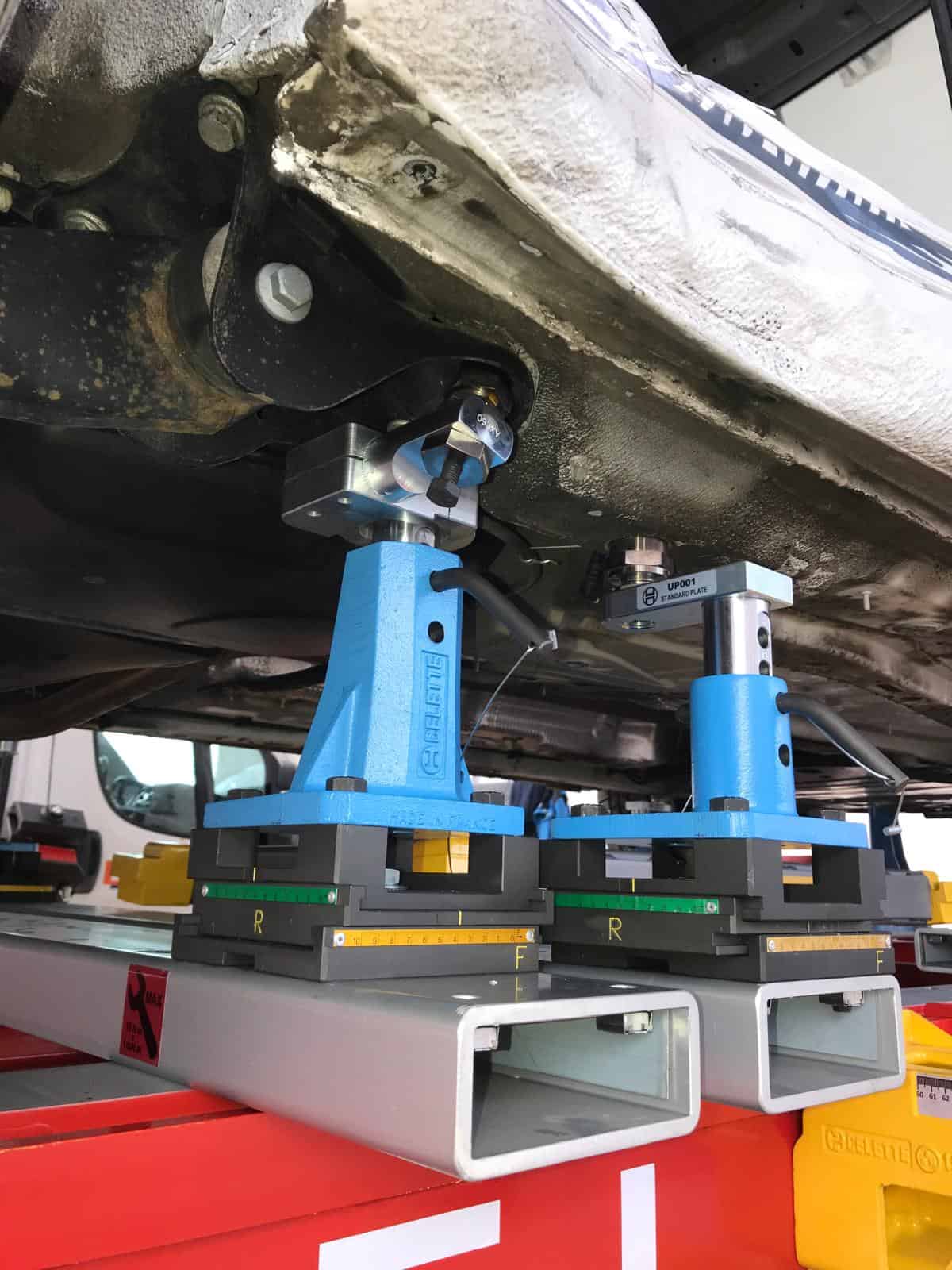
Celette dedicated jigs are vehicle-specific precision fixtures designed to locate, support, and lock a vehicle body at OEM-defined structural control points. These points are typically located on:
• Longitudinal rails
• Crossmembers
• Suspension and subframe mounting zones
• Critical load-bearing areas of the underbody
Unlike systems that only measure deviation, dedicated jigs physically impose correct geometry. Once installed, the vehicle structure is mechanically constrained to its factory position, eliminating interpretation errors and ensuring consistent, repeatable results.
MZ jigs tutorial video:
𝐒𝐭𝐫𝐮𝐜𝐭𝐮𝐫𝐚𝐥 𝐀𝐜𝐜𝐮𝐫𝐚𝐜𝐲 𝐚𝐧𝐝 𝐀𝐃𝐀𝐒 𝐏𝐞𝐫𝐟𝐨𝐫𝐦𝐚𝐧𝐜𝐞
Advanced Driver Assistance Systems depend directly on precise vehicle geometry. Cameras, radars, and sensors are mounted to body structures whose positions are defined in millimeters—and in some cases fractions of a millimeter. Any deviation in the body shell can shift sensor angles, distances, or reference planes, leading to incorrect ADAS operation even if electronic calibration is performed afterward.
By restoring the vehicle structure on jigs, the mechanical foundation for ADAS calibration is re-established first. This ensures that:
• Sensor mounting points are returned to true OEM position
• Calibration targets align correctly with vehicle geometry
• ADAS systems operate within manufacturer-defined tolerances
In this context, jig-based structural repair is not just about straightening metal—it is a prerequisite for reliable ADAS calibration and functional safety in modern vehicles.
𝐂𝐫𝐢𝐭𝐢𝐜𝐚𝐥 𝐂𝐨𝐧𝐭𝐫𝐨𝐥 𝐏𝐨𝐢𝐧𝐭𝐬 𝐨𝐧 𝐭𝐡𝐞 𝐕𝐞𝐡𝐢𝐜𝐥𝐞 𝐁𝐨𝐝𝐲
Every vehicle platform is defined by a network of critical control points determined during OEM design and production. These points directly influence:
• Wheelbase and track width
• Suspension geometry and steering alignment
• Load transfer and crash-energy management
• Positioning of ADAS sensors and calibration references
Celette jigs are engineered to control these exact points. When a vehicle is mounted on a Celette bench with the appropriate jig set, the body structure is restored to OEM geometry by design, not approximation.
𝐀𝐜𝐜𝐮𝐫𝐚𝐜𝐲: 𝐖𝐡𝐲 𝐉𝐢𝐠-𝐁𝐚𝐬𝐞𝐝 𝐑𝐞𝐩𝐚𝐢𝐫 𝐈𝐬 𝐒𝐮𝐩𝐞𝐫𝐢𝐨𝐫
Accuracy is the defining advantage of dedicated jigs. Celette jigs are manufactured to tight tolerances and validated through OEM-approved processes.
Key accuracy benefits include:
• Mechanical positioning rather than measurement-only verification
• Elimination of cumulative setup and interpretation errors
• Identical results regardless of technician or workshop
As modern vehicles increasingly combine high-strength steel, aluminum, and composite materials, even minimal deviation can compromise safety systems or ADAS calibration. Jig-based repair delivers the highest level of structural certainty.
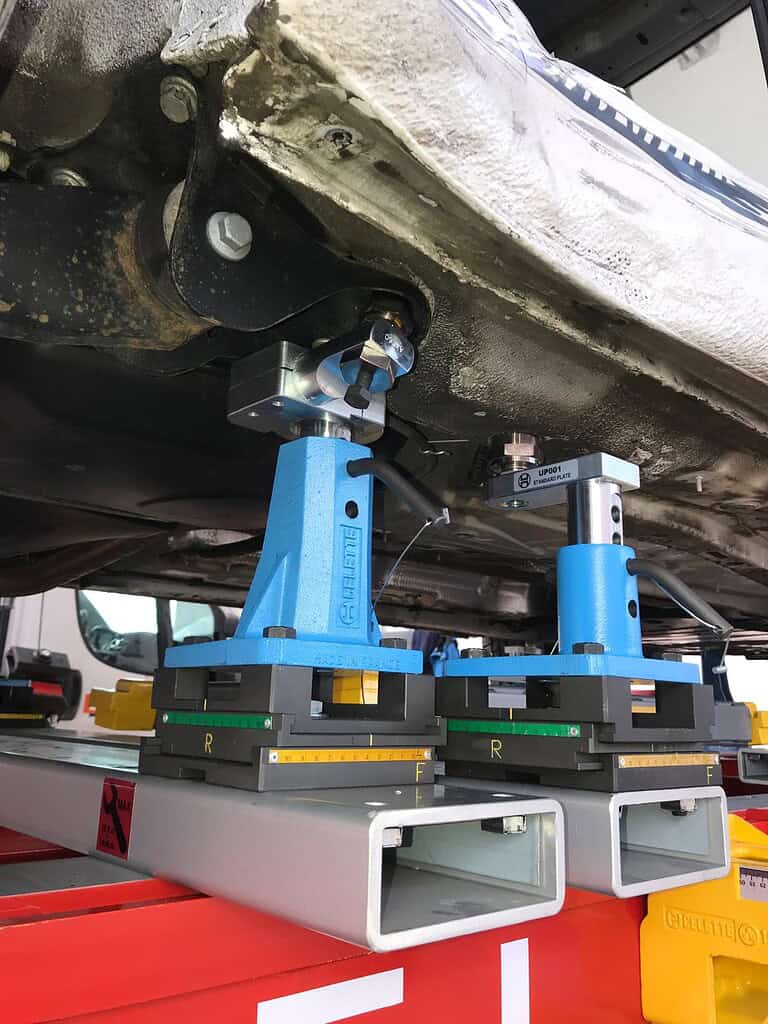
The Structural Advantage of Pulling on Jigs
One of the most important and often misunderstood benefits of repairing a vehicle on dedicated jigs becomes evident during the pulling and straightening process.
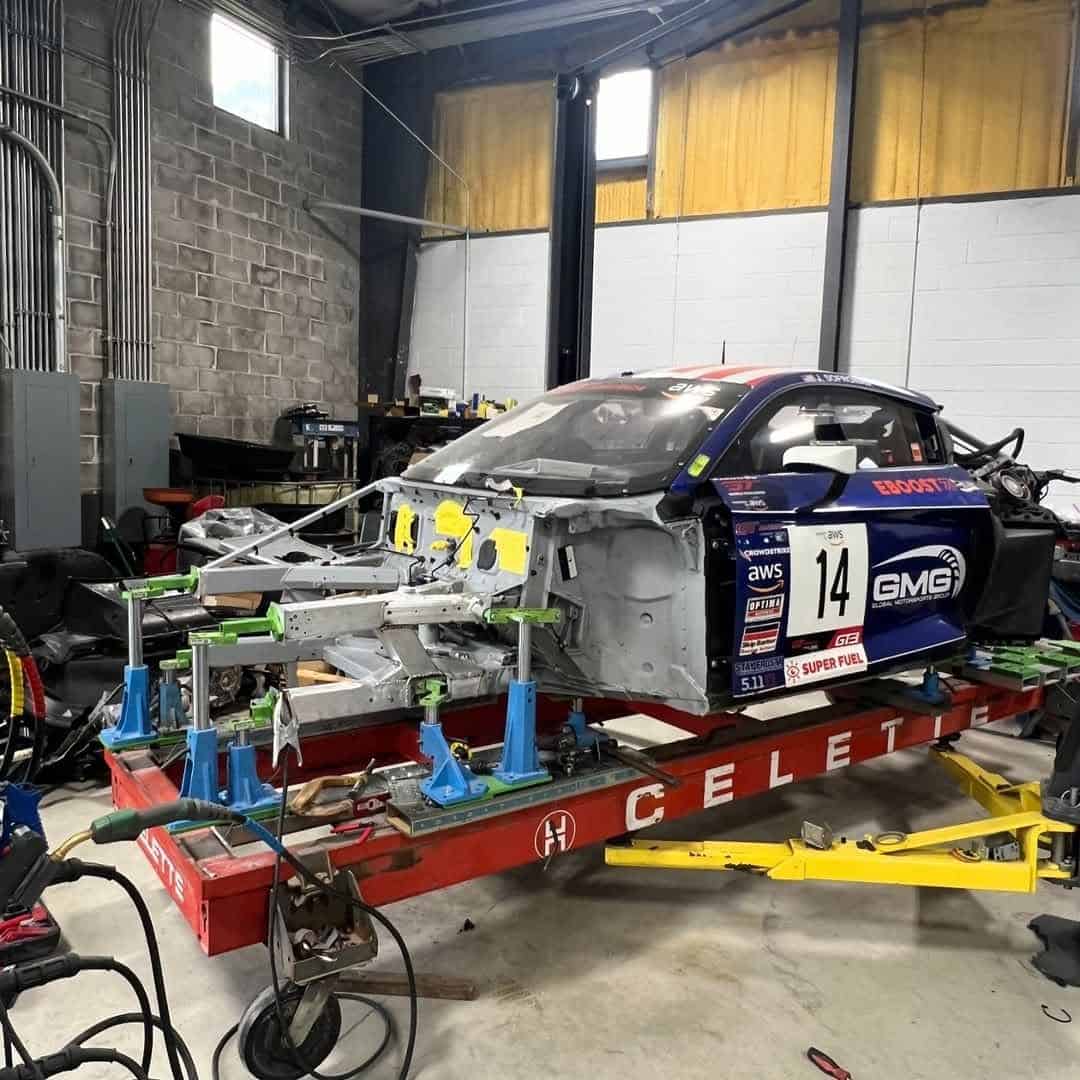
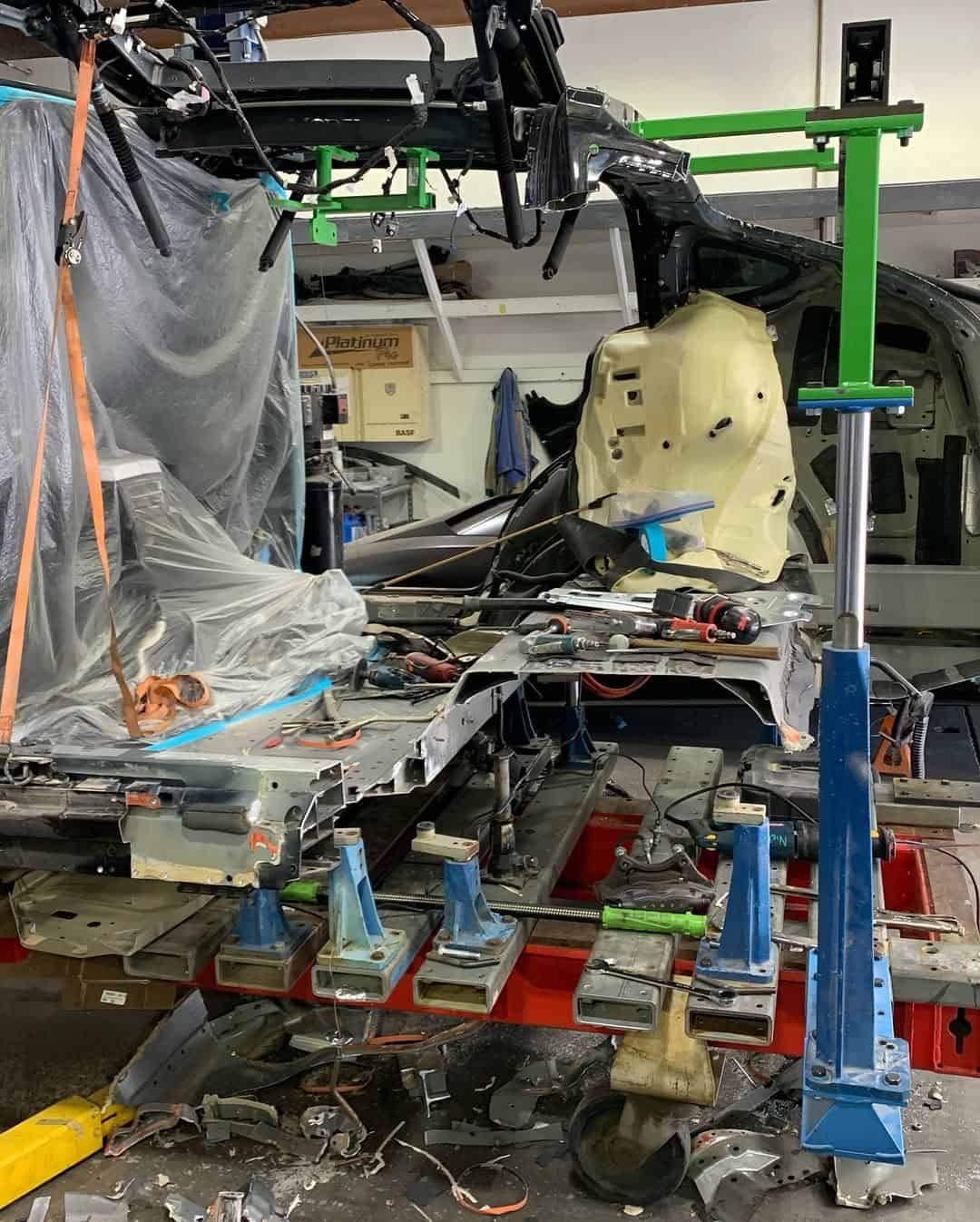
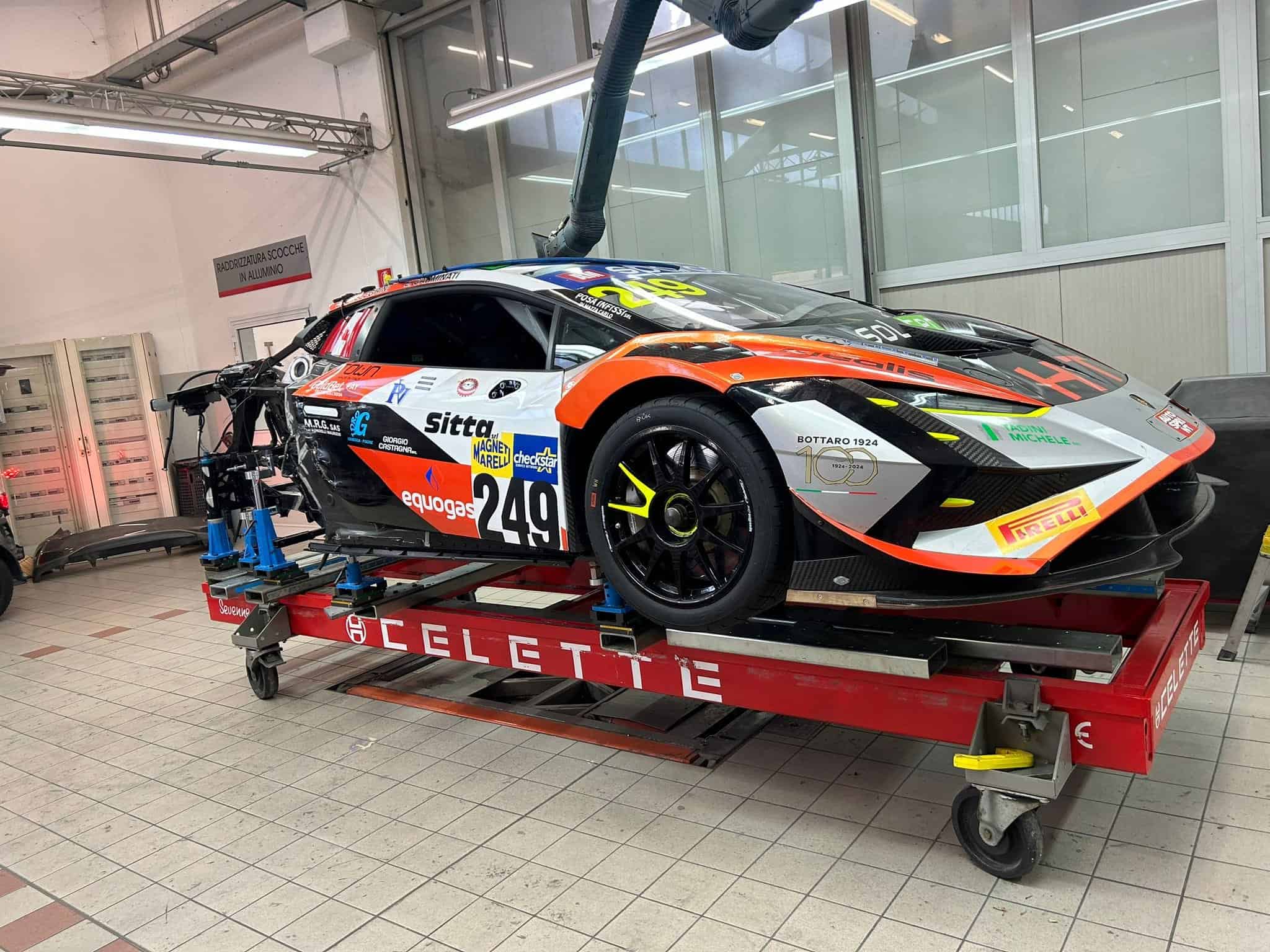
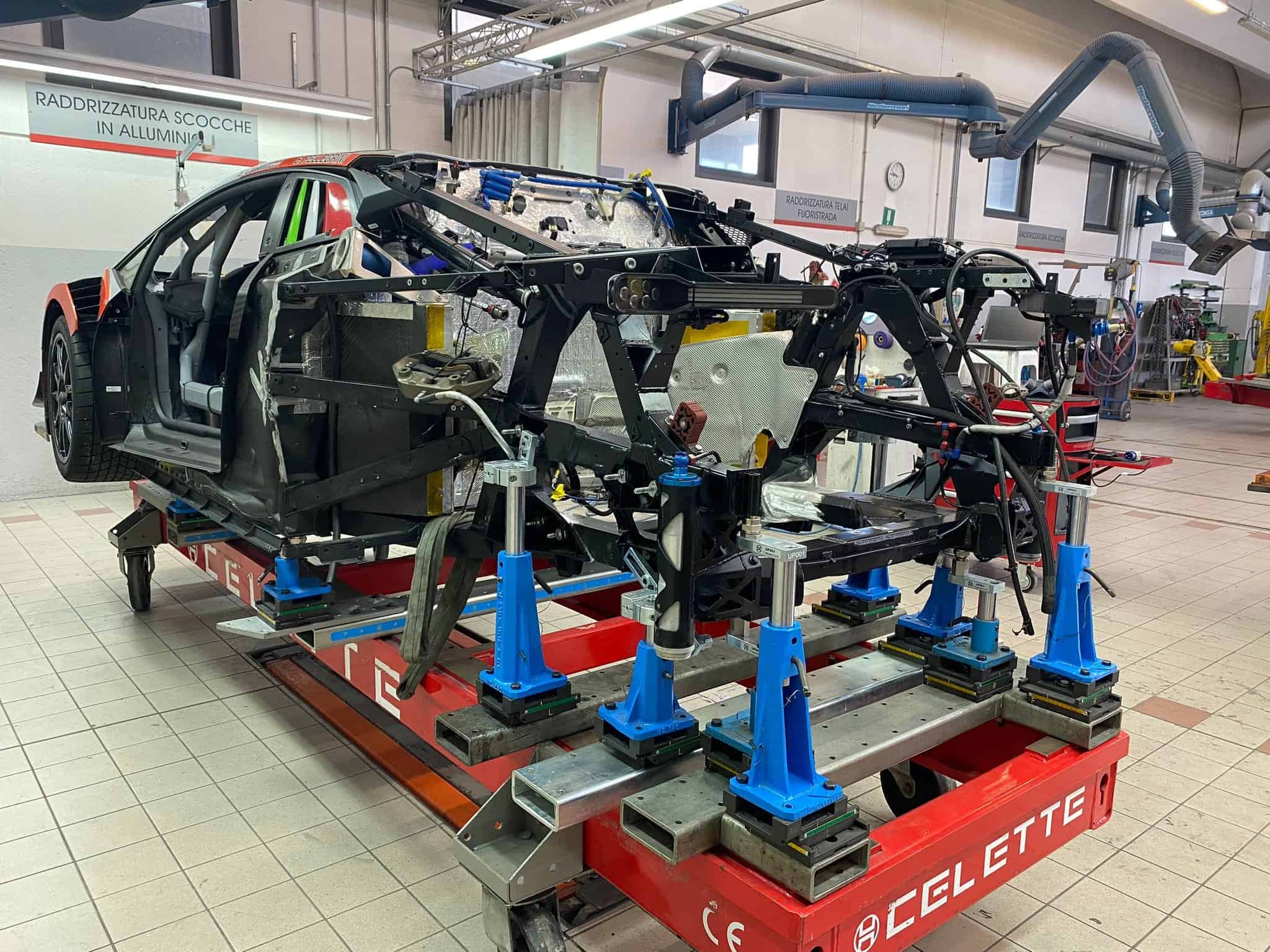
When a vehicle is mounted on a Celette bench using a sufficient number of dedicated jigs combined with sill clamps, the body structure is rigidly anchored at all OEM reference points. In this condition, the vehicle behaves as a fixed structural assembly.
As a result:
• Only the damaged area is pulled, not the entire vehicle body
• Undamaged sections remain mechanically locked in OEM position
• Pulling forces are concentrated exactly where deformation exists
Without jigs, pulling forces tend to distribute through the entire structure, potentially introducing secondary distortions in areas that were originally undamaged. With jig-based anchoring, the straightening process becomes controlled, localized, and predictable.
This approach:
• Preserves original factory geometry in unaffected zones
• Reduces the number of corrective pulls required
• Minimizes metal fatigue and stress redistribution
• Delivers a more precise and efficient structural correction
In essence, jigs transform pulling from a global correction into a targeted structural repair, aligned with OEM repair logic.
The world’s pioneer in the Car Body Repair Industry video:
𝐎𝐄𝐌 𝐏𝐚𝐫𝐭𝐧𝐞𝐫𝐬𝐡𝐢𝐩𝐬 𝐚𝐧𝐝 𝐄𝐚𝐫𝐥𝐲 𝐃𝐞𝐯𝐞𝐥𝐨𝐩𝐦𝐞𝐧𝐭
Celette works directly with vehicle manufacturers 6 to 12 months before a new model is released to the market, in close cooperation with OEM technical departments.
The development process typically includes:
1. Transfer of CAD data and blueprints
2. Definition of OEM-approved structural control points
3. Fixture set design
4. Virtual validation
5. Prototype manufacturing
6. Physical testing on final production vehicles, often at OEM facilities
This ensures that Celette jigs are validated on real vehicles, not reverse-engineered after market launch.
𝐓𝐡𝐞 𝐂𝐞𝐥𝐞𝐭𝐭𝐞 𝐌𝐙, 𝐌𝐙+, 𝐚𝐧𝐝 𝐌𝐙𝐱 𝐉𝐢𝐠 𝐅𝐚𝐦𝐢𝐥𝐢𝐞𝐬
Celette has continuously evolved its dedicated jig systems to meet changing vehicle architectures and workshop needs.
MZ: The Original Dedicated Jig System
The classic MZ system features jigs where the tops and pistons are welded together into a single rigid component.
This design delivers maximum robustness and long-term dimensional stability and has been used worldwide as a structural repair reference for decades.
MZ+: Increased Modularity and Flexibility
The MZ+ system represents the next evolution. In MZ+, the jig tops are separated from the pistons, providing greater modularity, easier handling, and improved flexibility in setup and replacement—while maintaining the same OEM-controlled geometry.
MZx: The Advanced Composite Evolution
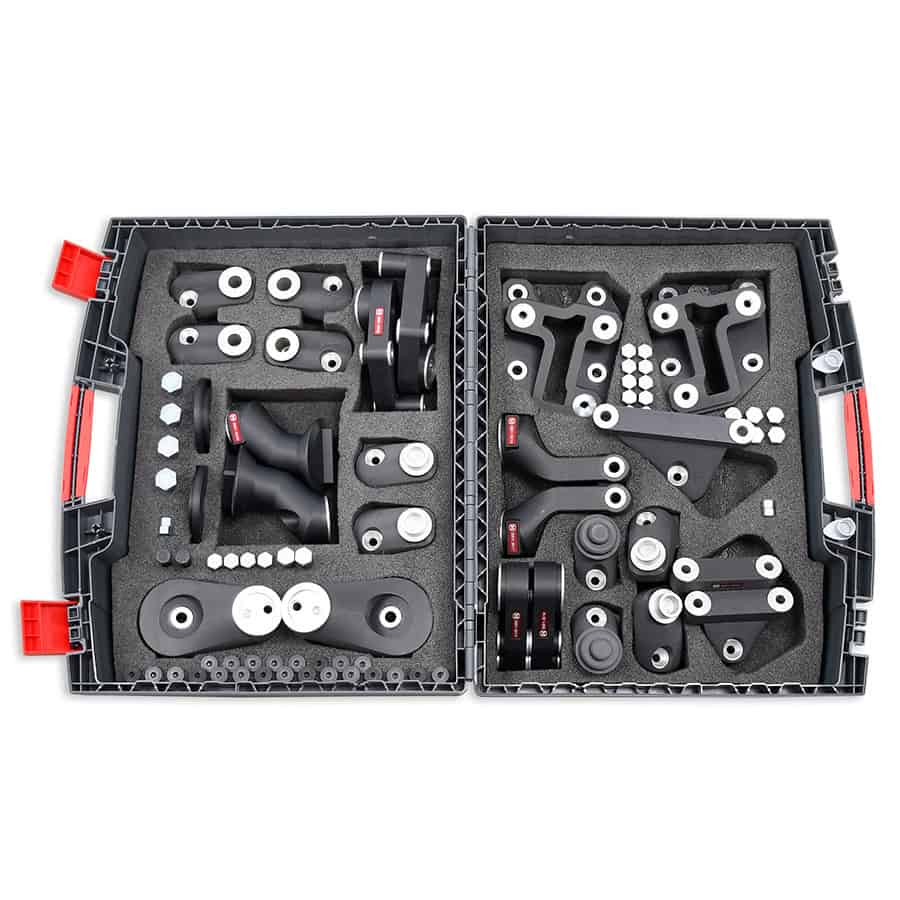
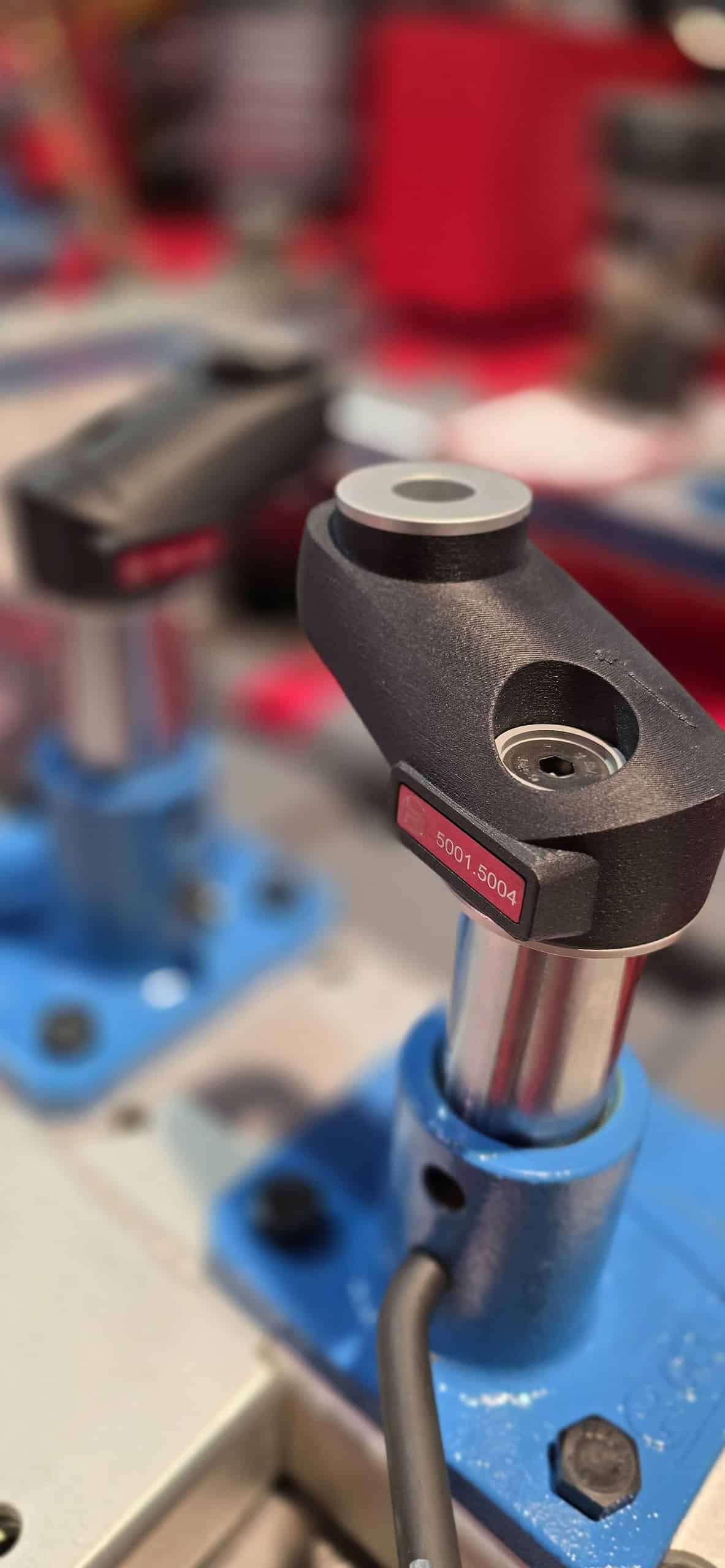
The MZx system is the most advanced evolution of Celette dedicated jigs. While preserving the same geometric precision as steel jigs, MZx introduces 3D-printed composite construction reinforced with carbon fiber and aluminium.
Key characteristics of MZx:
• Composite construction with carbon fiber reinforcement
• Extremely lightweight, around 40 lbs (≈18 kg) per set
• Same OEM-level accuracy as traditional steel jigs
• Improved ergonomics and faster handling
MZx jigs can be designed and produced on demand, leveraging Celette’s fixture database developed since the 1950s, allowing rapid support for new vehicle platforms.
𝐀𝐜𝐜𝐞𝐬𝐬 𝐭𝐨 𝐂𝐨𝐦𝐩𝐥𝐞𝐱 𝐚𝐧𝐝 𝐌𝐨𝐝𝐞𝐫𝐧 𝐕𝐞𝐡𝐢𝐜𝐥𝐞 𝐒𝐭𝐫𝐮𝐜𝐭𝐮𝐫𝐞𝐬
Modern vehicles, particularly EVs, feature compact packaging, battery enclosures, and complex underbody designs. MZx jigs are optimized to reach difficult mounting areas where other systems may fall short, ensuring accurate positioning even on advanced multi-material architectures.
𝐓𝐡𝐞 𝐉𝐢𝐠 𝐃𝐞𝐬𝐢𝐠𝐧 𝐚𝐧𝐝 𝐕𝐚𝐥𝐢𝐝𝐚𝐭𝐢𝐨𝐧 𝐏𝐫𝐨𝐜𝐞𝐬𝐬
Celette follows a strict and validated workflow:
1. OEM data acquisition
2. Identification of structural control points
3. Fixture geometry design
4. Virtual simulation and verification
5. Prototype manufacturing
6. Physical testing on production vehicles
7. Final validation and documentation
This ensures every jig set is technically accurate, physically proven, and OEM-aligned.
𝐂𝐚𝐦𝐞𝐥𝐞𝐨𝐧: 𝐎𝐧𝐞 𝐔𝐧𝐢𝐯𝐞𝐫𝐬𝐚𝐥 𝐉𝐢𝐠 𝐒𝐨𝐥𝐮𝐭𝐢𝐨𝐧
In addition to vehicle-specific jigs, Celette offers Cameleon, a universal jig solution designed to cover multiple vehicle brands with a single system.
Cameleon is ideal for workshops that:
• Repair a wide range of makes and models
• Require flexibility while maintaining OEM-level accuracy
• Want to reduce inventory without sacrificing structural control
While dedicated jigs provide maximum vehicle-specific precision, Cameleon offers a powerful one-set-fixes-all-brands solution for mixed-brand repair environments.
Car Universal Fixture System Cameleon video:
Cameleon Universal Jig System Tutorial video:
𝐃𝐞𝐝𝐢𝐜𝐚𝐭𝐞𝐝 𝐉𝐢𝐠𝐬 𝐯𝐬. 𝐀𝐥𝐭𝐞𝐫𝐧𝐚𝐭𝐢𝐯𝐞 𝐑𝐞𝐩𝐚𝐢𝐫 𝐌𝐞𝐭𝐡𝐨𝐝𝐬
Floor systems, tram gauges, and electronic measuring tools remain valuable diagnostic and verification instruments. However, they primarily measure deviation, whereas jigs physically control geometry.
Dedicated jigs:
• Lock the structure into the correct OEM position
• Remove interpretation from the repair process
• Provide the most reliable foundation for structural straightening
For critical structural repairs, jig-based repair remains the reference standard.
𝐂𝐨𝐧𝐜𝐥𝐮𝐬𝐢𝐨𝐧: 𝐑𝐞𝐩𝐚𝐢𝐫𝐢𝐧𝐠 𝐕𝐞𝐡𝐢𝐜𝐥𝐞𝐬 𝐭𝐡𝐞 𝐖𝐚𝐲 𝐓𝐡𝐞𝐲 𝐀𝐫𝐞 𝐁𝐮𝐢𝐥𝐭
Since 1953, Celette dedicated jigs have been built on a simple but powerful principle: vehicles should be repaired using the same reference logic with which they are manufactured. As the inventor of the straightening bench and the jig-based repair system, Celette continues to lead the industry through deep OEM partnerships, proven MZ and MZ+ systems, the advanced MZx composite evolution, and the versatile Cameleon solution.
For professional repair centers focused on safety, accuracy, and future-ready repair quality, jig-based repair is not an alternative, it is the benchmark.