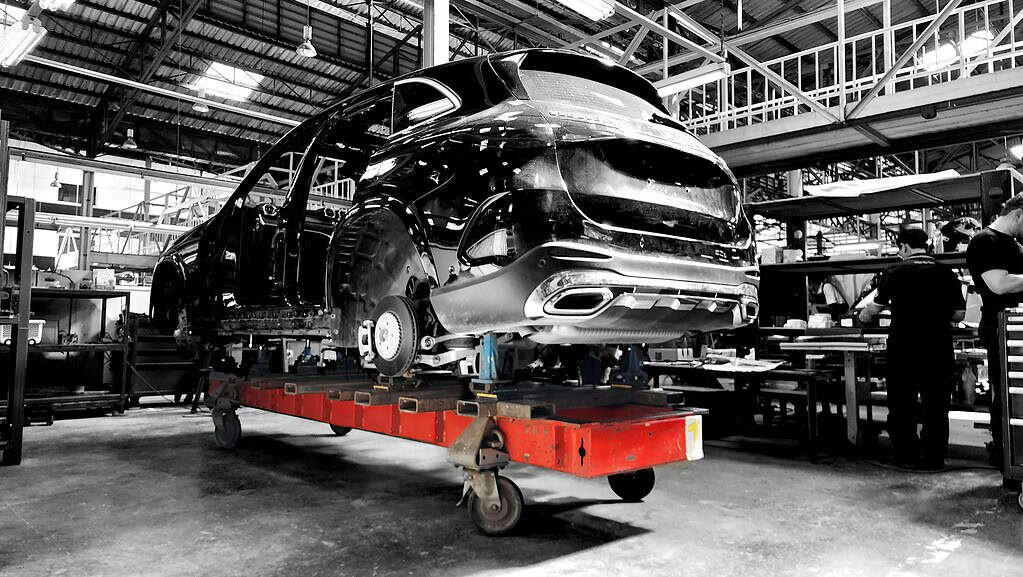
Introduction: ADAS Accuracy Begins Long Before Sensors Are Switched On
Advanced Driver Assistance Systems (ADAS) have fundamentally reshaped modern vehicles—and with them, collision repair. Cameras, radars, LiDAR, and ultrasonic sensors now govern braking, steering assistance, lane keeping, blind-spot monitoring, and adaptive cruise control. As a result, ADAS calibration has become a mandatory step after many repairs.
However, an essential reality is sometimes overlooked in the industry: ADAS calibration is only as accurate as the vehicle structure it is based on.
Before diagnostic tools, targets, and software procedures come into play, the vehicle must be restored to its correct OEM geometry. Even minimal structural deviations, often invisible to the naked eye, can alter sensor orientation, shift reference points, and compromise calibration accuracy.
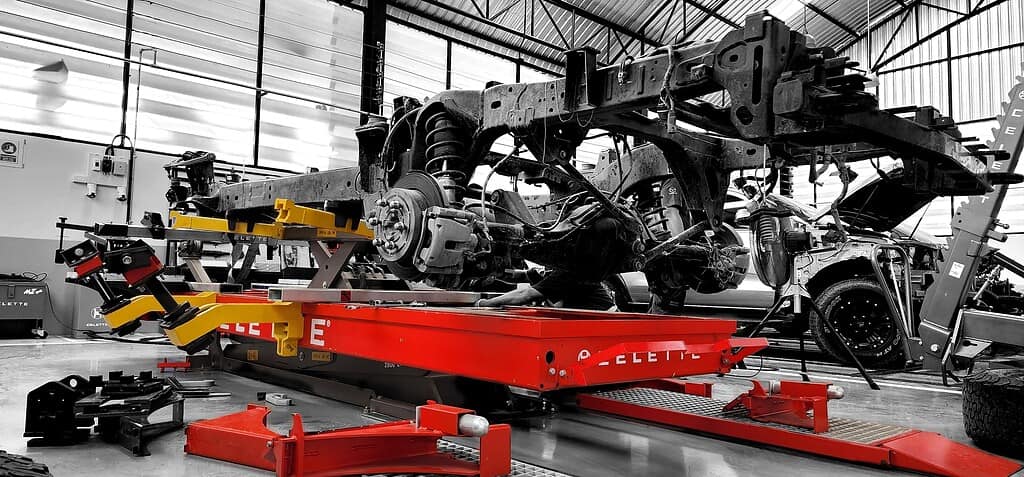
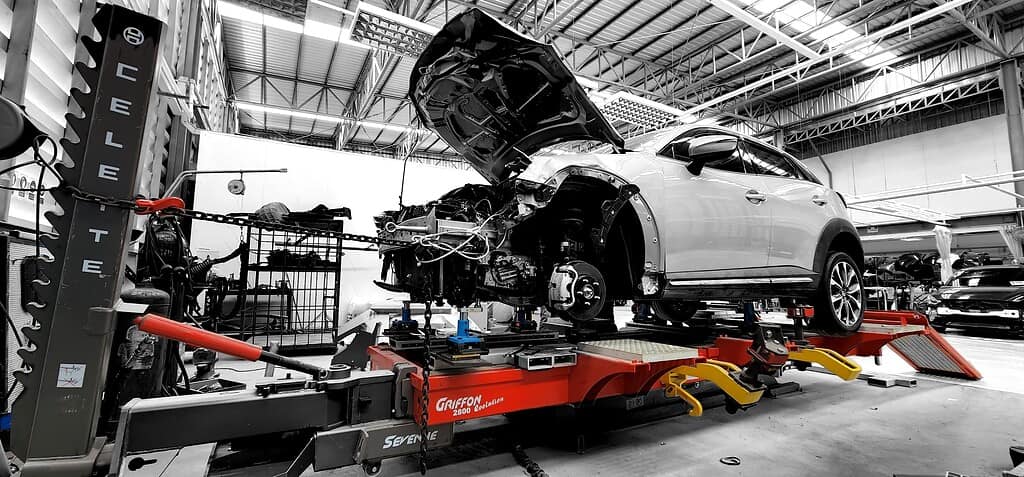
This is where structural benches and precise measurement systems become critical. Within this workflow, Celette benches SEVENNE, RHONE, and GRIFFON, combined with NAJA3D, form the technical foundation that ensures ADAS calibration is meaningful, repeatable, and safe.
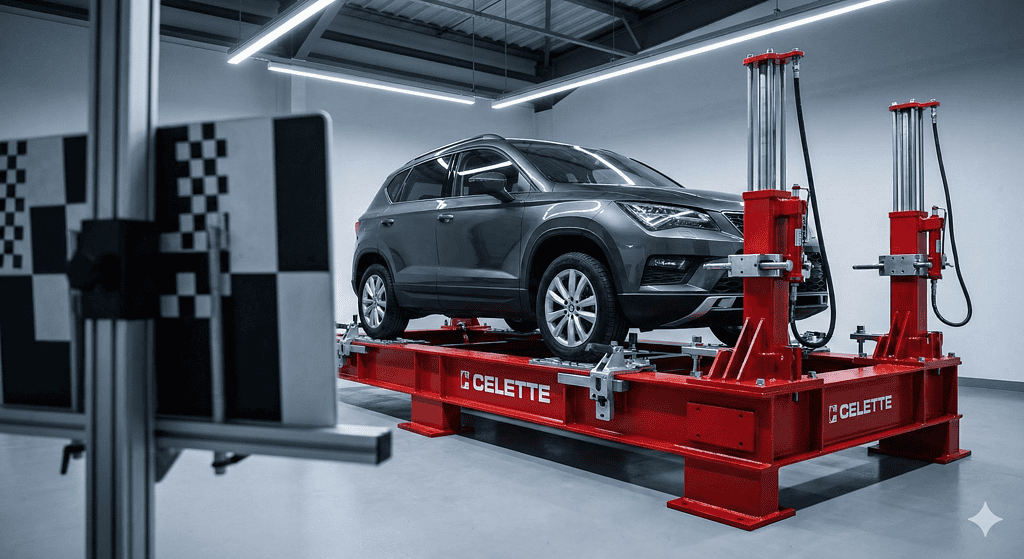
𝐖𝐡𝐲 𝐒𝐭𝐫𝐮𝐜𝐭𝐮𝐫𝐚𝐥 𝐁𝐞𝐧𝐜𝐡𝐞𝐬 𝐀𝐫𝐞 𝐌𝐨𝐫𝐞 𝐑𝐞𝐥𝐞𝐯𝐚𝐧𝐭 𝐓𝐡𝐚𝐧 𝐄𝐯𝐞𝐫
There is a misconception that structural benches belong to a pre-ADAS era, associated mainly with visible damage and metal pulling. In reality, ADAS has increased the importance of benches.
A professional bench provides:
• A stable, repeatable reference plane
• Controlled anchoring without secondary deformation
• Precise correction of length, width, and height
• A reliable base for advanced measurement systems
Without this foundation, ADAS calibration becomes an isolated step rather than part of a controlled repair process.
𝐂𝐞𝐥𝐞𝐭𝐭𝐞’𝐬 𝐒𝐭𝐫𝐮𝐜𝐭𝐮𝐫𝐚𝐥 𝐏𝐡𝐢𝐥𝐨𝐬𝐨𝐩𝐡𝐲: 𝐑𝐞𝐬𝐭𝐨𝐫𝐢𝐧𝐠 𝐎𝐄𝐌 𝐆𝐞𝐨𝐦𝐞𝐭𝐫𝐲
Celette’s approach to structural repair is built around a single objective: restore the vehicle to OEM-defined geometry, not an approximation.
This philosophy aligns directly with ADAS requirements, where tolerances are increasingly tight, and consistency is critical. Celette benches are engineered not only to straighten vehicles, but to re-establish correct reference geometry for modern electronic systems.
𝐂𝐞𝐥𝐞𝐭𝐭𝐞 𝐁𝐞𝐧𝐜𝐡𝐞𝐬 𝐚𝐬 𝐚 𝐔𝐧𝐢𝐟𝐢𝐞𝐝 𝐒𝐭𝐫𝐮𝐜𝐭𝐮𝐫𝐚𝐥 𝐅𝐨𝐮𝐧𝐝𝐚𝐭𝐢𝐨𝐧 𝐟𝐨𝐫 𝐀𝐃𝐀𝐒-𝐑𝐞𝐚𝐝𝐲 𝐑𝐞𝐩𝐚𝐢𝐫𝐬
Across its bench range, Celette follows a consistent engineering philosophy: restoring vehicles to OEM-defined structural geometry using stable, repeatable reference systems. Whether working on unibody passenger cars, long-wheelbase SUVs, or structurally reinforced modern platforms, Celette benches provide a rigid reference plane that allows deformation to be corrected in length, width, and height without introducing secondary distortion. This structural precision is essential in the ADAS era, where even minor geometric deviations can influence sensor orientation, calibration reference points, and system behavior.
Sevenne, Rhone, and Griffon benches differ in capacity, configuration, and workflow efficiency, but they share the same core functional principles.
All Celette benches support controlled anchoring, respect OEM load paths during pulling, and allow corrections to be applied progressively rather than aggressively. This approach ensures that structural forces are distributed correctly through the body, preserving the integrity of sensor mounting areas, suspension pickup points, and reference axes. From an ADAS perspective, this means that camera brackets, radar mounts, and chassis-related sensor references are restored as part of the structure, not corrected later through electronic compensation.
Most importantly, Celette benches are designed to integrate seamlessly with professional measurement systems and jig solutions, creating a complete structural workflow rather than isolated repair steps. Once geometry is mechanically restored on the bench, measurements can confirm centerline accuracy, symmetry, and dimensional compliance with OEM data. This bench-first methodology ensures that ADAS calibration is performed on a vehicle that is structurally correct by design. In this way, Celette benches function not simply as straightening tools, but as the physical foundation of safe, repeatable, and future-ready ADAS repair processes.
𝐓𝐡𝐞 𝐒𝐭𝐫𝐮𝐜𝐭𝐮𝐫𝐚𝐥–𝐀𝐃𝐀𝐒 𝐑𝐞𝐥𝐚𝐭𝐢𝐨𝐧𝐬𝐡𝐢𝐩: 𝐆𝐞𝐨𝐦𝐞𝐭𝐫𝐲 𝐂𝐨𝐦𝐞𝐬 𝐅𝐢𝐫𝐬𝐭
ADAS sensors do not operate independently. They are mounted to body panels, brackets, windshields, bumpers, and structural components that define their spatial orientation. OEM calibration procedures assume that:
• The vehicle centerline is correct
• Suspension and chassis reference points are within specification
• Sensor mounting angles correspond to OEM geometry
• Ride height, wheelbase, and symmetry are accurate
If the structure is even slightly out of tolerance:
• Radar beams may be misaligned
• Camera fields of view may be offset
• Steering-angle references may be incorrect
In such cases, electronic calibration can only align sensors to an incorrect structure, embedding physical errors into digital systems. This is why structural accuracy is not optional, it is a prerequisite.

𝐖𝐡𝐲 𝐒𝐭𝐫𝐮𝐜𝐭𝐮𝐫𝐚𝐥 𝐁𝐞𝐧𝐜𝐡𝐞𝐬 𝐀𝐫𝐞 𝐌𝐨𝐫𝐞 𝐑𝐞𝐥𝐞𝐯𝐚𝐧𝐭 𝐓𝐡𝐚𝐧 𝐄𝐯𝐞𝐫
There is a misconception that structural benches belong to a pre-ADAS era, associated mainly with visible damage and metal pulling. In reality, ADAS has increased the importance of benches.
A professional bench provides:
• A stable, repeatable reference plane
• Controlled anchoring without secondary deformation
• Precise correction of length, width, and height
• A reliable base for advanced measurement systems
Without this foundation, ADAS calibration becomes an isolated step rather than part of a controlled repair process.
𝐂𝐞𝐥𝐞𝐭𝐭𝐞’𝐬 𝐒𝐭𝐫𝐮𝐜𝐭𝐮𝐫𝐚𝐥 𝐏𝐡𝐢𝐥𝐨𝐬𝐨𝐩𝐡𝐲: 𝐑𝐞𝐬𝐭𝐨𝐫𝐢𝐧𝐠 𝐎𝐄𝐌 𝐆𝐞𝐨𝐦𝐞𝐭𝐫𝐲
Celette’s approach to structural repair is built around a single objective: restore the vehicle to OEM-defined geometry, not an approximation.
This philosophy aligns directly with ADAS requirements, where tolerances are increasingly tight, and consistency is critical. Celette benches are engineered not only to straighten vehicles, but to re-establish correct reference geometry for modern electronic systems.
𝐓𝐡𝐞 𝐑𝐨𝐥𝐞 𝐨𝐟 𝐉𝐢𝐠𝐬: 𝐅𝐢𝐱𝐢𝐧𝐠 𝐆𝐞𝐨𝐦𝐞𝐭𝐫𝐲 𝐁𝐞𝐟𝐨𝐫𝐞 𝐌𝐞𝐚𝐬𝐮𝐫𝐢𝐧𝐠 𝐚𝐧𝐝 𝐂𝐚𝐥𝐢𝐛𝐫𝐚𝐭𝐢𝐧𝐠
Beyond the bench itself, jigs play a decisive role in restoring OEM geometry, especially in ADAS-equipped vehicles. Dedicated jigs lock critical structural reference points in place, ensuring that loads are applied correctly, and that deformation is corrected at its source rather than compensated visually. This is particularly important for modern vehicles where sensor brackets, suspension pickup points, and subframe locations are structurally interdependent. Celette jig philosophy combines OEM-specific fixtures with the Cameleon universal jig system, allowing workshops to accurately position vehicles according to manufacturer reference data while maintaining flexibility across multiple platforms. By mechanically fixing the structure to verified points before pulling, jigs ensure that the restored geometry is stable, repeatable, and measurable—creating the necessary physical baseline for reliable 3D measurement and, ultimately, precise ADAS calibration.
𝐂𝐞𝐥𝐞𝐭𝐭𝐞 𝐁𝐞𝐧𝐜𝐡𝐞𝐬 𝐚𝐬 𝐚 𝐔𝐧𝐢𝐟𝐢𝐞𝐝 𝐒𝐭𝐫𝐮𝐜𝐭𝐮𝐫𝐚𝐥 𝐅𝐨𝐮𝐧𝐝𝐚𝐭𝐢𝐨𝐧 𝐟𝐨𝐫 𝐀𝐃𝐀𝐒-𝐑𝐞𝐚𝐝𝐲 𝐑𝐞𝐩𝐚𝐢𝐫𝐬
Across its bench range, Celette follows a consistent engineering philosophy: restoring vehicles to OEM-defined structural geometry using stable, repeatable reference systems. Whether working on unibody passenger cars, long-wheelbase SUVs, or structurally reinforced modern platforms, Celette benches provide a rigid reference plane that allows deformation to be corrected in length, width, and height without introducing secondary distortion. This structural precision is essential in the ADAS era, where even minor geometric deviations can influence sensor orientation, calibration reference points, and system behavior.
Sevenne, Rhone, and Griffon benches differ in capacity, configuration, and workflow efficiency, but they share the same core functional principles.
All Celette benches support controlled anchoring, respect OEM load paths during pulling, and allow corrections to be applied progressively rather than aggressively. This approach ensures that structural forces are distributed correctly through the body, preserving the integrity of sensor mounting areas, suspension pickup points, and reference axes. From an ADAS perspective, this means that camera brackets, radar mounts, and chassis-related sensor references are restored as part of the structure, not corrected later through electronic compensation.
Most importantly, Celette benches are designed to integrate seamlessly with professional measurement systems and jig solutions, creating a complete structural workflow rather than isolated repair steps. Once geometry is mechanically restored on the bench, measurements can confirm centerline accuracy, symmetry, and dimensional compliance with OEM data. This bench-first methodology ensures that ADAS calibration is performed on a vehicle that is structurally correct by design. In this way, Celette benches function not simply as straightening tools, but as the physical foundation of safe, repeatable, and future-ready ADAS repair processes.
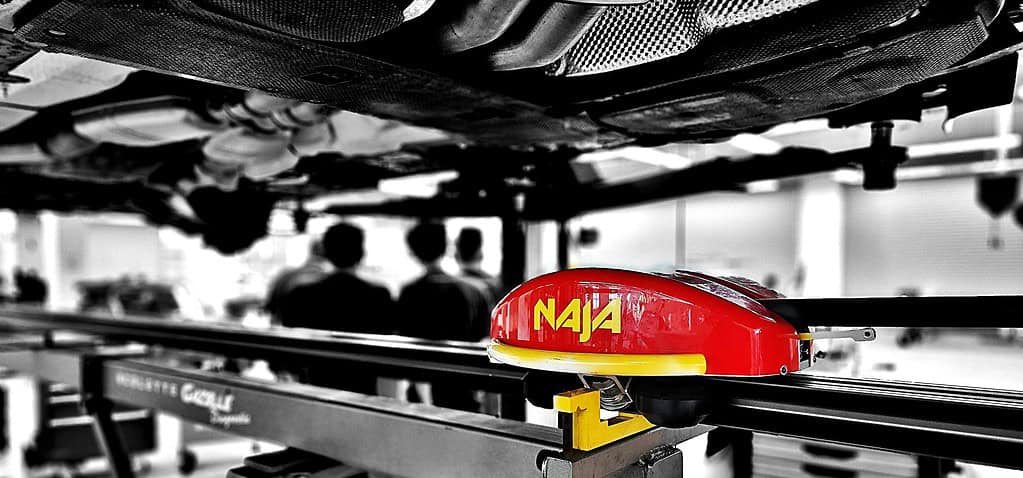
𝐍𝐀𝐉𝐀 𝟑𝐃: 𝐕𝐞𝐫𝐢𝐟𝐲𝐢𝐧𝐠 𝐒𝐭𝐫𝐮𝐜𝐭𝐮𝐫𝐞 𝐁𝐞𝐟𝐨𝐫𝐞 𝐄𝐥𝐞𝐜𝐭𝐫𝐨𝐧𝐢𝐜𝐬
While benches restore geometry, measurement confirms it.
NAJA3D is not an ADAS calibration system. Its role comes before electronic calibration, ensuring the vehicle structure is correct so that calibration can be performed with confidence.
NAJA3D provides:
• Real-time 3D measurement of chassis reference points
• Centerline-based verification
• Comparison against OEM structural data
• Documented measurement results
This verification step is essential because ADAS calibration procedures assume that the structure is already correct. NAJA3D validates that assumption with measurable data.
𝐂𝐞𝐧𝐭𝐞𝐫𝐥𝐢𝐧𝐞 𝐀𝐜𝐜𝐮𝐫𝐚𝐜𝐲: 𝐓𝐡𝐞 𝐇𝐢𝐝𝐝𝐞𝐧 𝐑𝐞𝐟𝐞𝐫𝐞𝐧𝐜𝐞 𝐢𝐧 𝐀𝐃𝐀𝐒 𝐂𝐚𝐥𝐢𝐛𝐫𝐚𝐭𝐢𝐨𝐧
One of the most underestimated factors in ADAS performance is vehicle centerline accuracy.
Many ADAS functions reference:
• Steering angle sensors
• Radar symmetry
• Camera orientation relative to the vehicle axis
If the centerline is shifted, calibration targets may be positioned correctly in space but incorrectly relative to the vehicle itself. This can lead to subtle but critical system deviations.
Celette benches, combined with NAJA3D, ensure:
• Mechanical restoration of the centerline
• Measured confirmation of symmetry
• A reliable baseline for all subsequent calibrations
𝐖𝐡𝐲 𝐄𝐥𝐞𝐜𝐭𝐫𝐨𝐧𝐢𝐜𝐬 𝐂𝐚𝐧𝐧𝐨𝐭 𝐂𝐨𝐫𝐫𝐞𝐜𝐭 𝐒𝐭𝐫𝐮𝐜𝐭𝐮𝐫𝐚𝐥 𝐄𝐫𝐫𝐨𝐫𝐬
Calibration software does not “fix” structure. It aligns sensors to the vehicle as it exists.
If the structure is incorrect:
• Lane-keeping systems may drift
• Adaptive cruise distances may be inaccurate
• Emergency braking behavior may change
Structural errors become embedded in electronic behavior. This makes structural accuracy a safety requirement, not merely a repair-quality consideration.
𝐓𝐡𝐞 𝐅𝐮𝐭𝐮𝐫𝐞 𝐨𝐟 𝐂𝐨𝐥𝐥𝐢𝐬𝐢𝐨𝐧 𝐑𝐞𝐩𝐚𝐢𝐫: 𝐒𝐭𝐫𝐮𝐜𝐭𝐮𝐫𝐞 𝐚𝐬 𝐭𝐡𝐞 𝐅𝐢𝐫𝐬𝐭 𝐂𝐚𝐥𝐢𝐛𝐫𝐚𝐭𝐢𝐨𝐧
ADAS adoption continues to expand:
• More sensors per vehicle
• Increasingly strict OEM tolerances
• Greater emphasis on liability and documentation
As these systems evolve, the importance of verified structural accuracy will only grow. Workshops that integrate professional benching and precise measurement into their ADAS workflow are better positioned for OEM compliance, reduced rework, and long-term credibility.
𝐂𝐨𝐧𝐜𝐥𝐮𝐬𝐢𝐨𝐧: 𝐂𝐞𝐥𝐞𝐭𝐭𝐞’𝐬 𝐑𝐨𝐥𝐞 𝐢𝐧 𝐚𝐧 𝐀𝐃𝐀𝐒-𝐃𝐫𝐢𝐯𝐞𝐧 𝐑𝐞𝐩𝐚𝐢𝐫 𝐏𝐫𝐨𝐜𝐞𝐬𝐬
ADAS calibration is not a standalone operation, it is the final step in a controlled, technically disciplined repair process. That process begins with structure.
By combining Sevenne, Rhone, and Griffon benches with NAJA3D measurement, Celette provides collision repair professionals with a coherent structural foundation that supports modern vehicle technology. Rather than treating ADAS as an isolated electronic challenge, Celette integrates it into a broader philosophy of OEM-accurate repair.
As vehicles continue to evolve, the connection between structure and electronics will become even tighter. In this environment, Celette’s bench and measurement systems remain not just relevant, but essential, supporting repairers as they move beyond “metal pulling” and toward complete, future-ready vehicle restoration.