Unibody repair depends on how the frame rails behave under load, and rail integrity affects how crash energy travels through the vehicle, where the suspension mounts, and whether ADAS sensors sit where the OEM puts them. Decisions regarding unibody frame rail repair are among the most critical in collision work. Deciding to repair, section, or replace impacts vehicle safety and can prevent unpredictable behavior after an impact.
Here’s what to know about reading the damage correctly, the unibody frame rail repair methods that fit each type, the tools required, and where structural data closes the gap between technician judgment and OEM specification.
Repair or Replace: Reading the Damage
The kink-versus-bend distinction is the first call. Bent rails are typically repairable because the metal is deformed but not fractured. Kinked rails generally aren’t as the metal has folded past its ability to spring back, and the underlying steel is compromised in ways welding or straightening can’t reliably restore.
OEM repair data sets the outer limits. Sectioning locations, maximum allowable pull force, and repairable-versus-replace zones vary between vehicle platforms and are defined by the manufacturer. Judgment calls that override those specs create risk that isn’t visible in a post-repair measurement.
Damage patterns give the initial clue. Front corner hits translate force back along the rail toward the firewall. Rear collisions distort rear crossmember attachment points. Curb strikes localize damage but often bend the rail vertically, which is easy to miss on a walk-around.
Before the vehicle goes on the bench, a few checks are worth doing: how sharp is the crease, is the paint cracking at the deformation point, and has the metal doubled over itself or simply bowed. Sharp creases and cracked paint usually point to kink territory. Smooth bowing without paint failure is more often a bend that can be pulled.
Core Repair Methods Shops Rely On
Straightening on a frame bench is the workhorse method for repairable bends. The vehicle anchors at the pinch welds, chains attach to pulling towers, and force is applied in controlled increments with measurement checks between pulls to verify progress against OEM dimensions.
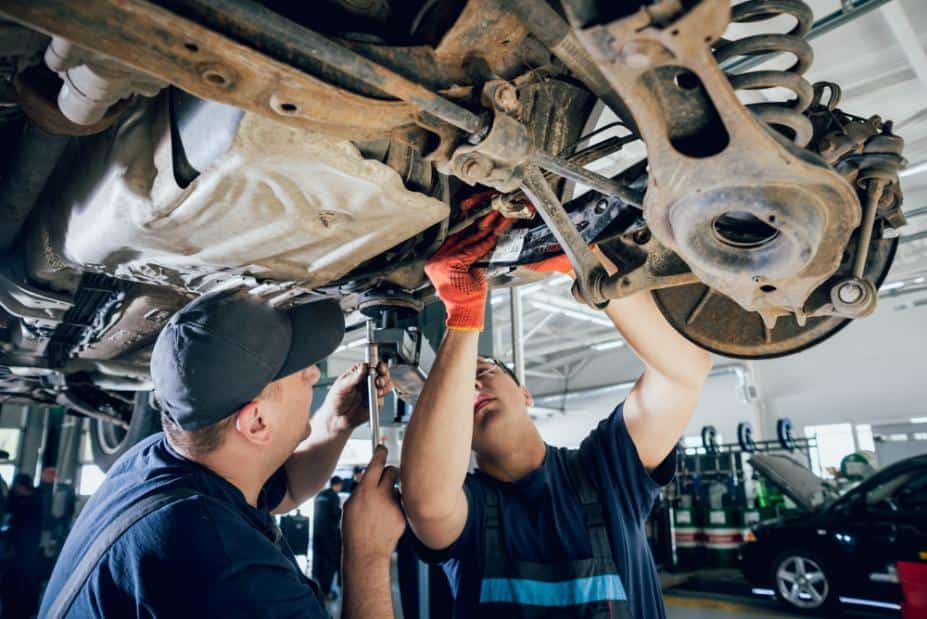
Sectioning is the next step up. When damage extends beyond what pulling can restore but doesn’t require full replacement, a defined length of rail is cut out and replaced. OEM specifications govern where the cut lines fall and how the joint is designed, usually involving sleeve inserts, backing plates, and either plug or seam welds depending on the platform.
Patch repair and fish-plating handle localized damage, particularly minor rust perforation or small deformations that don’t warrant full sectioning. Skip and stitch welding matter here because heat-treated rail steel loses strength if it’s overheated, and continuous welds concentrate heat in ways that reduce parent material properties.
Unibody frame rail replacement is reserved for severe cases, such as full-length damage, extensive kink zones, or corrosion running along the structural length that can’t be sectioned within manufacturer allowances. In those cases, a pre-formed OEM or aftermarket rail matched to original shape and mounting points is the repair path.
Tools That Make the Difference
The structural pull relies on a frame machine as the anchoring platform, pulling towers for directional force, and pinch-weld clamps to secure the vehicle without slipping under load.
Rail-specific inner tools cover a gap that external pulling can’t reach. When a section has collapsed inward, inner-rail dolly systems reshape the metal from inside the closed section, restoring internal geometry after external pulling has restored the outer shape.
Measuring systems belong before and after the repair, not as a running check during the pull. Pre-repair measurement establishes what’s actually damaged. Post-repair verification confirms the vehicle meets specification. Measurement isn’t a substitute for reading the metal correctly in the first place.
Welding and metal-prep gear rounds out the setup: MIG welders sized for the rail material, weld-through primer to preserve corrosion resistance at joint areas, and rust inhibitors for interior cavity protection where fresh cuts have exposed bare steel.
Getting Rust and Cracks Right
Surface rust and structural corrosion look similar in photos but require different responses. Surface rust that hasn’t thinned the metal cleans, treats, and coats. Structural corrosion that has perforated or thinned load-bearing sections requires cutting the compromised material out and replacing it with equivalent-grade steel.
It’s more difficult to deal with cracks in heat-treated rail steel. When you weld directly over a crack, a common failure occurs because the weld holds, but the base metal near the heat-affected zone cracks again a short distance away due to residual stress in the surrounding steel. The fish plate overlays reinforcement, spreading the load over a larger area and stopping migration.
The process is simple: first, clean the damaged part. Then, remove any weakened metal until only solid material remains. Next, create or find a replacement piece and attach it. Finally, weld the new section in place, making sure to protect both the interior and exterior surfaces from corrosion. Don’t overlook the interior cavity coating, as it’s crucial for long-term rust repair success.
Bringing OEM Data Into Every Rail Repair
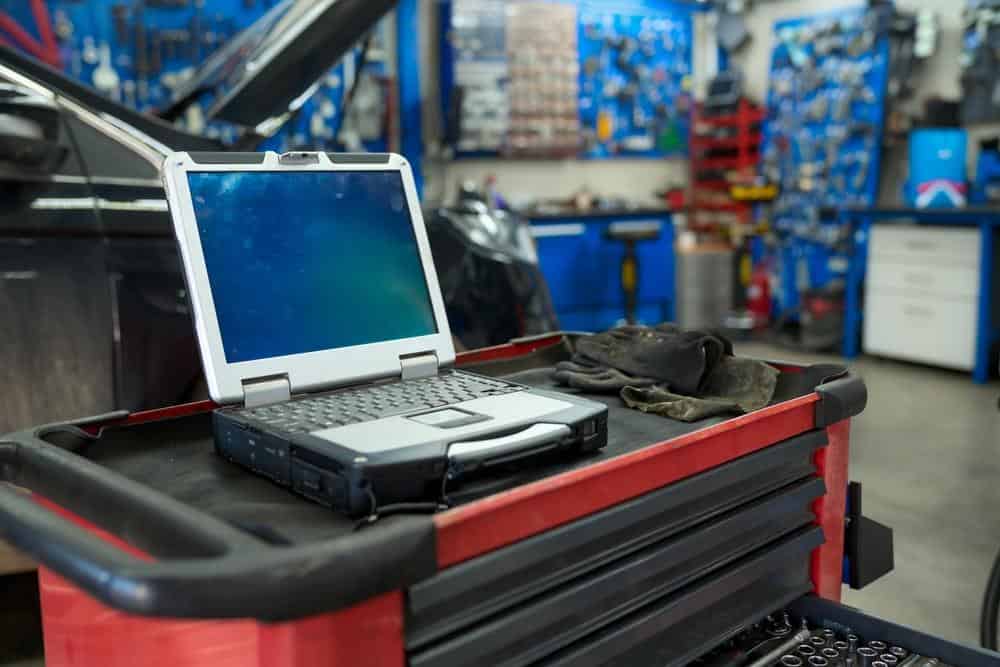
Proper unibody frame rail repair necessitates having the right OEM data. CELETTE’s AI WebTools is a cloud-based AI auto repair database platform that puts OEM structural schematics, sectioning locations, and repair procedures in front of the technician while the vehicle is on the bench. Coverage spans a wide range of vehicle references, with updates as OEMs release new platform data.
Guided measuring points connect sectioning and pull locations to manufacturer specifications, eliminating technician estimation. This is especially important for unibody structures, where OEM sectioning areas are limited, and a slight alteration to the cut line could place the joint in a zone of high stress.
The system complements current frame benches and measurement tools. Our platform allows shops to integrate a data layer without replacing existing capital tooling. This makes it ideal for businesses that have already invested in their current setup.
Get Unibody Rail Repairs Right the First Time
Unibody frame rail repair comes down to reading the damage correctly first, then applying the method that fits: pulling for bends within specification, sectioning within OEM zones, patch or fish-plate reinforcement for localized damage, and full unibody frame rail replacement for the severe cases. Each method solves a different problem, and choosing the wrong one produces a repair that measures well but behaves badly.
At CELETTE, we pair decades of OEM-recognized frame equipment with the AI WebTools vehicle database, so technicians see manufacturer sectioning locations and measuring points directly in the workflow.
Explore CELETTE’s AI auto repair database platform before your next structural repair. Our AI collision repair software puts OEM sectioning locations and repair procedures in front of your technicians, mid-job, to ensure smoother outcomes for your unibody rail repairs and more.
References:
- Welding, Cutting, and Brazing. Retrieved August 26, 2026, from https://www.osha.gov/welding-cutting-brazing