
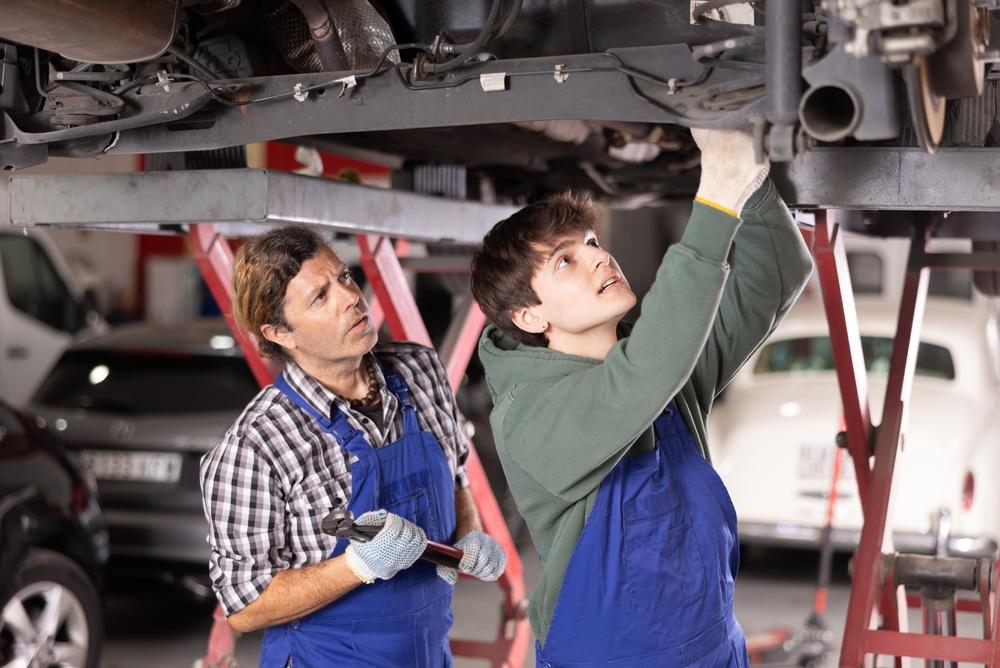
If vehicle loading and setup reduce productive bench time, it’s a good idea to consider if a single-lift frame machine is still appropriate for the workload.
A drive-on bench with dual lifting systems improves workflow by combining drive-on convenience with two synchronized lifting mechanisms for faster setup and improved stability during pulling. This article covers what dual-lift frame benches offer, how they compare to traditional setups, and when the upgrade makes sense for your shop.
What Is a Drive-on Bench with Dual Lifting Systems?
A drive-on bench is a car repair platform that allows the damaged vehicle to be driven onto a structural frame, bypassing the need for cranes, dollies, or winches. The “dual lifting” refers to two synchronized lifting systems in the bench that elevate the vehicle for better access and structural repairs.
Why dual lifting matters for technicians:
- Even load distribution: Two lift points raise the vehicle uniformly, reducing the risk of uneven stress on the chassis during elevation.
- Better underbody access: Higher, more controlled lift height means technicians can reach anchoring points, structural members, and measurement targets without contorting themselves.
- Wider vehicle compatibility: Dual lift systems handle a broader range of vehicle weights and wheelbases, from compact sedans to full-size SUVs and light commercial vehicles.
What Is a Double Scissor Frame Machine?
How a Scissor Lift Frame System Works
A double scissor frame machine uses a crossed mechanical lifting structure (the scissor mechanism) to raise and lower vehicles on the repair bench. A dual scissor configuration, with two units operating together, offers a wider lifting height range, increased load capacity, and enhanced platform stability over a single scissor setup.
Load support is spread out over the platform’s full length, which is helpful for vehicles with unbalanced weight, such as pickup trucks with substantial differences in bed and cab weight.
Benefits in Body Shop Operations
- Faster setup and teardown: Drive-on convenience eliminates the manual positioning, lifting, and alignment steps required by non-drive-on systems.
- Better ergonomics: Adjustable lift height lets technicians work at a comfortable level, reducing physical strain during long repair sessions.
- Improved underbody access: Higher lift ranges give technicians clear sightlines and tool access to structural components underneath the vehicle.
- Higher throughput: Reduced setup time per vehicle adds up. Over weeks and months, it translates directly into more completed repairs.
Drive-on Bench vs. Traditional Frame Machines
Vehicle setup: Traditional frame machines often require manual positioning using loading trolleys, cranes, or push ramps. A drive-on bench with double scissor lift lets the vehicle roll directly onto the platform under its own power (or with minimal assistance), cutting setup time significantly.
Lifting capability: Single-lift systems raise the vehicle from one central point. Dual-lift configurations use two synchronized lift mechanisms, providing more even elevation and better stability under pulling loads.
Workflow efficiency: Drive-on benches streamline the transition between vehicle loading, anchoring, measuring, and pulling. The vehicle goes from reception to repair-ready faster, and the bench stays productive for a larger portion of the work day.
Stability during repair: Dual-lift systems provide a more stable working platform, which matters when hydraulic pulling towers are applying 10 tons of corrective force. A stable platform means more accurate structural corrections and fewer interruptions for repositioning.
When Should a Body Shop Upgrade?
Increasing Repair Volume
If your shop consistently has vehicles waiting for bench time, the bottleneck is likely equipment throughput. Faster vehicle loading and setup translates directly into more completed jobs per week. A drive-on bench with double scissor lift can compress the setup phase from an hour to minutes.
Complex Modern Vehicle Structures
Newer vehicle platforms use mixed materials (high-strength steel, aluminum, composites), require precise ADAS recalibration after structural work, and follow strict OEM repair procedures. These vehicles demand measurement accuracy that starts with a stable, properly configured bench. Older single-lift systems may not provide the lifting range or platform stability required.
Need for Workflow Efficiency
The primary expense at a body shop is labor. Time spent preparing a vehicle is time lost for repairs. Labor productivity benefits shops that use equipment for quick, consistent setups.
Benefits of Dual-lift Systems for Body Shops
Higher Productivity
For a shop running three to five structural repairs per week, shaving 30 to 45 minutes off each setup adds up to several extra hours of productive bench time monthly.
Improved Technician Safety and Ergonomics
Better working height control means less bending, reaching, and working in awkward positions. Over an eight-hour day, this improves comfort and reduces injury risk. Dual-lift platforms with remote-controlled height adjustment let technicians dial in the exact working height for each task.
Greater Versatility
A well-specified frame machine for body shops needs to handle whatever rolls through the door: sedans, crossovers, SUVs, pickup trucks, and light commercial vans. Dual-lift drive-on benches with adjustable configurations support this range without requiring separate equipment for each vehicle category.
Better Structural Repair Outcomes
Enhanced stability during pulling and straightening operations results in corrections that are more precise and repeatable. When the bench doesn’t flex or shift under load, measurement readings stay consistent, and the final repair has a higher chance of falling within OEM tolerances on the first attempt.
Precision and Measurement in Modern Frame Repair
Electronic 3D measuring systems pair directly with dual-lift benches to track structural dimensions against manufacturer specifications throughout the repair. The stable platform provided by a drive-on bench with dual lifting systems ensures those measurements reflect actual structural position rather than bench flex or vehicle drift under load.
Celette’s Rhone XL drive-on bench with double scissor lift integrates with the NAJA 3D electronic measuring system and Cameleon universal jig system, providing a complete structural repair ecosystem from anchoring through verified measurement. The Rhone XL, with its double scissor lift and 5,500 kg capacity, is built for long-wheelbase vehicles and high-volume shops, while the standard Rhone and Rhone L serve passenger car and mid-size vehicle workshops. Contact Celette at [email protected] to discuss which configuration fits your workshop’s volume and vehicle mix.
References:
General Requirements for All Machines (29 CFR 1910.212). Retrieved July 10, 2026, from https://www.osha.gov/laws-regs/regulations/standardnumber/1910/1910.212
Is a Frame Rack the Best Way to Fix Structural Repairs?. Retrieved July 10, 2026, from https://www.autotrainingcentre.com/blog/frame-rack-auto-body-technician-fix-structural-repairs/
Frequently Asked Questions About Dual-Lift Frame Benches (FAQs)
Q: What Is a Drive-on Bench with Dual Lifting Systems?
A: A drive-on bench with dual lifting systems is a collision repair platform where the vehicle is driven directly onto the frame machine, then raised by two synchronized lifting mechanisms for structural repair. The dual lift design provides even load distribution, greater stability, and improved access to the vehicle’s underbody.
Q: How Does a Double Scissor Frame Machine Work?
A: A double scissor frame machine uses two crossed mechanical lifting structures working in tandem to raise and lower the repair platform. The double configuration increases lifting height, load capacity, and platform stability compared to a single scissor setup, making it suitable for a wider range of vehicle sizes and weights.
Q: What Are the Advantages of Dual-Lift Frame Machines for Body Shops?
A: Dual-lift frame machines for body shops offer faster vehicle loading, better ergonomics for technicians, improved pulling stability, and higher daily throughput. They handle a wider range of vehicle types, from sedans to light commercial vehicles, and provide more consistent structural repair accuracy.
Q: When Should a Body Shop Upgrade Its Frame Equipment?
A: Common upgrade signals include increasing repair volume with vehicles waiting for bench time, growing demand for modern vehicle structural repairs, and technician productivity losses from slow setup processes. If setup time and vehicle loading are bottlenecks in your workflow, a drive-on bench with dual lifting systems can address both.
Q: Are Modern Frame Machines Compatible with All Vehicle Types?
A: Most professional-grade dual-lift frame benches support passenger cars, crossovers, SUVs, and light commercial vehicles. Extended-length models like the Celette Rhone XL (5-meter platform with double scissor lift) are specifically designed for long-wheelbase vehicles and light commercial applications. Compatibility with electronic measuring systems and universal jig systems further extends their application range.




