Electric vehicles aren’t a future trend anymore. They’re already rolling into collision bays across the wider Asia-Pacific region. While they don’t seem all that different from ICE-based cars, when an EV arrives after a crash, the repair process looks nothing like what technicians are used to with conventional cars.
High-voltage battery systems, structural designs built around massive underfloor packs, and mixed materials that demand specialized techniques all combine to make EV collision repair far more complex than traditional bodywork.
If you’re looking into what body repair needs to know with emerging EV car models, we have you covered for safety protocols, structural considerations, and why having the right equipment matters more than ever.
Why EV Collision Repair Is Different
The gap between repairing an internal combustion engine (ICE) vehicle and an EV is significant. Here’s what changes.
High-Voltage Systems
Battery electric vehicles operate on 400–800V systems. That’s enough voltage to be lethal if mishandled. Before any bodywork begins, repairs must start with proper power-down and high-voltage isolation. And just as importantly, technicians need to know where the orange HV wiring that runs throughout the vehicle is and keep tabs on it at every stage of disassembly.
Structural Integration
Large battery packs sit under the floor of an EV, making the vehicle’s frame and battery enclosure tightly linked. If the rails, crossmembers, or mounting points are damaged, the alignment may not be the only thing affected, as it can also directly compromise battery safety. What appears to be minor structural damage might actually threaten the battery’s protective cage.
Repair Complexity
EV repairs typically take longer and cost more than comparable ICE repairs. The process adds steps that simply don’t exist with conventional vehicles, such as high-voltage (HV) isolation, battery assessment, structural measurement, post-repair diagnostics, and ADAS calibration. Skipping any of these steps creates risk for both the shop and the vehicle owner.
Key Safety Considerations for EV Collision Repair Work
As EVs run on electricity, safety makes up the foundation of every repair.
High-Voltage Handling
Before repair work can commence, certified technicians must follow OEM procedures to disable and isolate HV systems, which involves lockout/tagout protocols, insulated gloves rated for high-voltage work, and EV-specific tools. Never assume a vehicle is “safe” just because it’s not running, since the battery pack holds energy regardless of whether the car is on or off.
Thermal Runaway Risk
Internal battery damage from a collision may not be visible externally. A compromised cell can trigger thermal runaway, resulting in a fire that’s extremely difficult to extinguish and can reignite hours or even days later. Shops need protocols for battery monitoring, safe storage, and quarantine of damaged packs.
Dedicated Work Areas
Many EVs use aluminum extensively, and this material is susceptible to cross-contamination and galvanic corrosion when exposed to steel particles. What’s worse, aluminum dust is explosive. Combine that with HV components, and you have a serious hazard if the environment isn’t managed properly. For this reason, EV work zones must be kept clean and separated to reduce this risk significantly.
Structural Realities: Battery, Materials, and ADAS
Beyond all that, three other technical factors make collision repair for EV cars particularly demanding.
Battery Pack Considerations
The battery pack is often the single most expensive component in the vehicle. Damage to the casing, cooling lines, or mounting points can dramatically escalate repair costs and, in many cases, trigger total-loss decisions outright (such as in the UK). Accurate structural measurement is essential here, since small deviations in mounting points affect battery fitment and, ultimately, safety.
Mixed-Material Complexity
EVs combine aluminum, high-strength steel, composites, and adhesives to offset battery weight, and each material requires different welding, gluing, riveting, and straightening techniques. Incorrect heat input or sectioning can weaken crash structures or compromise battery protection zones.
Thus, strict adherence to OEM repair procedures is required, as deviating from them creates liability and puts occupants at risk.
The ADAS Factor
Most EVs come loaded with cameras, radar, and lidar for advanced driver assistance systems (ADAS). Even minor structural shifts can throw sensor angles out of tolerance, which is why the sequence matters: verified geometry first, then calibration. Doing it backward wastes time and produces unreliable results.

Equipment Requirements for EV Collision Repair
Proper collision repair for EV cars demands proper tools. Here’s what shops need.
Frame Machines and Benches
EV structural repairs require precision equipment that can clamp at defined structural points without damaging battery enclosures. Before any pulling operations begin, the battery pack must be safely removed following OEM procedures. Once the pack is out, frame machines for body shops handling EVs must support correct clamping locations and integrate with accurate measuring systems. The bench keeps battery-mounting rails, crossmembers, and crush zones stable during measurement and pulling operations.
Jig Systems
Universal and adaptive jigs locate underbody and upper-body reference points on EV platforms, making them essential for accurately rebuilding structures that protect or support the battery pack. Both model-specific and universal options exist, with universal systems offering flexibility across multiple EV makes without requiring dedicated fixtures for each model.
Measuring Systems
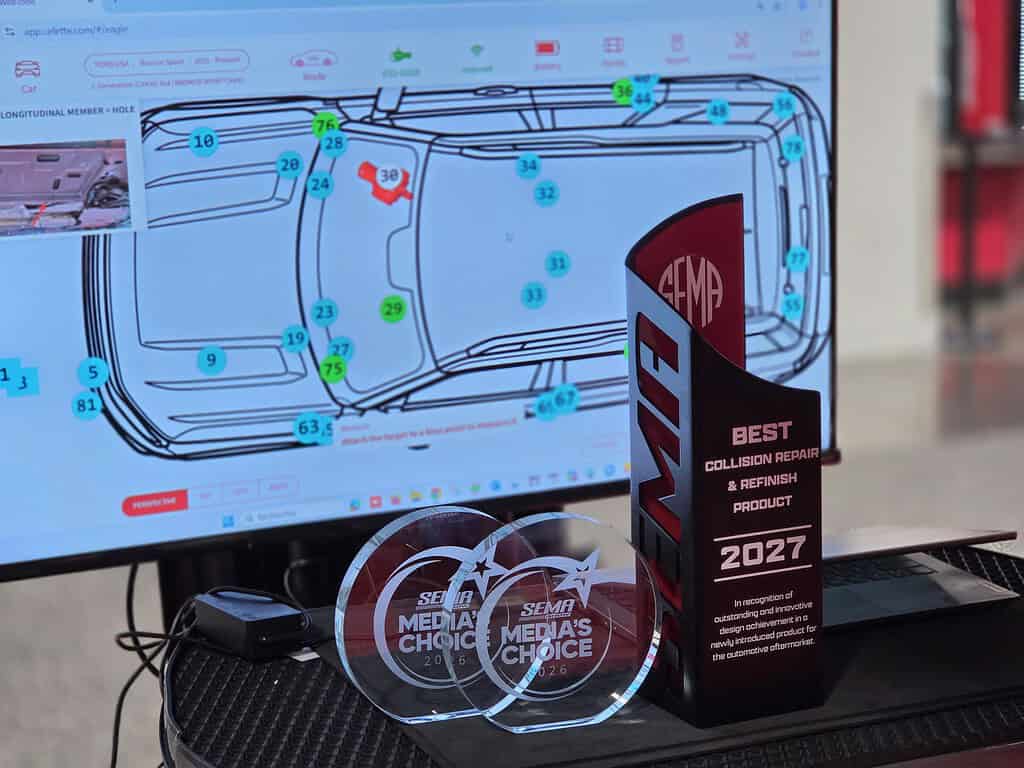
Electronic 3D measurement systems are vital for assessing damage before repairs and verifying the work afterward. Technicians utilize these systems to record the severity of structural damage before work commences by cross-referencing critical points with OEM standards. Once straightening is finished, systems confirm that rails, crossmembers, and battery mounts are within acceptable limits. Documentation is then generated to verify the repair meets factory standards before battery packs are reinstalled and ADAS is calibrated.
Working with an established body shop repair equipment manufacturer ensures hardware aligns with OEM tolerances and integrates seamlessly.
Preparing Your Shop for EV Work
A practical checklist for shops looking to become EV-ready.
- Safety and procedures: Start by documenting your EV intake process, including HV isolation and battery inspection protocols. From there, establish safe storage procedures for damaged or removed battery packs, and develop fire response planning specific to lithium-ion battery incidents.
- Equipment investment: You’ll need a quality bench capable of handling EV platforms, universal jigs that accommodate various EV architectures, and an electronic measuring system with OEM data access (like our NAJA 3D Evolution system). These three components work together to ensure structural accuracy.
- Training and certification: Technicians need training in HV safety and OEM repair procedures, as well as certification in mixed-material welding and bonding. ADAS calibration competency is another core component of the skill set required for proper EV collision work.
- Mindset shift: EV repairs require more planning, more time, and more communication with customers and insurers. Being “service-ready” before EVs arrive is far safer than learning on the job.
Be prepared and equipped for handling EV repairs today
EV collision repair isn’t just regular bodywork with extra steps. It’s a fundamentally different discipline requiring proper equipment, training, and procedures. With EV adoption accelerating across Thailand and the Asia-Pacific region, shops that invest in what body repair needs to know with emerging EV cars now position themselves for growth in this increasingly EV-centric time.
Visit Celette Thailand to see how we support collision repair centers preparing for the EV future. As a body shop repair equipment manufacturer, we offer frame machines, universal jigs, and precision measuring systems designed for modern vehicle architectures to help you perform EV collision repair properly.
EV Collision Repair FAQs
Q1: Why is EV collision repair more complex than repairing conventional vehicles?
A: EV collision repair involves high-voltage battery systems, structural designs integrated around battery packs, mixed-material construction, and mandatory ADAS recalibration. These all require specialized training, procedures, and equipment that conventional repairs don’t demand.
Q2: Can traditional frame machines be used for EV repairs?
A: Many modern frame machines can handle EVs, but they must support correct clamping points that avoid damaging battery enclosures and work with accurate measuring systems. Purpose-built or EV-capable equipment from established manufacturers ensures proper structural restoration.
Q3: What safety equipment do technicians need for EV collision repair work?
Technicians need insulated gloves rated for high-voltage work, EV-specific isolation tools, proper lockout/tagout equipment, and access to dedicated work zones that prevent cross-contamination between materials.
Q4: How long does EV collision repair typically take compared to ICE vehicles?
EV repairs generally take longer due to additional required steps: HV isolation, battery assessment, precision structural measurement, post-repair diagnostics, and ADAS calibration. The exact timeline depends on damage severity and parts availability.